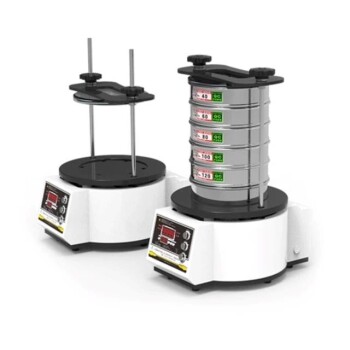
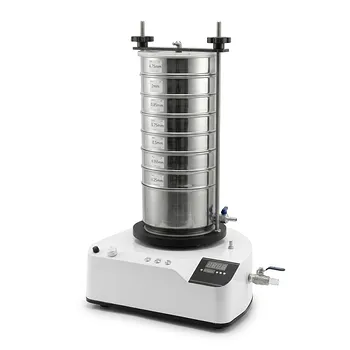
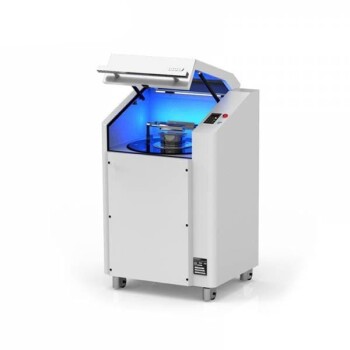
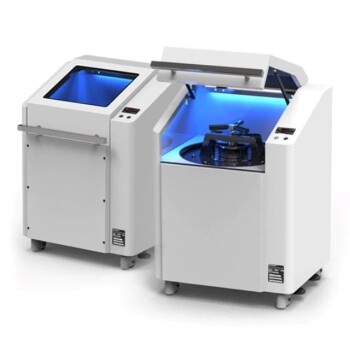
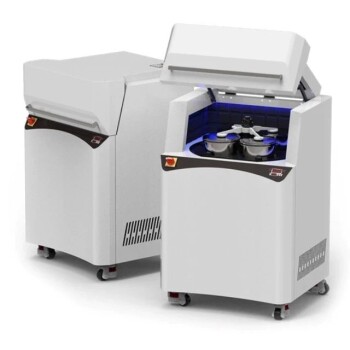
Achieving precision in biochar research requires absolute control over raw material dimensions. High-precision vibrating sieves are used to classify biomass powders into specific, uniform particle size distributions, such as fractions smaller than 400 μm or within the 40–63 μm range. This mechanical separation is critical because it ensures that every particle reacts identically during thermal processing, directly influencing the repeatability of the biochar’s specific surface area, porosity, and chemical structure.
High-precision sieving transforms heterogeneous biomass into a standardized feedstock, eliminating variables in heat and mass transfer that would otherwise compromise the scientific validity of pyrolysis and activation experiments.
Optimizing Thermal and Kinetic Consistency
Eliminating Heat Conduction Variations
Biomass particles of different sizes respond differently to heat; larger particles often develop internal temperature gradients while smaller ones heat through almost instantly. By using a high-precision sieve, researchers ensure that all particles experience the same heating rate, which is essential for accurate kinetic modeling and devolatilization data.
Standardizing Mass Transfer during Pyrolysis
Uniform particle sizes facilitate consistent gas diffusion out of the biomass and uniform penetration of activating agents into the material. This consistency prevents the formation of "under-processed" cores or "over-processed" surfaces, leading to a biochar with a highly repeatable pore structure.
Enhancing Chemical Impregnation
For researchers creating modified or magnetic biochars, uniform sizing ensures that chemical precursors, such as iron salt solutions, are distributed evenly across the material. A standardized surface-to-volume ratio allows for predictable absorption, resulting in a stable and controllable final product.
Mechanical Efficiency and Data Accuracy
Breaking Agglomeration Forces
Fine biomass powders often clump together due to moisture or electrostatic forces, which can skew size distribution data. The controlled vibration frequencies and vertical motion of an electric sieve shaker effectively tumble and collide particles, breaking down these agglomerates to ensure they pass through the correct mesh aperture.
Reducing Mesh Clogging
High-precision sieves are designed to maintain high-efficiency classification of "difficult" materials like oily wood powders or fibrous cow manure. The continuous motion prevents blinding or clogging of the fine mesh, ensuring that the resulting particle size distribution (PSD) data is both accurate and representative of the entire batch.
Improving Physical Pelletization
In research involving biomass pellets, sieving allows for the selection of particles that achieve an optimal self-locking effect within die holes. This optimization improves the filling rate and physical density of the pellets, which is vital for studying the mechanical durability of bio-fuels.
Understanding the Trade-offs and Limitations
The Risk of Particle Degradation
While vibration is necessary for separation, excessive mechanical energy can cause fragile biomass particles to break or abrade during the process. This can lead to an "artificial" increase in fines, potentially misrepresenting the original material's characteristics if the sieving duration is not strictly controlled.
Material Loss and Dust Management
High-precision sieving of dry biomass creates significant amounts of fine dust, which can lead to material loss and safety hazards in a laboratory setting. Researchers must balance the need for dry classification with the potential for sample loss, particularly when working with limited quantities of specialized feedstocks.
Limitations of Two-Dimensional Mesh
Sieves classify particles based on their second-smallest dimension, meaning long, needle-like particles may pass through the same mesh as spherical particles. This can lead to variations in the aspect ratio within a single "uniform" size fraction, which may still introduce minor discrepancies in thermal behavior.
Applying Sieving Results to Your Research Goals
How to Select Your Sieving Strategy
To maximize the value of your biomass classification, align your sieving parameters with your ultimate experimental objective.
- If your primary focus is Kinetic Modeling: Use high-precision sieves to extract a very narrow range (e.g., 40–63 μm) to eliminate internal temperature gradients and ensure accurate devolatilization data.
- If your primary focus is Adsorbent Performance: Prioritize a uniform distribution around a central aperture (e.g., 0.25 mm) to guarantee repeatable specific surface area and pore volume in the resulting biochar.
- If your primary focus is Pelletization and Logistics: Focus on identifying the ratio of different size fractions to optimize the "filling effect" and maximize the physical density of your compressed biomass.
By standardizing the physical dimensions of your feedstock, you provide the foundational consistency necessary for high-impact, reproducible biochar research.
Summary Table:
| Key Benefit | Scientific Impact | Research Application |
|---|---|---|
| Thermal Consistency | Eliminates internal temperature gradients | Kinetic modeling and devolatilization |
| Mass Transfer | Ensures uniform gas diffusion and penetration | Adsorbent pore structure development |
| Chemical Uniformity | Predictable surface-to-volume ratio | Modified and magnetic biochar creation |
| Mechanical Efficiency | Breaks agglomerates and prevents clogging | Accurate particle size distribution (PSD) |
| Pelletization | Optimizes self-locking and physical density | Bio-fuel durability studies |
Elevate Your Biochar Research with KINTEK
Precision starts with the right equipment. KINTEK specializes in high-performance laboratory solutions designed to ensure the repeatability and accuracy of your scientific data. Whether you are classifying biomass powders with our high-precision vibrating sieves, conducting pyrolysis in our high-temperature muffle or vacuum furnaces, or preparing samples with our hydraulic pellet presses, we provide the tools necessary for high-impact research.
Don't let inconsistent feedstock compromise your results. Our team is ready to help you select the ideal sieving parameters and laboratory equipment tailored to your specific biomass processing needs.
Contact KINTEK experts today to optimize your lab workflow!
References
- Priyanka Priyanka, S.K. Mehta. Evaluating the pre-treatment protocol required to produce an effective carbonized waste adsorbent for organic pollution control. DOI: 10.3389/fenvs.2023.1224388
This article is also based on technical information from Kintek Solution Knowledge Base .
Related Products
- Vibratory Sieve Shaker Machine Dry Three-Dimensional Vibrating Sieve
- Laboratory Vibratory Sieve Shaker Machine for Dry and Wet Three-Dimensional Sieving
- Laboratory Vibratory Sieve Shaker Machine Slap Vibrating Sieve
- Laboratory Test Sieves and Vibratory Sieve Shaker Machine
- Laboratory Wet Three-Dimensional Vibratory Sieve Shaker Machine
People Also Ask
- How is a vibratory sieve shaker used in the particle size analysis of mechanically alloyed powders? Expert Guide
- Why use a vibratory sieve shaker for PET powder? Achieve Precise Particle Size Control for Chemical Research
- What is the principle of vibratory sieve shaker? Achieve Accurate Particle Size Analysis
- What is the function of a vibratory sieve shaker? Achieve Precise Particle Size Analysis
- What is the use of vibratory sieve shaker? Achieve Precise Particle Size Analysis for Your Lab