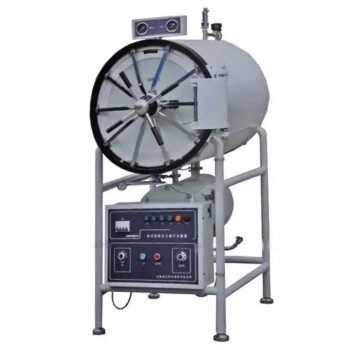
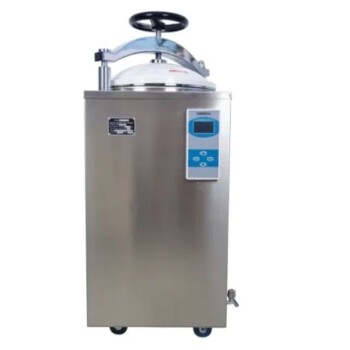
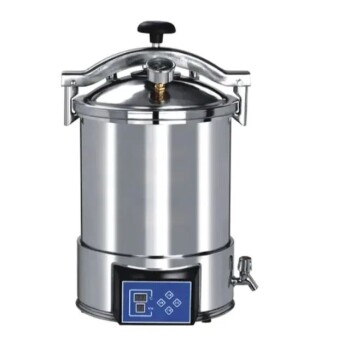
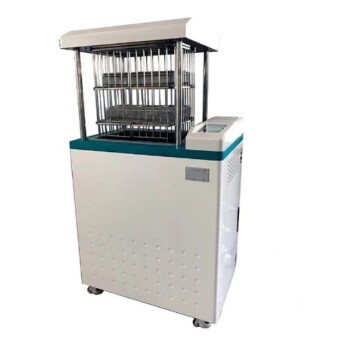
A high-pressure autoclave creates a sealed, high-energy environment that is critical for synthesizing titanium dioxide ($TiO_2$) nanomaterials. By allowing solvents to reach temperatures and pressures far exceeding their atmospheric boiling points, the autoclave forces normally insoluble titanium precursors to dissolve and recrystallize into precise, high-performance nanostructures.
The high-pressure autoclave enables hydrothermal synthesis by maintaining supercritical or near-supercritical conditions. This unique thermodynamic state allows researchers to manipulate crystal nucleation and growth, transforming basic precursors into highly active, specific morphologies like nanowires or nanobelts.
The Thermodynamics of Dissolution and Growth
Overcoming Solubility Limits
At standard temperature and pressure, many titanium precursors are difficult to dissolve.
The autoclave solves this by creating a sealed reaction system. As the temperature rises above the solvent's boiling point, the internal pressure increases drastically, creating near-supercritical conditions.
Under these conditions, the solubility of precursors increases, enabling the dissolution-recrystallization process necessary for forming new materials.
Accelerating Reaction Kinetics
The high-pressure environment significantly accelerates chemical reaction rates.
Heat and pressure facilitate the hydrolysis of precursors (such as titanium isopropoxide) much faster than open-air methods.
This creates an environment where highly active crystalline phases, such as anatase, can form directly and efficiently.
Precision Control Over Morphology
Directing Crystal Shape
The most distinct advantage of using an autoclave is the ability to directionally control the morphology of the final product.
By adjusting the "filling degree" (how full the vessel is), pressure, and temperature, researchers can force $TiO_2$ to grow into specific shapes.
Common outcomes include nanowires, nanobelts, nanotubes, and mesoporous structures rather than simple granular particles.
Optimizing Surface Area
The performance of $TiO_2$ in applications like photocatalysis relies heavily on its specific surface area.
The autoclave promotes the growth of structures with high aspect ratios (long and thin).
This increases the electrochemical active surface area, thereby optimizing the material's adsorption capabilities and catalytic activity.
Understanding the Trade-offs
The Necessity of Corrosion Resistance
Hydrothermal synthesis often requires strong alkaline solutions, such as high-concentration sodium hydroxide (NaOH), to induce crystallization.
Standard metal vessels cannot withstand this; therefore, a Polytetrafluoroethylene (PTFE) liner is essential.
This liner provides chemical inertness, preventing the metal walls from corroding and keeping metal ion impurities out of the reaction solution.
Sensitivity to Parameters
The process is highly sensitive to the filling degree of the autoclave.
Because the pressure is self-generated by the heating of the solvent, a vessel filled to 40% will generate significantly different pressure than one filled to 80% at the same temperature.
Inaccurate filling can lead to inconsistent particle sizes or failure to achieve the desired crystal phase.
Making the Right Choice for Your Goal
To maximize the effectiveness of your hydrothermal synthesis, consider the following parameters based on your desired outcome:
- If your primary focus is Photocatalytic Activity: Prioritize parameters that yield high aspect ratio structures (like nanotubes), as the increased surface area directly enhances catalytic performance.
- If your primary focus is Purity and Stability: Ensure your autoclave utilizes a high-quality PTFE liner to prevent structural defects caused by metal ion infiltration from the reactor walls.
The high-pressure autoclave is not just a heating vessel; it is a precision tool that leverages thermodynamics to engineer the microscopic architecture of titanium dioxide.
Summary Table:
| Parameter | Influence on TiO2 Synthesis | Benefit for Nanomaterials |
|---|---|---|
| Temperature | Exceeds atmospheric boiling points | Increases precursor solubility & reaction rates |
| Internal Pressure | Maintains near-supercritical states | Enables dissolution-recrystallization of crystals |
| Filling Degree | Controls self-generated pressure | Determines final particle size and crystal phase |
| PTFE Liner | Chemical inertness | Prevents corrosion and metal ion contamination |
| Reaction Kinetics | Accelerates hydrolysis | Facilitates direct formation of active anatase phases |
Elevate Your Nanomaterial Research with KINTEK Precision
Unlock the full potential of hydrothermal synthesis with KINTEK’s high-performance high-pressure reactors and autoclaves. Specifically designed for demanding laboratory environments, our systems feature high-quality PTFE liners and robust construction to ensure maximum purity and precise morphology control for your titanium dioxide nanowires and nanotubes.
From advanced hydrothermal reactors to crushing systems and furnace solutions, KINTEK provides the comprehensive tools needed to optimize your material's surface area and catalytic activity. Don't settle for inconsistent results—partner with the laboratory equipment experts.
Contact KINTEK Today for a Custom Solution
References
- Huaitao Yang, Junjiao Yang. Preparation and Photocatalytic Activities of TiO2-Based Composite Catalysts. DOI: 10.3390/catal12101263
This article is also based on technical information from Kintek Solution Knowledge Base .
Related Products
- Mini SS High Pressure Autoclave Reactor for Laboratory Use
- High Pressure Laboratory Autoclave Reactor for Hydrothermal Synthesis
- Stainless High Pressure Autoclave Reactor Laboratory Pressure Reactor
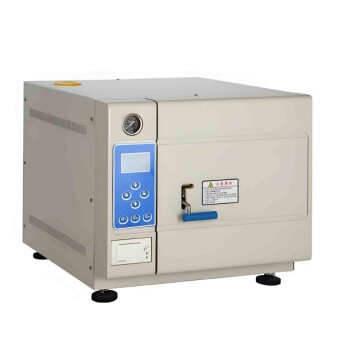
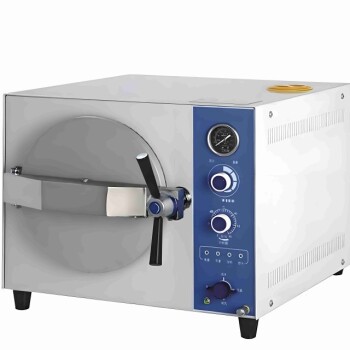
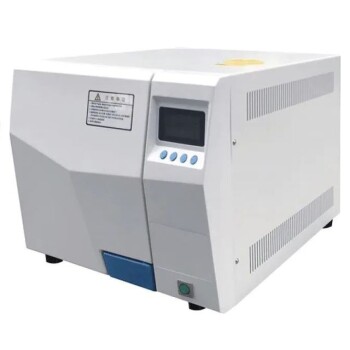
- Desktop Fast High Pressure Laboratory Autoclave Sterilizer 16L 24L for Lab Use
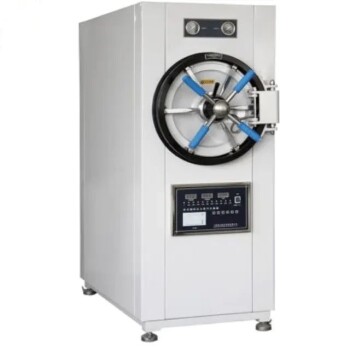
- Laboratory High Pressure Horizontal Autoclave Steam Sterilizer for Lab Use
People Also Ask
- Why use high-pressure reactors for molecular sieve synthesis? Unlock Superior Crystallinity and Framework Control
- What are the advantages of using a high-pressure reactor like an autoclave? Maximize Liquefaction Speed & Yield
- What is the function of a high-pressure reactor autoclave? Enhancing Cu/N Co-Doped Carbon Catalyst Synthesis
- Why are high-pressure reactors or autoclaves necessary for the synthesis of new functional materials? Unlock Precision.
- How are high-pressure reactors used to prepare metaphosphate electrocatalysts? Master In-Situ Precursor Growth