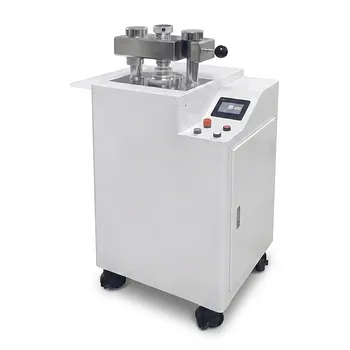
A high-pressure hydrothermal autoclave with a PTFE liner is essential because it creates a controlled, high-energy environment that forces precursor ions into the complex pore structures of biochar. This equipment allows the reaction to exceed the standard boiling point of solvents, facilitating the in-situ nucleation of copper oxide (CuO) nanoparticles directly within the biochar matrix. Without the PTFE liner, the high-temperature corrosive reagents would degrade the autoclave’s integrity and contaminate the composite with metallic impurities.
Core Takeaway: The autoclave provides the necessary thermodynamic conditions for molecular-level integration of CuO into biochar, while the PTFE liner ensures chemical purity by isolating the reaction from the metal pressure vessel.
Driving Ion Diffusion through High-Pressure Environments
Breaking the Atmospheric Barrier
A sealed hydrothermal autoclave allows the internal temperature to reach 120 °C or higher, generating pressure significantly above atmospheric levels. This environment increases the vapor pressure and solubility of solvents, enabling chemical reactions that are impossible at standard pressure.
Facilitating Pore Penetration in Biochar
The elevated pressure enhances the diffusion capacity of the solvent, which is critical for transporting copper ions deep into the microscopic pores of the biochar. This penetration is the fundamental step required to move beyond a simple surface coating to a true molecular-level composite.
Enabling In-Situ Nucleation and Crystal Growth
Achieving Molecular-Level Uniformity
Once the copper ions are embedded within the biochar pores, the hydrothermal conditions trigger in-situ nucleation. This process ensures that the CuO grows as an integral part of the biochar structure rather than as a separate, loosely attached phase.
Controlling Nano-scale Dimensions
The stable, high-pressure environment allows for the controlled growth of nano-scale CuO particles, typically around 32 nm. This precision is vital for maintaining the high surface area and reactivity required for the composite's functional applications.
The Role of the PTFE Liner in Maintaining Purity
Chemical Inertness Against Corrosive Reagents
Hydrothermal synthesis often involves highly acidic or alkaline precursors that would aggressively corrode a standard stainless steel vessel. The Polytetrafluoroethylene (PTFE) liner acts as a chemically inert barrier, resisting corrosion even at temperatures up to 200 °C.
Prevention of Metal Ion Contamination
By isolating the reaction solution from the autoclave's metal walls, the PTFE liner prevents metal ion impurities from leaching into the product. This ensures the structural integrity and high purity of the synthesized CuO@BC, which is essential for consistent experimental results.
Understanding the Trade-offs and Limitations
Temperature and Pressure Constraints
While PTFE is highly resistant to chemicals, it has a physical limit; exceeding 220 °C to 250 °C can cause the liner to deform or release toxic fumes. Users must carefully balance the need for high-temperature diffusion with the mechanical limits of the liner material.
Cooling and Safety Requirements
The high internal pressure that makes the synthesis successful also poses a safety risk if the vessel is opened prematurely. Rapid cooling can cause pressure shocks or structural failure of the liner, requiring a slow, controlled return to ambient conditions.
How to Apply This to Your Synthesis Goals
Strategic Recommendations
- If your primary focus is Maximum Purity: Always inspect the PTFE liner for cracks or discoloration before use to ensure no metal ions from the outer shell contaminate your CuO@BC composite.
- If your primary focus is Uniform Particle Distribution: Prioritize a longer "soak time" at the target temperature (e.g., 120 °C) to allow the copper ions sufficient time to penetrate the deepest pores of the biochar.
- If your primary focus is Material Scalability: Ensure the autoclave's fill degree remains between 60% and 80% to provide enough headspace for pressure generation without risking a mechanical breach.
By mastering the high-pressure environment of the PTFE-lined autoclave, you can achieve the precise molecular architecture necessary for high-performance CuO@BC composites.
Summary Table:
| Feature | Role in Synthesis | Benefit for CuO@BC |
|---|---|---|
| High Pressure | Increases solvent vapor pressure | Forces copper ions into deep biochar pores |
| PTFE Liner | Chemically inert barrier | Prevents contamination from metallic impurities |
| Controlled Temp | Facilitates in-situ nucleation | Ensures uniform, nano-scale crystal growth |
| Sealed Vessel | Enables temps > boiling point | Achieves molecular-level material integration |
Elevate your material synthesis with KINTEK’s high-performance laboratory solutions. Specialized in high-temperature high-pressure reactors and autoclaves, we provide the thermodynamic precision needed for complex CuO@BC synthesis and molecular-level integration. Our range of PTFE liners, ceramics, and crucibles ensures maximum chemical purity, while our cooling solutions and hydraulic presses support your entire material processing workflow. Contact KINTEK today to optimize your lab's efficiency and achieve superior, contamination-free research results!
References
- Marwah Ahmed Alsharif, A.A.A. Darwish. CuO nanoparticles mixed with activated BC extracted from algae as promising material for supercapacitor electrodes. DOI: 10.1038/s41598-023-49760-4
This article is also based on technical information from Kintek Solution Knowledge Base .
Related Products
- High Pressure Laboratory Autoclave Reactor for Hydrothermal Synthesis
- Stainless High Pressure Autoclave Reactor Laboratory Pressure Reactor
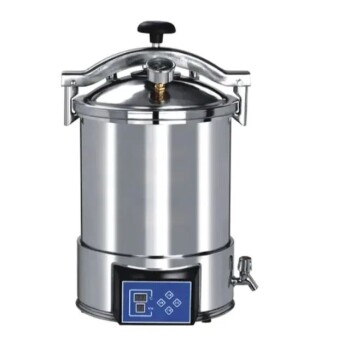
- Portable High Pressure Laboratory Autoclave Steam Sterilizer for Lab Use
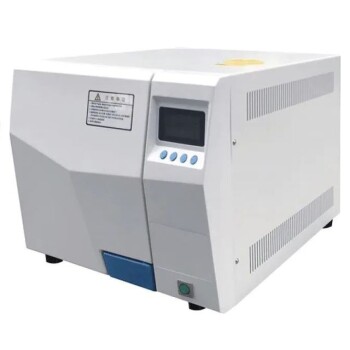
- Desktop Fast High Pressure Laboratory Autoclave Sterilizer 16L 24L for Lab Use
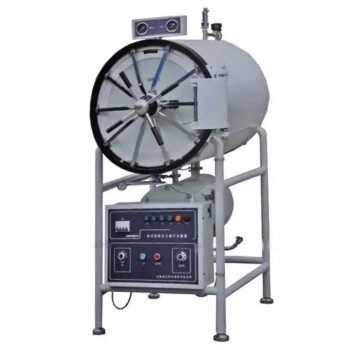
- Laboratory High Pressure Horizontal Autoclave Steam Sterilizer for Lab Use
People Also Ask
- What role does a high-pressure reactor (autoclave) play in the synthesis of NiCuFe-LDH? Master Hydrothermal Growth
- What Role Does a High-Pressure Reactor or Autoclave Play in HA Catalyst Synthesis? Achieve High Surface Area Materials
- What equipment is required for hydrothermal synthesis of Ga0.25Zn4.67S5.08? Optimize Your Semiconductor Production
- What is the function of a high-pressure reactor in the hydrothermal synthesis of boehmite? Expert Process Insights
- What role does an autoclave play in the synthesis of MnO2 nanofibers? Mastering Hydrothermal Growth