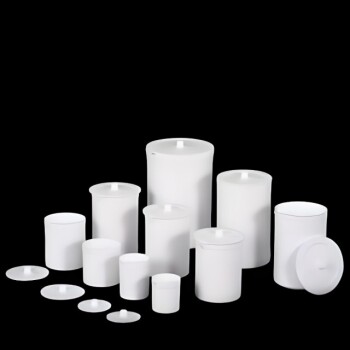
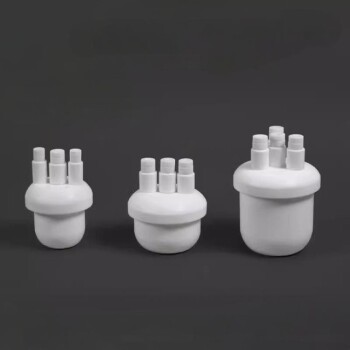
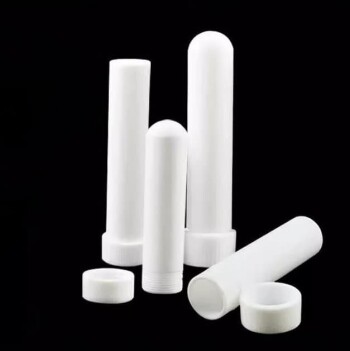
The use of a high-pressure reactor with a polytetrafluoroethylene (PTFE) liner is non-negotiable for this process because it guarantees chemical purity while forcing coating materials to bond deeply with the substrate. This specific setup solves two simultaneous challenges: it prevents the harsh hydrothermal fluids from corroding the steel vessel, and it generates the pressure required to deposit the composite uniformly into the micropores of the titanium surface.
The PTFE liner acts as an inert barrier that ensures the chemical composition of your coating remains uncontaminated by the reactor walls, while the high-pressure environment drives the composite materials into the substrate's pores for superior mechanical adhesion.
Preserving Chemical Integrity
To create a high-quality GO/ZnO/nHAp composite, you must maintain absolute control over the chemical environment. The PTFE liner is the primary defense against contamination.
Preventing Ionic Contamination
Under hydrothermal conditions, standard stainless steel reactor walls can degrade. Without a liner, metallic ions from the steel could leach into your reaction mixture, altering the stoichiometry of your composite.
Withstanding Corrosive Environments
The reaction liquid used to synthesize these coatings becomes highly aggressive at elevated temperatures. The PTFE liner offers superior chemical stability, ensuring the vessel remains intact even during prolonged exposure to these corrosive fluids.
Enhancing Coating Adhesion
The "high-pressure" aspect of the reactor is just as critical as the liner. It changes the physical mechanics of how the coating attaches to the substrate.
Deep Micropore Penetration
A porous titanium surface is complex and difficult to coat evenly using standard dipping methods. The high pressure within the reactor forces the reaction fluid deep into the micropores of the metal.
Achieving Strong Secondary Bonds
By driving the composite components into these microscopic voids, the reactor facilitates a strong secondary bond. This mechanical interlocking between the coating and the metallic substrate significantly improves the durability of the final product.
Uniform Deposition
At the target operation temperature (typically around 160°C), the pressurized environment ensures that the graphene oxide, zinc oxide, and hydroxyapatite components are deposited uniformly across the complex geometry of the substrate.
Controlling Reaction Kinetics
Beyond protecting the vessel and the substrate, the sealed nature of the reactor fundamentally alters how the chemicals react.
Reacting Above Boiling Points
The sealed environment allows solvents to remain liquid at temperatures well exceeding their normal boiling points (often up to 180°C). This "superheated" state facilitates the dissolution of precursors that would not dissolve under standard atmospheric conditions.
Precision Crystal Growth
This environment provides precise control over the chemical stoichiometric ratio. It enables the production of uniform, nanometer-scale powders by regulating the speed of nucleation and crystal growth.
Operational Trade-offs
While this reactor setup is essential for quality, it introduces specific constraints that must be managed.
Thermal Limitations of PTFE
While PTFE is chemically inert, it has thermal limits. At extremely high temperatures, PTFE can soften or deform, meaning this setup is generally limited to hydrothermal processes below roughly 200°C–250°C.
Safety and Pressure Management
The creation of a sealed, high-pressure environment turns the reactor into a potential pressure vessel hazard. Rigorous safety protocols regarding heating rates and maximum pressure limits are required to prevent rupture.
Optimizing Your Synthesis Strategy
To get the most out of this equipment, match your operational parameters to your specific quality goals.
- If your primary focus is Chemical Purity: Ensure the PTFE liner is inspected for scratches or defects before every run to prevent micro-leaching from the steel shell.
- If your primary focus is Adhesion Strength: Prioritize maintaining the target temperature (160°C) to ensure sufficient pressure is generated to force the liquid into the substrate's micropores.
Ultimately, this reactor setup is the only way to achieve the dual requirements of chemical purity and deep mechanical interlocking necessary for a robust composite coating.
Summary Table:
| Feature | Benefit for GO/ZnO/nHAp Synthesis |
|---|---|
| PTFE Liner | Prevents metallic ion leaching; ensures 100% chemical purity. |
| High-Pressure Environment | Forces composite materials into substrate micropores for superior bonding. |
| Chemical Stability | Withstands aggressive hydrothermal fluids at elevated temperatures. |
| Temperature Control | Enables reactions above boiling points (up to 200°C) for crystal growth. |
| Mechanical Interlocking | Facilitates strong secondary bonds between coating and titanium surface. |
Elevate Your Material Synthesis with KINTEK Precision
Achieving the perfect composite coating requires more than just chemistry; it requires the right environment. KINTEK specializes in high-performance laboratory equipment designed to meet the rigorous demands of advanced material research.
Whether you are developing bio-compatible coatings or nanostructured surfaces, our high-temperature high-pressure reactors and autoclaves provide the chemical inertness and pressure stability you need for flawless results. Beyond reactors, we offer a comprehensive range of crushing and milling systems, hydraulic presses, and specialized furnace solutions to support every stage of your lab workflow.
Ready to optimize your coating adhesion and purity? Contact our technical experts today to find the perfect equipment solution for your research goals.
References
- Jiang Wu, Guoliang Zhang. The Preparation of a GO/ZnO/nHAp Composite Coating and the Study of Its Performance Optimization for Pure Titanium Implants. DOI: 10.3390/mi16060637
This article is also based on technical information from Kintek Solution Knowledge Base .
Related Products
- Custom PTFE Teflon Parts Manufacturer for Hydrothermal Synthesis Reactor Polytetrafluoroethylene Carbon Paper and Carbon Cloth Nano-growth
- Stainless High Pressure Autoclave Reactor Laboratory Pressure Reactor
- Custom PTFE Teflon Parts Manufacturer for Reagent Wide Mouth Fine Mouth Sample High Temperature Bottles
- Customizable High Pressure Reactors for Advanced Scientific and Industrial Applications
- High Pressure Laboratory Autoclave Reactor for Hydrothermal Synthesis
People Also Ask
- What is the function of a PTFE reactor in MXene etching? Ensure Safe, High-Purity MAX Phase Conversion
- Why is a PTFE reactor required for titanium-based nano-ceramic coating solutions? Ensure Chemical Inertness & Purity
- Why must a Polytetrafluoroethylene (PTFE) reactor be used for Ti3C2TX MXene etching? Ensure Safety and Purity
- Why are PTFE reactors preferred for silver phosphate glass testing? Ensure Purity and Kinetic Accuracy
- What are the advantages of using polytetrafluoroethylene (PTFE) liners in hydrothermal synthesis reactors? High Purity