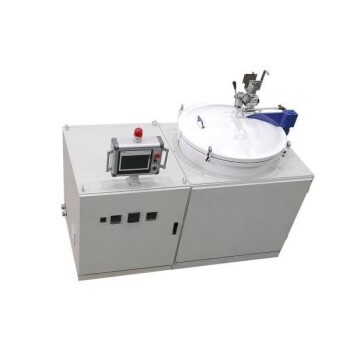
To preserve the integrity of stainless steel during extended thermal studies, the exclusion of reactive atmospheric gases is mandatory. A high-temperature furnace with inert gas protection, typically using argon, is required to strictly prevent surface oxidation and decarburization. During aging processes that can span 2,600 to 7,000 hours or more, even trace amounts of oxygen can alter the material's surface chemistry, rendering data regarding internal microstructural evolution invalid.
Core Insight: The scientific goal of thermal aging is to observe internal changes caused by heat, not external changes caused by the atmosphere. An inert environment is the only way to isolate these variables, ensuring that observed phenomena—like carbide precipitation or grain growth—are genuine thermal effects rather than artifacts of environmental contamination.
The Critical Role of Atmosphere Control
The primary function of inert gas protection is to maintain a pristine sample environment over massive timescales.
Preventing Surface Oxidation
When stainless steel is exposed to high temperatures for thousands of hours, it is highly susceptible to oxidation.
Without an inert shield (such as argon), oxide layers form on the material's surface. This obscures the sample, making subsequent surface analysis difficult and potentially altering the underlying material properties.
Eliminating Decarburization
Decarburization is the loss of carbon from the surface of the steel when it reacts with atmospheric oxygen or hydrogen.
This process changes the chemical composition of the outer layers. Because carbon content drives hardness and phase stability, decarburization can lead to false readings regarding the steel's mechanical evolution.
Protecting Irradiated Materials
For studies involving irradiated materials, atmospheric control is even more critical.
The primary reference notes that maintaining this controlled environment is a prerequisite for researching the stability of the microstructure in these sensitive materials. It ensures that the "aging" observed is purely thermal and not chemical.
Facilitating Accurate Microstructural Observations
The ultimate goal of using such specialized equipment is to allow researchers to study specific evolution mechanisms without interference.
Tracking Carbide Precipitation
Long-term heat exposure causes carbon to precipitate out of the solid solution.
To accurately map how and when these carbides form, the baseline carbon content of the sample must remain constant throughout the experiment. Inert gas prevents the environment from leeching carbon from the steel.
Monitoring Grain Growth and Stability
Researchers use these furnaces to observe how grains (crystals) within the metal grow or recrystallize over time.
Primary sources indicate that understanding the stability of the material microstructure requires an environment where the surface energy is not manipulated by oxidation. This allows for a clear view of the material's natural thermal evolution.
The Necessity of Precision Temperature Control
While inert gas protects the chemistry, the "high-precision" aspect of the furnace ensures the physical phases evolve correctly.
Inducing Recrystallization and Ordering
Specific temperatures drive specific atomic behaviors. For example, maintaining exactly 1100°C ensures full recrystallization, while lower temperatures (around 400°C) induce atomic ordering.
Precision furnaces stabilize these thermal fields to promote mechanisms like "growth accidents" (twinning), which significantly enhance resistance to Intergranular Stress Corrosion Cracking (IGSCC).
Controlling Phase Decomposition
Certain phenomena, such as spinodal decomposition in the ferrite phase, require strict temperature gradients.
Fluctuations in temperature can disrupt the formation of nanoscale chromium-rich phases. A high-precision furnace ensures these delicate, nanoscale changes occur uniformly, ensuring the reliability of the data.
Common Pitfalls to Avoid
Understanding the limitations of your equipment is just as important as knowing its capabilities.
The Leak Rate Variable
A furnace may be "sealed," but no seal is perfect over 7,000 hours.
The Pitfall: Assuming a static fill of argon is sufficient. The Reality: For ultra-long studies, a continuous, low-flow purge is often necessary to flush out micro-leaks of oxygen that accumulate over months.
Thermal Gradient Drift
High-quality insulation degrades over time, potentially altering the internal temperature map.
The Pitfall: Trusting the thermocouple reading blindly after 5,000 hours. The Reality: Regular calibration checks are required to ensure the sample is actually experiencing the target temperature, not a cooler zone caused by insulation settling.
Making the Right Choice for Your Goal
Select your equipment configuration based on the specific degradation mechanism you are investigating.
- If your primary focus is Phase Stability (e.g., Carbide Precipitation): You must prioritize inert gas purity to prevent decarburization from altering the chemical baseline of your sample.
- If your primary focus is Crystal Lattice Changes (e.g., Atomic Ordering): You must prioritize extreme temperature stability over thousands of hours to reach equilibrium states without thermal fluctuation.
- If your primary focus is Stress Relief or Recrystallization: You must ensure the furnace can reach high temperatures (up to 1403 K) while maintaining a uniform thermal field to eliminate cold-working stresses evenly.
Summary: The validity of long-term aging data rests entirely on your ability to hold the sample in a state of suspended chemical animation, allowing only heat—and never oxygen—to dictate the evolution of the microstructure.
Summary Table:
| Requirement | Purpose in Thermal Aging | Key Benefit |
|---|---|---|
| Inert Atmosphere | Prevents surface oxidation and decarburization | Maintains chemical baseline & sample integrity |
| Argon Protection | Isolates sample from reactive oxygen/hydrogen | Eliminates atmospheric artifacts in microstructures |
| Precision Temp Control | Facilitates recrystallization & phase decomposition | Ensures uniform grain growth and atomic ordering |
| Continuous Purge | Flushes out micro-leaks over 7,000+ hours | Guarantees long-term stability for irradiated materials |
Secure Your Research Accuracy with KINTEK Advanced Thermal Solutions
Don't let atmospheric contamination compromise thousands of hours of thermal aging research. KINTEK specializes in high-performance laboratory equipment designed for the most demanding material science applications. Whether you are studying carbide precipitation, grain growth, or phase stability in stainless steel, our comprehensive range of high-temperature furnaces (muffle, tube, vacuum, and atmosphere-controlled) provides the precise inert environment and thermal stability your data requires.
From high-precision crushing and milling systems for sample preparation to high-temperature high-pressure reactors and specialized ceramics and crucibles, KINTEK delivers the end-to-end tools needed for elite metallurgical analysis. Our systems are engineered to eliminate thermal gradient drift and oxidation risks, ensuring your results are a true reflection of material evolution.
Ready to elevate your lab's capabilities? Contact KINTEK today to discuss your specific thermal aging requirements.
References
- O.V. Rofman, Michael P. Short. The natural aging of austenitic stainless steels irradiated with fast neutrons. DOI: 10.1016/j.jnucmat.2017.11.006
This article is also based on technical information from Kintek Solution Knowledge Base .
Related Products
- Controlled Nitrogen Inert Hydrogen Atmosphere Furnace
- 1200℃ Controlled Atmosphere Furnace Nitrogen Inert Atmosphere Furnace
- 1700℃ Controlled Atmosphere Furnace Nitrogen Inert Atmosphere Furnace
- 1400℃ Controlled Atmosphere Furnace with Nitrogen and Inert Atmosphere
- High Temperature Muffle Oven Furnace for Laboratory Debinding and Pre Sintering
People Also Ask
- What is the role of a hydrogen atmosphere furnace in diamond/copper composites? Enhance Your Material Purity
- Why is hydrogen used in furnaces? Achieve Superior Purity and Bright Finishes
- What are the characteristics and risks of a hydrogen atmosphere in a furnace? Master the Balance of Power and Control
- Why is a hydrogen atmosphere furnace necessary for W-Cu composite? Unlock Superior Infiltration and Density
- Can hydrogen be used in furnaces? Yes, for Oxide-Free Metal Processing & Rapid Heating