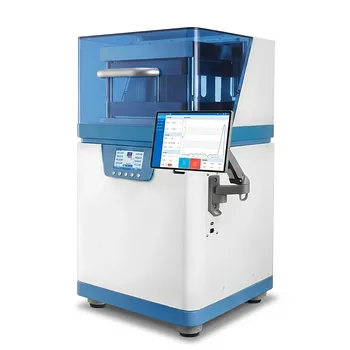
A high-temperature high-pressure reactor is essential for lignin purification because it provides the controlled 140°C environment and resulting autogenous pressure necessary to dissociate and dissolve lignin within an acidic polyethylene glycol (PEG) solution. These specific conditions are the critical prerequisite for overcoming the natural hardness of plant fibers, enabling the efficient separation of lignin from the cellulose and hemicellulose matrix.
The reactor acts as a high-precision vessel that facilitates the chemical breakdown of biomass by maintaining solvents at temperatures well above their atmospheric boiling points. This environment accelerates bond cleavage and ensures the acidic PEG solution can fully penetrate and solubilize the complex lignin structure.
Overcoming the Structural Integrity of Biomass
Breaking the Lignocellulosic Matrix
Lignin acts as a natural "glue" that provides structural rigidity to wood chips. At standard temperatures and pressures, this matrix is highly resistant to chemical attack.
A high-temperature reactor provides the thermal energy required to weaken the chemical bonds between lignin, cellulose, and hemicellulose. This process allows the solvent to infiltrate the fiber structure effectively.
Achieving Deep Fiber Penetration
High temperatures reduce the viscosity of the solvent and increase the kinetic energy of the molecules. In a pressurized environment, the acidic PEG solution can penetrate deep into the pores of the wood chips.
Without this pressure-driven penetration, the purification process would only affect the surface of the wood chips. This would result in low yields and incomplete separation of the high-purity lignin required for industrial applications.
Optimizing Solubility and Mass Transfer
Dissociation in Acidic PEG
The primary role of the 140°C environment is to ensure the full dissociation of lignin molecules. At this specific temperature, the chemical interaction between the acidic medium and the lignin reaches its peak efficiency.
The reactor maintains the solvent in a state where it can maximize the dissolution of lignin. This prevents the lignin from re-precipitating onto the wood fibers during the extraction process.
Management of Autogenous Pressure
As the temperature rises to 140°C, autogenous pressure is generated within the sealed vessel. This pressure is not merely a byproduct but a functional tool that keeps the liquid reactants in contact with the solid biomass.
By preventing the evaporation of volatile components, the reactor ensures a stable reaction environment. This stability is vital for achieving a narrow molecular weight distribution in the purified lignin.
Engineering Safety and Process Control
The Reactor as a Sealed Pressure Vessel
Working with acidic solutions at 140°C poses significant safety risks if the environment is not strictly contained. A high-pressure reactor (or autoclave) serves as a safe and reliable sealed vessel designed to handle these specific stresses.
The vessel prevents the leakage of acidic vapors and maintains the integrity of the three-phase system. This containment is critical for both operator safety and the purity of the final PEGL product.
Integrated Stirring and Temperature Precision
Purification requires consistent exposure of all wood chip surfaces to the solvent. High-pressure reactors are often equipped with mechanical stirring and high-precision temperature controls.
Uniform heat distribution prevents "cold spots" that would lead to incomplete purification. Mechanical agitation ensures efficient mass transfer, allowing the dissolved lignin to move away from the wood chips and into the solvent phase.
Understanding the Trade-offs
Equipment Costs and Complexity
The primary disadvantage of using high-temperature high-pressure reactors is the initial capital investment. These vessels require specialized materials, such as high-grade stainless steel or alloys, to resist corrosion from the acidic PEG solution.
Additionally, the operational complexity is higher than atmospheric systems. Staff must be trained in high-pressure safety protocols and rigorous maintenance schedules for seals and pressure-relief valves.
Energy Consumption vs. Yield
Achieving and maintaining 140°C requires significant energy input. While this increases the operational cost per batch, it is often offset by the superior purity and yield of the resulting lignin.
In atmospheric systems, the extraction is slower and less complete. This results in a "lower quality" product that may require additional downstream processing, potentially negating the initial energy savings of a low-pressure setup.
Applying This to Your Purification Project
Making the Right Choice for Your Goal
- If your primary focus is High Purity for Technical Adhesives: Utilize a high-pressure reactor at 140°C or higher to ensure the complete breakage of chemical bonds and a narrow molecular weight distribution.
- If your primary focus is Maximizing Yield from Hardwood Chips: Prioritize a reactor with strong mechanical stirring to ensure the acidic PEG solution penetrates the dense fiber matrix effectively.
- If your primary focus is Process Safety and Scalability: Invest in a pilot-scale pressure vessel with integrated autogenous pressure monitoring to maintain a stable environment and prevent solvent loss.
The transition from atmospheric to high-pressure processing is the defining factor in transforming raw biomass into a high-value, purified lignin precursor.
Summary Table:
| Key Requirement | Role in Lignin (PEGL) Purification | Impact on Outcome |
|---|---|---|
| 140°C Temperature | Provides thermal energy to break the lignocellulosic matrix. | Efficient separation of lignin from cellulose. |
| Autogenous Pressure | Forces acidic PEG solution deep into wood chip pores. | High yields and complete fiber penetration. |
| Sealed Containment | Prevents evaporation of volatile solvents/acidic vapors. | Stable reaction environment and operator safety. |
| Mechanical Stirring | Ensures uniform heat distribution and mass transfer. | Prevents lignin re-precipitation and cold spots. |
| Corrosion Resistance | Withstands acidic PEG environments at high heat. | Long-term equipment durability and product purity. |
Elevate Your Biomass Refining with KINTEK
Precision is the defining factor in transforming raw biomass into high-value purified lignin. KINTEK specializes in advanced laboratory equipment, offering a premium range of high-temperature high-pressure reactors and autoclaves designed to handle the rigorous demands of PEGL purification. Our reactors provide the exact thermal control and pressure stability needed to achieve narrow molecular weight distributions and superior yields.
Beyond reactors, our comprehensive portfolio includes:
- Material Processing: Crushing, milling, and sieving systems.
- Sample Preparation: Hydraulic pellet presses and high-temperature furnaces (muffle, tube, vacuum).
- Lab Essentials: Electrolytic cells, cooling solutions (ULT freezers), and high-durability ceramics/crucibles.
Ready to optimize your purification project? Contact KINTEK today to explore how our specialized equipment can enhance your lab's efficiency and research outcomes!
References
- Linfei Zhou, Hui Jie Zhang. Fabrication of Graphitized Carbon Fibers from Fusible Lignin and Their Application in Supercapacitors. DOI: 10.3390/polym15081947
This article is also based on technical information from Kintek Solution Knowledge Base .
Related Products
- Customizable Laboratory High Temperature High Pressure Reactors for Diverse Scientific Applications
- High Pressure Laboratory Autoclave Reactor for Hydrothermal Synthesis
- Stainless High Pressure Autoclave Reactor Laboratory Pressure Reactor
- Mini SS High Pressure Autoclave Reactor for Laboratory Use
- Customizable High Pressure Reactors for Advanced Scientific and Industrial Applications
People Also Ask
- How do high-pressure and high-temperature reactors ensure the effective treatment of lignocellulosic wastewater in WAO?
- What equipment is required for high-pressure high-temperature reactions? Master Extreme Chemistry Safely
- How do you control high pressure in a reactor? A Guide to Safe & Stable Operation
- Why is argon better than nitrogen for inert atmosphere? Ensure Absolute Reactivity & Stability
- How does initial oxygen pressure affect the wet oxidation of pharmaceutical sludge? Master Your Oxidation Depth