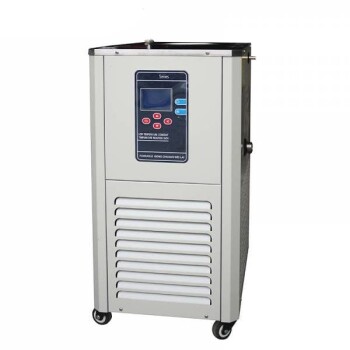
High-temperature oil baths are the superior choice for CO2 desorption because the process requires thermal energy levels that exceed the physical limits of liquid water. While a water bath is capped at its boiling point of 100°C, an oil bath can provide a stable environment of 120°C or higher. This specific temperature range is necessary to break strong chemical bonds and drive the regeneration reaction to completion.
Core Takeaway The regeneration of CO2 capture solvents involves breaking stable chemical bonds, such as carbamates, which requires temperatures typically around 120°C. Because water cannot exceed 100°C at atmospheric pressure, only an oil bath can provide the high, stable thermal energy needed for efficient desorption and solvent recovery.
The Thermodynamics of Regeneration
Breaking the Chemical Bonds
The primary challenge in solvent regeneration is reversing the chemical reaction that captured the CO2 in the first place.
In many systems, CO2 forms strong chemical bonds with the solvent, creating stable compounds like carbamates.
To release the CO2 and regenerate the solvent for reuse, you must input enough energy to break these specific bonds.
Exceeding the Water Barrier
Water baths have a hard physical limit: they boil at 100°C.
According to standard process requirements, effective regeneration often necessitates a temperature of 120°C.
Using a water bath would result in a temperature deficit, leaving the solvent only partially regenerated and the CO2 trapped in the liquid.
Efficiency and Stability
Rapid Heat Transfer
Oil baths possess a high heat capacity, allowing them to store significant thermal energy.
This property ensures that when the reaction vessel is introduced, the heat is transferred rapidly to the CO2-rich liquid.
Uniform Temperature Maintenance
Consistency is critical for experimental accuracy and process efficiency.
Oil provides thermal stability, ensuring the reaction vessel is heated uniformly without significant temperature fluctuations.
This uniform heating facilitates a smooth desorption process, preventing "cold spots" that could hinder the release of CO2.
Common Pitfalls to Avoid
The Risk of Incomplete Desorption
The most common mistake is assuming that reaching the boiling point of the solvent alone is sufficient.
You must reach the dissociation temperature of the CO2-solvent complex (the carbamate).
Attempting this process in a water bath will likely result in incomplete desorption, yielding a solvent that retains residual CO2 and has a reduced capacity for future capture cycles.
Making the Right Choice for Your Goal
To ensure your experimental setup matches your processing needs, consider the following parameters:
- If your primary focus is complete solvent regeneration: You must use an oil bath set to at least 120°C to ensure sufficient energy is available to break carbamate bonds.
- If your primary focus is process speed: Rely on the high heat capacity of an oil bath to heat the liquid rapidly and uniformly, reducing overall cycle time.
Select the thermal medium that accommodates the chemistry of your solvent, not just the physical state of your reactants.
Summary Table:
| Feature | Water Bath | High-Temperature Oil Bath |
|---|---|---|
| Max Temperature | 100°C (at atmospheric pressure) | Up to 250°C - 300°C |
| Target Temperature | Insufficient for regeneration | Ideal for 120°C+ requirements |
| Bond Breaking | Cannot break carbamate bonds | Provides energy for dissociation |
| Thermal Stability | Moderate | High Heat Capacity & Uniformity |
| Process Efficiency | Low (Incomplete desorption) | High (Full solvent recovery) |
Maximize Your Carbon Capture Efficiency with KINTEK
Precision heating is the backbone of successful CO2 desorption and solvent recovery. At KINTEK, we specialize in providing high-performance laboratory equipment designed for the most demanding thermal processes. Whether you need reliable oil baths, high-temperature furnaces, or specialized high-pressure reactors and autoclaves, our solutions ensure the thermal stability and bond-breaking energy your research requires.
From crushing and milling systems to advanced battery research tools and cooling solutions, KINTEK delivers the quality and consistency your laboratory deserves. Don't settle for incomplete regeneration—partner with the experts in laboratory excellence.
Contact KINTEK today to optimize your lab setup!
References
- Qiuli Zhang, Jun Zhou. Experimental study of CO<sub>2</sub> capture by nanoparticle-enhanced 2-amino-2-methyl-1-propanol aqueous solution. DOI: 10.1039/d3ra06767j
This article is also based on technical information from Kintek Solution Knowledge Base .
Related Products
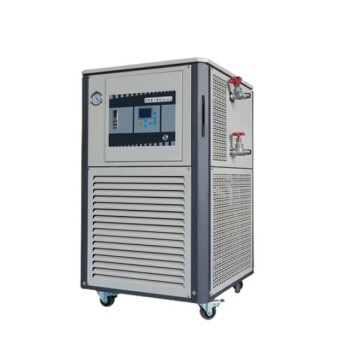
- High Temperature Constant Temperature Heating Circulator Water Bath Chiller Circulator for Reaction Bath
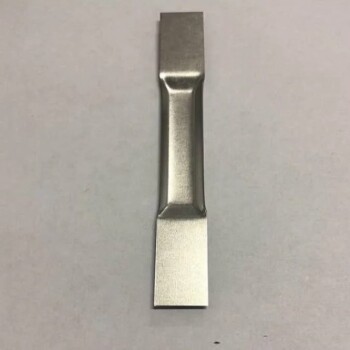
- Molybdenum Tungsten Tantalum Evaporation Boat for High Temperature Applications
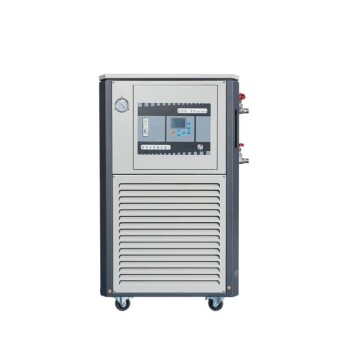
- 50L Heating Chilling Circulator Cooling Water Bath Circulator for High and Low Temperature Constant Temperature Reaction
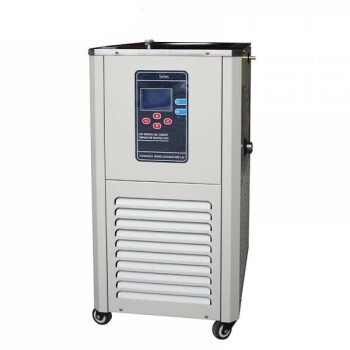
- 30L Heating Chilling Circulator Cooling Water Bath Circulator for High and Low Temperature Constant Temperature Reaction
- 20L Heating Chilling Circulator Cooling Water Bath Circulator for High and Low Temperature Constant Temperature Reaction
People Also Ask
- What is the necessity of a circulating water bath in chlorate production? Optimize Yield & Purity with Precision
- How do constant temperature circulators impact weight-loss immersion tests? Ensure Precision in Corrosion Analysis
- How does a constant temperature circulator support the leaching reaction of gold scrap? Optimize Gold Recovery Results
- Why is a constant temperature water bath used for precursor storage in CVD? Achieve Stable Nanocrystalline SiC Deposition
- Why is a high-precision constant temperature water bath necessary for anaerobic digestion? Ensure Success at 37±0.02°C