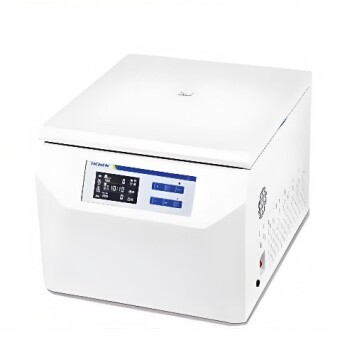
A laboratory autoclave or high-pressure reactor is essential for creating the specific thermodynamic conditions required for secondary hydrolysis. To accurately analyze carbohydrate composition, you must subject the pretreatment liquids to a constant environment of high temperature (typically 121 °C) and high pressure. This extreme environment, combined with dilute sulfuric acid, drives the chemical reaction necessary to break down complex sugars into a measurable form.
The core purpose of this equipment is to ensure the complete conversion of oligosaccharides into monosaccharides. Without this secondary hydrolysis step, analytical equipment cannot detect the full sugar content, leading to inaccurate data regarding the total sugar yield of your biomass conversion process.
The Role of Secondary Hydrolysis
Converting Oligosaccharides
Pretreatment liquids often contain a mix of free sugars and strictly bound sugar chains called oligosaccharides. Standard analytical equipment generally detects monosaccharides (single sugar units).
Bridging the Gap
The autoclave bridges this gap. It forces the hydrolysis of these oligosaccharide chains, breaking them down into their constituent monosaccharides.
The Reagent Requirement
This process relies on the presence of dilute sulfuric acid. The acid acts as a catalyst, but it requires the energy provided by the autoclave to function effectively within a reasonable timeframe.
Why Temperature and Pressure Control is Non-Negotiable
Achieving 121 °C
Standard boiling occurs at 100 °C, which is insufficient for efficient secondary hydrolysis. An autoclave uses pressure to raise the boiling point of water, allowing the liquid to reach and maintain 121 °C.
Ensuring Reaction Completeness
Consistency is key to data integrity. The constant high-pressure environment ensures that the heat is distributed evenly and the reaction proceeds to completion.
Accurate Yield Determination
If the reaction is incomplete, significant portions of the sugar will remain as oligosaccharides. These will go undetected, resulting in an underestimation of the total sugar yield.
Critical Considerations and Potential Pitfalls
The Risk of Sugar Degradation
While heat is necessary, excessive exposure can be detrimental. If the autoclave cycle is too long or the temperature exceeds 121 °C, monosaccharides can degrade into fermentation inhibitors like furfural or HMF.
Balancing Conversion vs. Loss
You must balance the need for complete hydrolysis against the risk of degradation. The goal is to maximize the recovery of monosaccharides without destroying them in the process.
Equipment Calibration
The accuracy of your analysis depends on the accuracy of your equipment. If the autoclave displays 121 °C but actually runs cooler, hydrolysis will be incomplete; if it runs hotter, degradation occurs.
Ensuring Data Integrity in Your Lab
To ensure your carbohydrate analysis provides actionable data, consider the following based on your specific objectives:
- If your primary focus is Absolute Quantification: Ensure your autoclave is strictly calibrated to 121 °C to prevent the under-reporting of yields caused by incomplete hydrolysis.
- If your primary focus is Process Optimization: Recognize that this step is distinct from the initial pretreatment; it is a standardization step required solely for the analytical detection of total sugars.
Ultimately, the autoclave transforms a complex mixture into a standardized solution, allowing you to see the true efficiency of your biomass conversion.
Summary Table:
| Feature | Requirement for Carbohydrate Analysis | Impact on Data Accuracy |
|---|---|---|
| Temperature | Constant 121 °C | Prevents incomplete hydrolysis or sugar degradation |
| Pressure | High Pressure Environment | Allows liquid to exceed standard boiling points |
| Reagent | Dilute Sulfuric Acid | Acts as the catalyst for breaking oligosaccharides |
| Reaction | Secondary Hydrolysis | Converts complex chains into detectable monosaccharides |
| Risk Factor | Over-exposure | Avoids formation of inhibitors like furfural and HMF |
Maximize Your Biomass Conversion Precision with KINTEK
Precise carbohydrate analysis begins with reliable thermodynamic control. KINTEK specializes in high-performance high-temperature high-pressure reactors and autoclaves designed to deliver the exact conditions required for secondary hydrolysis. Whether you are conducting biomass pretreatment or optimizing total sugar yields, our laboratory equipment ensures consistency and data integrity.
Our value to your laboratory includes:
- Unmatched Precision: Advanced temperature control systems to maintain a steady 121 °C.
- Versatile Solutions: A full range of reactors, muffle furnaces, and cooling solutions for comprehensive material research.
- Durability & Safety: High-pressure systems built to withstand rigorous chemical reactions and acidic environments.
Contact our laboratory experts today to find the perfect autoclave or reactor system for your specific research needs and take the guesswork out of your sugar yield analysis.
References
- Hanna Hörhammer, Renata Bura. Removal of non-structural components from poplar whole-tree chips to enhance hydrolysis and fermentation performance. DOI: 10.1186/s13068-018-1219-4
This article is also based on technical information from Kintek Solution Knowledge Base .
Related Products
- Customizable Laboratory High Temperature High Pressure Reactors for Diverse Scientific Applications
- Customizable High Pressure Reactors for Advanced Scientific and Industrial Applications
- Stainless High Pressure Autoclave Reactor Laboratory Pressure Reactor
- Mini SS High Pressure Autoclave Reactor for Laboratory Use
- High Pressure Laboratory Autoclave Reactor for Hydrothermal Synthesis
People Also Ask
- How do high-pressure and high-temperature reactors ensure the effective treatment of lignocellulosic wastewater in WAO?
- What equipment is required for high-pressure high-temperature reactions? Master Extreme Chemistry Safely
- How do you control high pressure in a reactor? A Guide to Safe & Stable Operation
- How does initial oxygen pressure affect the wet oxidation of pharmaceutical sludge? Master Your Oxidation Depth
- Why is argon better than nitrogen for inert atmosphere? Ensure Absolute Reactivity & Stability