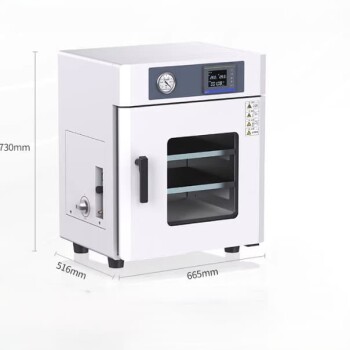
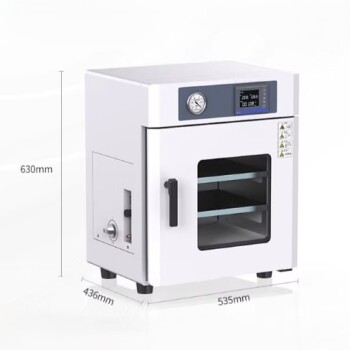
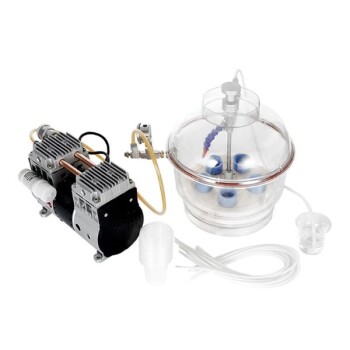
The final processing stage of Layered Double Hydroxide (LDH) powders relies on precise thermal treatment to eliminate residual solvents trapped within the material's complex structure. A laboratory drying oven, and specifically a vacuum drying oven, is required to remove these molecules from both the surface and the critical interlayer spaces without compromising the material's chemical stability.
The primary goal of this process is not merely drying, but structural preservation. Utilizing a vacuum drying oven allows for thorough solvent removal at lower temperatures, effectively preventing the thermal decomposition of interlayer anions and the irreversible collapse of the LDH’s layered structure.
Preserving Structural Integrity
The defining characteristic of high-performance LDHs is their layered structure, which houses anions and solvent molecules between metal hydroxide sheets. Preserving this architecture during drying is the central challenge.
Removing Deeply Embedded Solvents
Unlike simple powders where moisture sits only on the surface, LDHs contain interlayer solvent molecules.
To achieve a stable powder, these solvents must be driven out from the spaces between the layers. Failing to remove them can lead to unpredictable mass changes or interference in subsequent chemical applications.
Preventing Structural Collapse
The application of heat carries a significant risk: irreversible collapse.
If the temperature is too high, the layered structure can break down, destroying the material's unique properties. Controlled drying ensures the solvent is removed at a rate and temperature that maintains the framework's integrity.
Protecting Interlayer Anions
LDHs often contain specific interlayer anions that are vital to their function.
Excessive heat can cause these anions to decompose. A precise drying environment ensures these chemical components remain intact and functional in the final powder.
The Strategic Advantage of Vacuum Drying
While standard ovens provide heat, vacuum drying ovens offer a distinct advantage by manipulating pressure. This is the preferred method for high-performance LDH synthesis.
Lowering Thermal Stress
By reducing the pressure inside the chamber, a vacuum oven lowers the boiling point of residual solvents.
This allows the material to dry thoroughly at significantly lower temperatures. For heat-sensitive LDHs, this is critical for avoiding thermal degradation while ensuring complete solvent removal.
Maximizing Active Sites
High temperatures can cause surface defects or sintering that reduces surface area.
Vacuum drying at lower temperatures preserves the material's rich active sites and porous structures. This maximizes the surface area available for future reactions, which is essential if the LDH is intended for catalytic or adsorption applications.
Understanding the Trade-offs
When selecting between a standard laboratory drying oven and a vacuum drying oven, you must weigh efficiency against material sensitivity.
Standard Laboratory Ovens
Standard ovens are generally robust and effective for removing absorbed water and ethanol from robust samples.
However, they rely solely on thermal energy to evaporate solvents. To achieve complete drying, they often require higher temperatures or longer durations, which increases the risk of oxidizing the surface or decomposing sensitive interlayer components in complex materials like LDHs.
Vacuum Drying Ovens
Vacuum ovens provide a low-oxygen, low-temperature drying environment.
The primary trade-off is complexity and throughput; the process is often slower or limited by batch size compared to forced-air ovens. However, for materials prone to agglomeration or secondary oxidation, the vacuum environment is superior, preventing particles from sticking together and ensuring the powder remains loose and dispersible.
Making the Right Choice for Your Goal
The choice of drying equipment dictates the final quality and utility of your LDH powder.
- If your primary focus is basic structural characterization: A standard drying oven with precise temperature control is sufficient to remove surface moisture without needing vacuum assistance.
- If your primary focus is high-performance catalysis or adsorption: A vacuum drying oven is mandatory to preserve maximum porosity and active sites by drying at the lowest possible temperature.
By controlling the drying environment, you secure the material's architecture, ensuring reliable performance in its final application.
Summary Table:
| Feature | Standard Laboratory Oven | Vacuum Drying Oven |
|---|---|---|
| Drying Mechanism | Convection / Thermal Heat | Low Pressure + Lower Temperatures |
| LDH Structure Risk | High (Thermal Decomposition) | Low (Structural Preservation) |
| Solvent Removal | Surface & Simple Interlayer | Deeply Embedded / Low Boiling Point |
| Oxidation Risk | Potential for Surface Oxidation | Minimal (Low Oxygen Environment) |
| Best For | Basic Structural Characterization | High-Performance Catalysis & Adsorption |
Elevate Your Material Research with KINTEK
Don't compromise the structural integrity of your high-performance LDH powders. KINTEK provides advanced laboratory drying solutions, including high-precision vacuum drying ovens, muffle furnaces, and rotary systems designed for sensitive thermal processing. Whether you are scaling up synthesis or refining catalytic properties, our experts can help you select the perfect equipment to preserve your material's active sites and porosity.
Ready to optimize your drying process? Contact us today to discuss your laboratory needs!
References
- Xue Li, Zhanhu Guo. Progress of layered double hydroxide-based materials for supercapacitors. DOI: 10.1039/d2qm01346k
This article is also based on technical information from Kintek Solution Knowledge Base .
Related Products
- 56L Vertical Laboratory Vacuum Drying Oven
- 23L Laboratory Vacuum Drying Oven
- Laboratory Scientific Electric Heating Blast Drying Oven
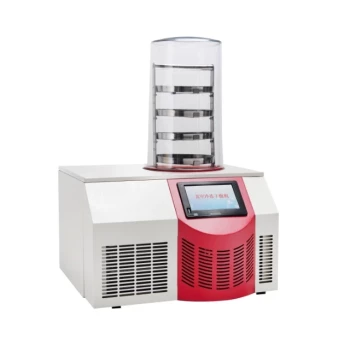
- Benchtop Laboratory Vacuum Freeze Dryer
- Dental Porcelain Zirconia Sintering Ceramic Vacuum Press Furnace
People Also Ask
- Why is a laboratory vacuum drying oven recommended for rice straw residues? Protect Your Biomass Integrity
- What role does a laboratory vacuum drying oven play in the preparation of modified multi-walled carbon nanotubes?
- What is the importance of using a laboratory vacuum drying oven? Preserving Slow-Release Microcapsule Integrity
- Why is a Laboratory Vacuum Drying Oven recommended for PBAT microspheres? Protect Sensitive Polymer Integrity
- What role does a laboratory vacuum drying oven play in processing nanoparticle powder samples? Protect Sample Integrity