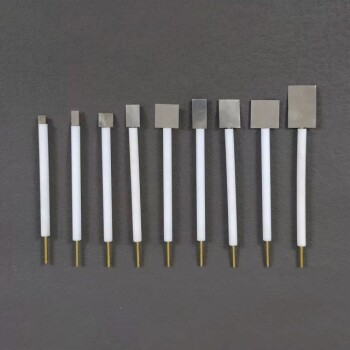
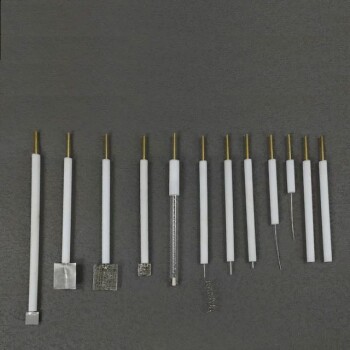
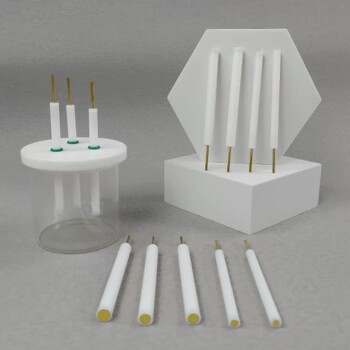
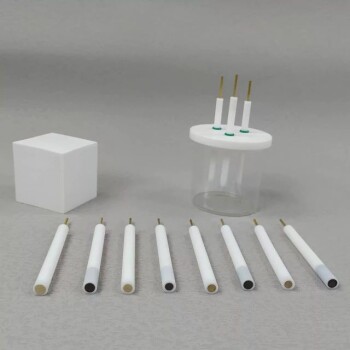
A platinum electrode acts as the chemically stable cathode required to complete the direct current (DC) electrical circuit during electrochemical anodization. Its primary function is to facilitate the reduction of hydrogen ions into hydrogen gas without corroding, ensuring the stable current density necessary for growing precise titanium dioxide nanotube arrays.
Core Takeaway While its basic function is to complete the circuit, platinum’s true value lies in its exceptional corrosion resistance and electrical conductivity. This stability guarantees the consistent current density required to grow nanotube arrays with precise geometric dimensions, which is the defining factor for high photocatalytic performance.
The Critical Role of the Cathode
Completing the Electrical Circuit
In an electrochemical anodization system, the process cannot occur without a closed loop. The platinum electrode serves as the cathode, connecting with the titanium anode through the electrolyte and a DC power supply.
Facilitating Hydrogen Reduction
As the titanium anode oxidizes to form nanotubes, a complementary reaction must occur at the cathode. The platinum electrode facilitates the reduction of hydrogen ions, effectively generating hydrogen gas to balance the electrochemical reaction.
Why Platinum is Specifically Required
Superior Chemical Stability
The anodization environment is chemically aggressive. Platinum is chosen because of its high corrosion resistance, meaning it does not degrade or react unfavorably with the electrolyte during the process.
Ensuring Stable Current Density
Because platinum does not corrode, it maintains excellent electrical conductivity throughout the entire anodization period. This allows for a stable current density, which is the most critical variable in controlling the growth of the membrane.
Impact on Photocatalytic Performance
Regulating Geometric Dimensions
The quality of the final product depends on the stability of the electrical input. By ensuring a steady current, the platinum cathode allows for the growth of nanotubes with regular geometric dimensions, specifically controlling tube length and diameter.
Enhancing Photocatalytic Activity
The physical structure of the membrane dictates its performance. The precise nanotube arrays enabled by the platinum cathode directly result in enhanced photocatalytic activity, making the membrane more effective for its intended application.
Understanding the Trade-offs
The Cost of Precision
While the primary reference highlights the necessity of platinum for stability, it is important to recognize that platinum is a precious metal. The choice to use platinum prioritizes process reliability and product quality over raw material costs.
Sensitivity to Current Fluctuations
The reliance on platinum underscores the process's sensitivity to current density. Any instability in the cathode material—such as corrosion or variable conductivity—would lead to irregular nanotube growth, compromising the structural integrity and efficiency of the final membrane.
Making the Right Choice for Your Goal
To ensure the production of high-quality self-supporting photocatalytic membranes, consider the following regarding your equipment setup:
- If your primary focus is Geometric Precision: Utilize platinum to maintain the constant current density required for uniform nanotube length and diameter.
- If your primary focus is Process Stability: Rely on platinum’s corrosion resistance to prevent electrolyte contamination and ensure consistent long-term operation.
The use of a platinum cathode is not merely a structural choice, but a fundamental requirement for achieving the stable electrochemical environment needed for high-performance photocatalytic applications.
Summary Table:
| Feature | Role of Platinum Cathode | Impact on Final Membrane |
|---|---|---|
| Chemical Stability | High corrosion resistance in aggressive electrolytes | Prevents contamination and ensures process purity |
| Conductivity | Maintains stable current density throughout process | Guarantees uniform nanotube length and diameter |
| Electrochemical Role | Facilitates efficient hydrogen ion reduction | Balances the reaction for continuous nanotube formation |
| Performance Link | Provides a reliable electrical environment | Results in enhanced photocatalytic activity and efficiency |
Elevate Your Electrochemical Research with KINTEK
Precision in photocatalytic membrane production starts with high-quality components. KINTEK specializes in providing premium electrolytic cells and electrodes, including high-purity platinum electrodes designed to withstand aggressive anodization environments.
Whether you are growing titanium dioxide nanotube arrays or conducting advanced battery research, our comprehensive range of laboratory equipment—from high-temperature furnaces to precision hydraulic presses—is engineered to meet the rigorous demands of your lab.
Ready to achieve superior geometric precision and process stability?
Contact our specialists today to find the perfect electrode solutions for your application.
References
- Kipchumba Nelson, Zeinab A. Suliman. Recent Trends in the Application of Photocatalytic Membranes in Removal of Emerging Organic Contaminants in Wastewater. DOI: 10.3390/pr13010163
This article is also based on technical information from Kintek Solution Knowledge Base .
Related Products
- Platinum Sheet Electrode for Laboratory and Industrial Applications
- Rotating Platinum Disk Electrode for Electrochemical Applications
- Platinum Sheet Electrode for Battery Lab Applications
- Platinum Auxiliary Electrode for Laboratory Use
- RRDE rotating disk (ring disk) electrode / compatible with PINE, Japanese ALS, Swiss Metrohm glassy carbon platinum
People Also Ask
- What is a common use for a platinum sheet electrode? As a Reliable Counter Electrode in Electrochemical Cells
- What is the most critical guideline for immersing a platinum sheet electrode in an electrolyte? Ensure Accurate Electrochemical Measurements
- What is the purity of the platinum sheet in a platinum sheet electrode? The Key to Reliable Electrochemical Data
- What is the expected lifespan of a platinum sheet electrode? Maximize Your Electrode's Service Life
- What are the available specifications for platinum sheet electrodes? Find the Perfect Fit for Your Electrochemical Needs