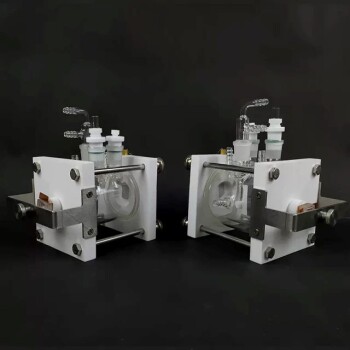
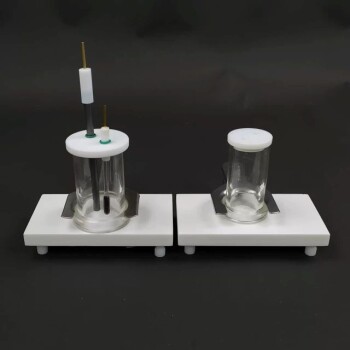
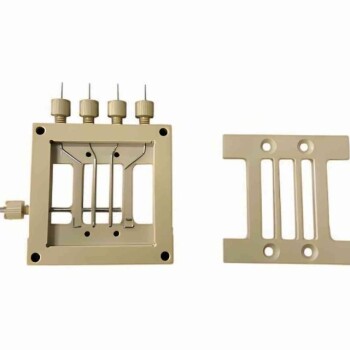
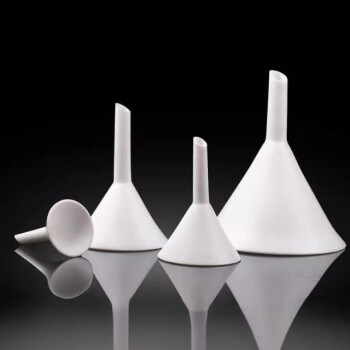
A Polytetrafluoroethylene (PTFE) test cell is necessary for corrosion testing in simulated body fluids primarily because of its exceptional chemical inertness and electrical insulation properties. This material ensures that the aggressive electrolytes used to mimic the human body—such as sodium chloride solutions containing hydrogen peroxide—do not degrade the test cell or distort the data through stray electrical currents.
The Core Value of PTFE The necessity of PTFE lies in its ability to eliminate experimental variables. By acting as a chemically neutral and electrically insulating barrier, it ensures that measured corrosion rates reflect only the material interaction, not external contamination or stray currents.
The Critical Role of Chemical Inertness
Resisting Aggressive Oxidizers
Simulated body fluids are designed to replicate harsh biological environments. These electrolytes often utilize strong oxidizing media, such as sodium chloride (NaCl) solutions mixed with hydrogen peroxide.
PTFE possesses excellent chemical inertness that resists erosion from these powerful solutions. Unlike other materials that might degrade or leach into the solution, PTFE remains stable throughout the testing cycle.
Preventing Solution Contamination
The accuracy of a corrosion test depends on the purity of the electrolyte. If the test cell container dissolves or reacts with the fluid, it introduces foreign ions that alter the corrosion rate.
PTFE prevents the container substrate from interfering with the experimental results. This ensures that the chemical reactions observed are strictly confined to the target thin film or biomaterial being tested.
The Molecular "Shield"
The superior stability of PTFE stems from its molecular structure. Fluorine atoms are arranged in a helical conformation that wraps tightly around the carbon chain skeleton.
This forms a completely "fluorinated" protective layer. Furthermore, the extremely high energy of the carbon-fluorine (C-F) bond creates a level of stability that shields the material from chemical attack.
Ensuring Electrical Accuracy
Defining the Working Area
To calculate corrosion rates accurately, you must know the exact surface area of the material being tested. Any deviation in this calculation leads to incorrect polarization curve measurements.
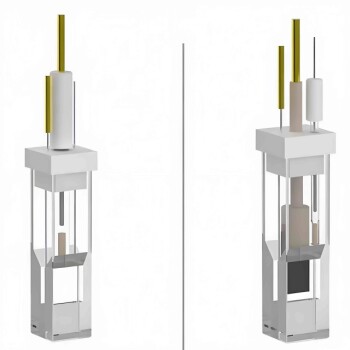
PTFE cells are designed to accurately define the test working area (commonly 1 cm²). By masking the rest of the sample, the cell ensures that current density calculations are precise.
Eliminating Current Interference
In electrochemical testing, current must only flow between the specific electrodes involved in the experiment. Conductive or semi-conductive containers can create "stray" current paths.
PTFE is an excellent electrical insulator. It eliminates current interference from non-test regions, ensuring that the recorded electrical signals correspond solely to the corrosion process occurring on the sample surface.
Common Pitfalls with Alternative Materials
The Vulnerability of Glass
While glass is common in general chemistry, it reacts rapidly with specific corrosive agents often used in materials testing, such as Hydrofluoric Acid (HF).
HF attacks the silicates in glass, compromising the vessel. PTFE does not react with HF, making it an essential consumable for tests involving such aggressive media.
Contamination from Metal Vessels
Using metal containers for corrosion testing introduces a high risk of substrate dissolution. This releases metal ions into the test solution, contaminating the environment.
This contamination is particularly problematic in studies involving simulated natural environments or specific mixtures like HIx solutions. PTFE-lined vessels are required to maintain the purity of the testing environment and collect accurate data.
Making the Right Choice for Your Goal
When designing your experimental setup for biomaterial or corrosion testing, select your equipment based on your specific data requirements:
- If your primary focus is Polarization Accuracy: Use PTFE to strictly define your working area (e.g., 1 cm²) and eliminate stray currents that skew corrosion rate calculations.
- If your primary focus is Chemical Purity: Rely on PTFE to prevent the leaching of container materials into your simulated body fluids, particularly when using strong oxidizers like hydrogen peroxide.
Ultimately, PTFE is not just a container; it is a control mechanism that guarantees the fidelity of your electrochemical data.
Summary Table:
| Feature | Benefit in Corrosion Testing | Impact on Data Accuracy |
|---|---|---|
| Chemical Inertness | Resists aggressive oxidizers (NaCl, H2O2) | Prevents electrolyte contamination and leaching |
| Electrical Insulation | Eliminates stray current paths | Ensures measured signals reflect only sample corrosion |
| Defined Working Area | Masks sample to exactly 1 cm² (typical) | Enables precise calculation of current density |
| HF Resistance | Stable in Hydrofluoric Acid environments | Outperforms glass vessels in aggressive media |
| Molecular Stability | C-F bonds create a protective shield | Guaranteed long-term stability during test cycles |
Elevate Your Electrochemical Precision with KINTEK
Don't let equipment variables compromise your research. KINTEK specializes in high-performance laboratory solutions, providing the precision-engineered PTFE test cells, electrolytic cells, and electrodes necessary for accurate corrosion analysis.
Whether you are developing biomaterials or testing thin films, our comprehensive portfolio—from high-temperature furnaces and hydraulic presses to specialized battery research tools—is designed to meet the rigorous demands of modern material science.
Ready to ensure the fidelity of your data? Contact our technical experts today to find the perfect equipment and consumables for your laboratory.
References
- Iulian Pană, M. Braic. In Vitro Corrosion of Titanium Nitride and Oxynitride-Based Biocompatible Coatings Deposited on Stainless Steel. DOI: 10.3390/coatings10080710
This article is also based on technical information from Kintek Solution Knowledge Base .
Related Products
- PTFE Electrolytic Cell Electrochemical Cell Corrosion-Resistant Sealed and Non-Sealed
- Thin-Layer Spectral Electrolysis Electrochemical Cell
- Flat Corrosion Electrolytic Electrochemical Cell
- Custom PTFE Teflon Parts Manufacturer for PTFE Measuring Cylinder 10/50/100ml
- Custom PTFE Teflon Parts Manufacturer for Centrifuge Tube Racks
People Also Ask
- What is the necessity of selecting a PTFE electrolytic cell? Ensure Precise Graphene Corrosion Testing Accuracy
- What is the proper method for cleaning the surface of an all-PTFE electrolytic cell? Ensure Accurate Results with a Pristine Surface
- How should an all-PTFE electrolytic cell be stored after use? Expert Maintenance Tips for Long-Lasting Performance
- What is the proper cleaning method for an all-PTFE electrolytic cell? Essential Tips for Surface Integrity
- What are the standard opening specifications for all-PTFE electrolytic cells? A Guide to Sealed vs. Non-Sealed Ports