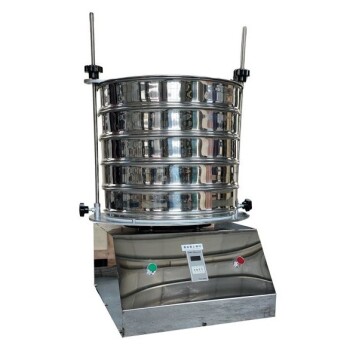
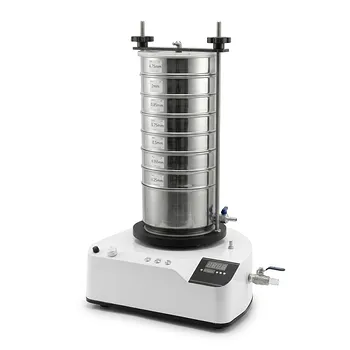
Precision sieving to a 2mm uniform size is the critical precursor to high-quality activated carbon production from peanut shells. By standardizing the particle dimensions, manufacturers ensure that chemical activators penetrate the material at a consistent rate, leading to a homogenous final product. This precision eliminates the quality fluctuations inherent in raw biomass processing.
Core Takeaway: A precision sieving machine is used to control the material's specific surface area and geometric dimensions, which dictates the kinetics of chemical activation and thermal conduction. Without this uniformity, the resulting activated carbon would suffer from inconsistent pore structures and unreliable adsorption performance.
The Role of Uniformity in Chemical Activation
Ensuring Consistent Activator Penetration
In activated carbon production, chemical activators like zinc chloride must saturate the raw material to create the desired porosity. A uniform 2mm particle size ensures that the penetration depth is identical across the entire batch, allowing the activator to reach the core of every particle simultaneously.
Preventing Reaction Disparities
When particle sizes vary, the chemical reaction becomes unpredictable. Smaller particles may become over-activated, leading to material loss, while larger particles remain under-activated, resulting in poor adsorption capacity in the final product.
Stabilizing Quality Output
Precision sieving acts as a quality control gate that ensures quality stability. By removing outliers, the manufacturer guarantees that the final activated carbon meets specific technical benchmarks for surface area and pore volume.
Thermal Dynamics and Carbonization Efficiency
Optimizing Heat Conduction
During pyrolysis or carbonization in a tube furnace, heat must be conducted evenly through the biomass. Uniform particles prevent internal diffusion resistance, a common issue where the center of oversized particles fails to reach the required temperature, leaving uncarbonized material.
Maintaining Stable Pore Structure
Inconsistent particle sizes lead to uneven heating, which can cause the pore structure to collapse in some areas while remaining undeveloped in others. A 2mm uniform size allows for a predictable thermal gradient, ensuring a stable and reliable pore architecture.
Improving Material Flow
Beyond chemical and thermal benefits, uniform particles improve the filling and self-locking effects within processing equipment. This is particularly important if the material is further processed into pellets, as it ensures a high physical density and a better pellet formation rate.
Understanding the Trade-offs
The Cost of Precision
Implementing high-precision sieving increases initial capital expenditure and requires regular mesh maintenance. However, the cost of not sieving is often higher, manifesting as wasted raw materials and lower-grade final products that command lower market prices.
Risk of "Hot Spots"
Bypassing the sieving process can lead to the formation of hard aggregates or "hot spots" in the kiln. Much like calcareous particles in sintering, oversized peanut shell fragments can cause local imbalances that decrease the overall synthesis efficiency of the carbonization process.
Optimizing Your Sieving Process
To achieve the best results in activated carbon production, your approach to sieving should align with your specific production or research targets.
- If your primary focus is Maximum Adsorption Performance: Prioritize the removal of all particles above the 2mm threshold to eliminate internal diffusion resistance and ensure 100% activator penetration.
- If your primary focus is High Production Yield: Use precision sieving to minimize the "fines" (extremely small particles) that are often consumed or destroyed during the aggressive chemical activation phase.
- If your primary focus is Research Reproducibility: Utilize laboratory-grade standard test sieves to narrow the distribution range even further, ensuring that your yield data is not skewed by size variations.
Precise control over particle size is the foundational step that transforms raw agricultural waste into a high-performance technical material.
Summary Table:
| Key Factor | Role in Production | Impact on Final Product |
|---|---|---|
| Uniformity (2mm) | Standardizes penetration depth of activators | Homogenous pore structure & high adsorption |
| Thermal Dynamics | Ensures even heat conduction in tube furnaces | Prevents uncarbonized cores and pore collapse |
| Chemical Kinetics | Prevents over/under-activation of particles | Quality stability and reduced material waste |
| Material Flow | Optimizes filling and pellet formation | Higher physical density and structural integrity |
Elevate Your Material Synthesis with KINTEK Precision
Achieving the perfect 2mm particle size is just the first step in high-performance activated carbon production. KINTEK specializes in the advanced laboratory equipment you need to transform raw biomass into technical-grade materials.
Our comprehensive range includes:
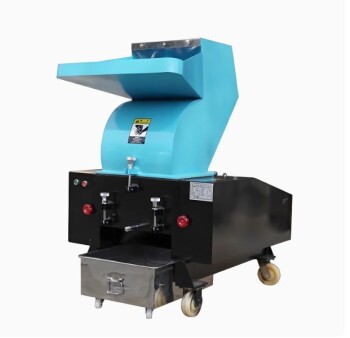
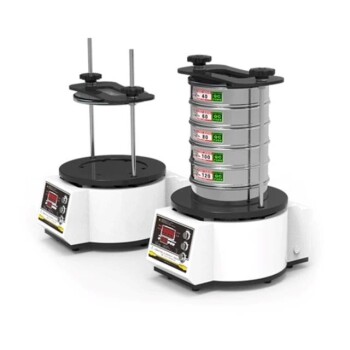
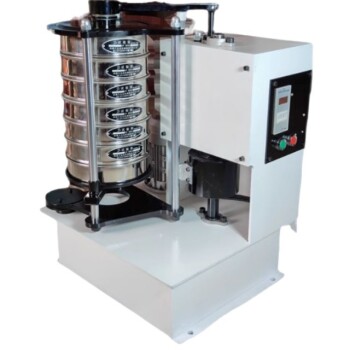
- Precision Sieving & Milling: Ensure perfect particle distribution with our industrial-grade sieving equipment and crushing systems.
- Thermal Processing: Optimize carbonization with our high-temperature tube, vacuum, and atmosphere furnaces.
- Quality Control: Utilize our hydraulic presses for pelletizing and laboratory-grade consumables for rigorous testing.
Whether you are a researcher focused on reproducibility or a manufacturer aiming for maximum yield and adsorption performance, KINTEK provides the reliability and technical support you need.
Ready to optimize your process? Contact our experts today to find the ideal equipment solution for your laboratory.
References
- Ashleigh J. Fletcher, Oluwagbemi Aladeokin. Production of High Surface Area Activated Carbon from Peanut Shell by Chemical Activation with Zinc Chloride: Optimisation and Characterization. DOI: 10.1007/s12155-023-10683-7
This article is also based on technical information from Kintek Solution Knowledge Base .
Related Products
- Laboratory Test Sieves and Vibratory Sieve Shaker Machine
- Laboratory Test Sieves and Sieving Machines
- Laboratory Vibratory Sieve Shaker Machine for Dry and Wet Three-Dimensional Sieving
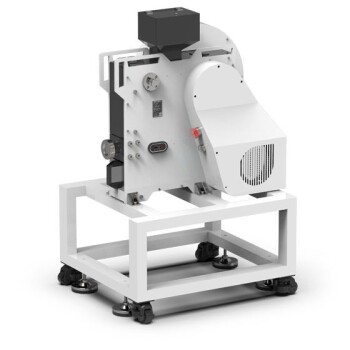
- Three-dimensional electromagnetic sieving instrument
- Precision Wire Saw Laboratory Cutting Machine with 800mm x 800mm Workbench for Diamond Single Wire Circular Small Cutting
People Also Ask
- How does a laboratory vibratory sieve shaker facilitate the microstructural study of gas-atomized alloy powders?
- What role does a laboratory vibrating sieve shaker play in the LiFePO4 powder processing workflow? Ensure Batch Quality
- What is the use of vibratory sieve shaker? Achieve Precise Particle Size Analysis for Your Lab
- How is a vibratory sieve shaker used in the particle size analysis of mechanically alloyed powders? Expert Guide
- Why use a vibratory sieve shaker for PET powder? Achieve Precise Particle Size Control for Chemical Research