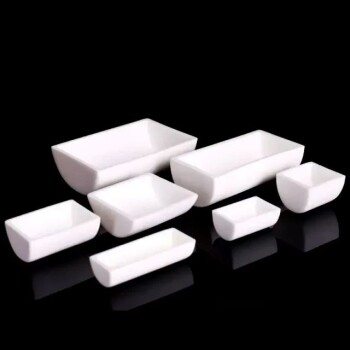
The choice of a quartz boat is fundamental to ensuring catalyst performance. Quartz is selected primarily because it combines extreme high-temperature resistance with exceptional chemical inertness. This prevents the introduction of metal impurities that would otherwise contaminate the nitrogen-doped carbon catalyst's sensitive active sites during the high-temperature pyrolysis process.
A quartz boat serves as a high-purity, inert vessel capable of withstanding temperatures exceeding 1000°C. Its primary role is to ensure the final catalyst remains free from unwanted metal ions, preserving the integrity of specific active sites like pyridinic nitrogen and ensuring the accuracy of experimental data.
Protecting the Purity of Active Sites
Prevention of Metal Contamination
The most critical advantage of a quartz boat is its chemical purity. During high-temperature synthesis, metallic vessels (like stainless steel) could leach ions into the carbon matrix, which would act as unintended co-catalysts and mask the true performance of the nitrogen-doped material.
Preservation of Pyridinic Nitrogen
The accuracy of a nitrogen-doped catalyst depends on the specific arrangement of atoms, such as pyridinic or pyrrolic nitrogen. Because quartz does not react with carbon precursors or nitrogen dopants, it ensures that the resulting active sites are a direct product of the chosen precursors rather than chemical interference from the vessel.
Chemical Inertness in Reducing Atmospheres
Synthesis often involves high-temperature reduction or the release of volatile gases. Quartz remains chemically inactive even in these aggressive environments, ensuring that the reaction vessel does not participate in the synthesis or degrade during the process.
Thermal Integrity and Heat Distribution
Resistance to Extreme Temperatures
Nitrogen-doped carbon catalysts are typically synthesized via pyrolysis at temperatures ranging from 600°C to well over 1000°C. Quartz boats maintain their structural integrity at these extremes without melting, deforming, or sagging.
Superior Thermal Shock Resistance
Quartz has an extremely low coefficient of thermal expansion. This allows the boat to withstand rapid temperature changes within a tube furnace—such as quick heating cycles or cooling—without cracking or shattering.
Uniform Heating and Gas Dynamics
The flat geometric design of a quartz boat allows for the uniform spreading of precursor powders. This thin-layer distribution ensures even heat conduction and facilitates the timely escape of volatile gases, leading to a more homogenous catalyst structure.
Understanding the Trade-offs
Fragility and Handling Requirements
While quartz is thermally robust, it is mechanically brittle. It is susceptible to breakage from physical impact or improper handling during insertion into and removal from furnace tubes.
Sensitivity to Chemical Etching
Quartz is highly sensitive to certain chemicals, particularly hydrofluoric acid (HF) and strong alkalis at high temperatures. If the catalyst precursors contain high concentrations of these substances, the quartz may begin to etch or pit, potentially compromising the vessel.
Devitrification Risks
Repeated use at temperatures near 1200°C can lead to devitrification, where the quartz transitions from a glassy state to a crystalline state. This process makes the boat more opaque and significantly more prone to cracking during subsequent heating cycles.
How to Apply This to Your Project
Guidelines for Reaction Vessel Selection
- If your primary focus is high-purity electrocatalysis: Use a high-purity quartz boat to ensure that no trace metal ions interfere with the characterization of nitrogen-doped active sites.
- If your primary focus is high-throughput production: Ensure the precursor layer is spread thinly across the flat surface of the quartz boat to maximize gas exchange and thermal uniformity.
- If your primary focus is longevity and cost-efficiency: Clean the quartz boat thoroughly after each run to prevent the buildup of residues that can accelerate devitrification at high temperatures.
By utilizing a quartz boat, you eliminate the variable of vessel-induced contamination, allowing for the precise and reproducible synthesis of advanced carbon materials.
Summary Table:
| Feature | Advantage for Catalyst Synthesis | Key Consideration |
|---|---|---|
| Chemical Purity | Prevents metal contamination; protects active sites (pyridinic N). | Sensitive to HF and strong alkalis. |
| Thermal Resistance | Sustains structural integrity at temperatures >1000°C. | Risk of devitrification above 1200°C. |
| Thermal Shock | Resists cracking during rapid heating/cooling cycles. | Mechanically brittle; handle with care. |
| Inertness | Does not react with carbon precursors or nitrogen dopants. | Must be cleaned to prevent residue buildup. |
| Geometry | Flat surface ensures uniform heating and gas exchange. | Requires thin-layer powder distribution. |
Elevate Your Material Synthesis with KINTEK Precision
Ensure the integrity of your research with high-purity laboratory solutions. At KINTEK, we specialize in the essential tools for advanced catalyst development, from high-performance tube and vacuum furnaces to premium quartz boats, ceramics, and crucibles.
Whether you are synthesizing nitrogen-doped carbon or exploring complex battery chemistries, our comprehensive range of laboratory equipment—including high-pressure reactors, hydraulic presses, and cooling solutions—is designed to deliver reproducible results without contamination.
Ready to optimize your synthesis process? Contact our experts today to find the perfect high-temperature consumables and equipment tailored to your lab's specific needs.
References
- Fangjie Lu, Bin Dai. Deactivation and Regeneration of Nitrogen Doped Carbon Catalyst for Acetylene Hydrochlorination. DOI: 10.3390/molecules28030956
This article is also based on technical information from Kintek Solution Knowledge Base .
Related Products
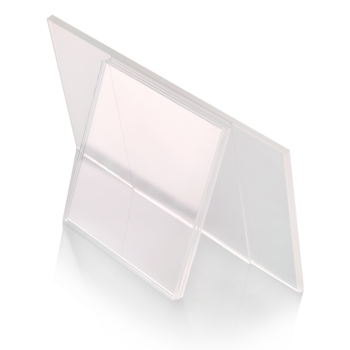
- Optical Window Glass Substrate Wafer Quartz Plate JGS1 JGS2 JGS3
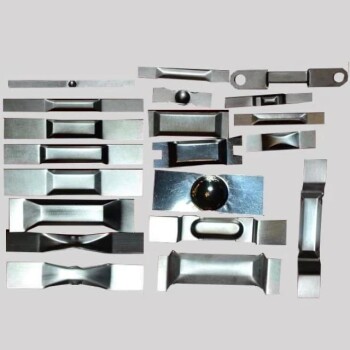
- Molybdenum Tungsten Tantalum Special Shape Evaporation Boat
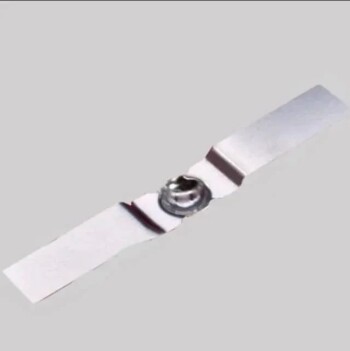
- Hemispherical Bottom Tungsten Molybdenum Evaporation Boat
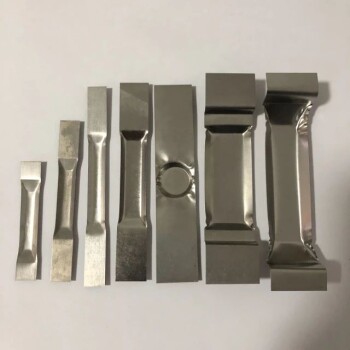
- Tungsten Evaporation Boat for Thin Film Deposition
- Aluminized Ceramic Evaporation Boat for Thin Film Deposition
People Also Ask
- What is optical quartz? The Ultimate Material for UV and High-Temp Optics
- Can quartz glass be heated? Mastering High-Temperature Applications with Quartz
- What is the temperature range of quartz glass? Master Its Thermal Limits for Demanding Applications
- What is the working temperature of quartz glass? Master Its High-Temp Limits & Applications
- What temperature does quartz glass melt at? Understanding Its Softening Point and Practical Limits