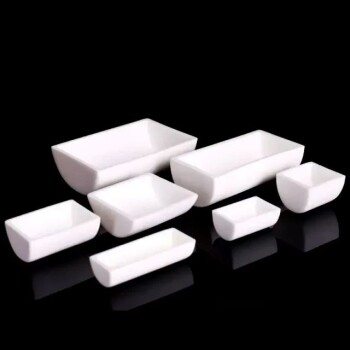
Quartz boats are the preferred sample containers for CCVD because they provide an exceptionally stable, non-reactive environment that maintains the integrity of catalysts and precursors at high temperatures. During the production of carbon fibers, these containers ensure that no external metallic impurities are introduced, allowing the synthesis process to yield high-purity carbon structures without interference from the vessel itself.
The use of quartz boats in CCVD is driven by the material's dual ability to withstand extreme thermal stress while remaining chemically inert, ensuring that the resulting carbon fibers are defined solely by the intended reactants and catalysts.
Maintaining Chemical Integrity Under Thermal Stress
Exceptional High-Temperature Resistance
The CCVD process for carbon fibers typically operates between 550°C and 900°C. High-purity quartz maintains its structural integrity at these temperatures, ensuring the boat does not warp, melt, or degrade during the critical carbon deposition phase.
Superior Resistance to Thermal Shock
Carbon fiber synthesis often involves rapid heating and cooling cycles to control growth and harvest products. Quartz boats possess a low coefficient of thermal expansion, which allows them to survive severe thermal shocks that would cause other materials to crack or shatter.
Prevention of Elemental Cross-Contamination
At high temperatures, many materials leach metallic ions into the sample. Quartz is used because its high-purity composition prevents the introduction of external metallic impurities, which is vital for maintaining the electrochemical purity of carbon products and the accuracy of subsequent characterizations like XRD or Raman spectroscopy.
Ensuring Reaction Precision and Consistency
Chemical Inertness Toward Catalysts
Nickel-based catalysts are highly sensitive to their environment during high-temperature reduction. Quartz does not react with nickel catalysts or carbon precursors, ensuring that the catalytic sites remain active and uncontaminated throughout the growth process.
Resistance to Corrosive Activators
In advanced preparations involving alkaline activators like potassium hydroxide (KOH), quartz provides a robust defense. It resists erosion from these strong chemicals even at temperatures reaching 800°C, protecting the sample from container-derived byproducts.
Surface Geometry and Heat Distribution
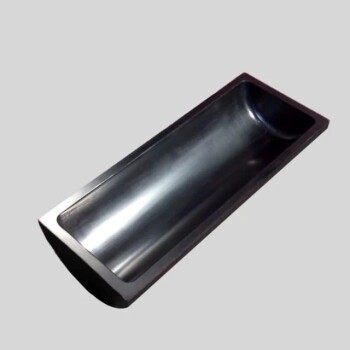
The typically flat, open structure of a quartz boat allows for the uniform spreading of precursors. This design facilitates even heat conduction across the sample and ensures that volatile gases generated during the reaction are removed efficiently, leading to a more uniform fiber structure.
Understanding the Trade-offs and Limitations
Vulnerability to Specific Chemical Etchants
While quartz is highly resistant to most acids and bases, it is extremely vulnerable to hydrofluoric acid (HF) and strong phosphoric acid at high temperatures. If your process involves these specific reagents, quartz will degrade rapidly and contaminate the sample.
Mechanical Fragility
Despite its thermal robustness, quartz is physically brittle. It requires careful handling to avoid chipping or breaking, and unlike metallic containers, it cannot withstand significant mechanical impact or pressure during the loading and unloading stages.
Temperature Ceilings for Long-Term Use
While quartz performs well up to 1000°C, prolonged exposure to temperatures near its softening point can lead to devitrification. Over time, this causes the quartz to become opaque and brittle, eventually requiring the replacement of the boat to ensure experimental consistency.
Making the Right Choice for Your Goal
How to Apply This to Your Project
Choosing the right container is essential for the repeatability of your carbon fiber synthesis. Consider these factors when selecting your quartz labware:
- If your primary focus is Maximum Purity: Prioritize high-purity synthetic quartz boats to eliminate trace metal migration that could poison your nickel-based catalysts.
- If your primary focus is Process Uniformity: Opt for a boat with a wide, flat base to ensure your precursor powder is spread thinly, allowing for consistent gas-solid interaction and heat transfer.
- If your primary focus is Quantitative Analysis: Use a quartz boat with a stable mass distribution to ensure that mass-loss measurements during pyrolysis are not skewed by the container's weight changes.
By leveraging the thermal and chemical stability of quartz, you ensure that the quality of your carbon fibers is a result of your process design rather than accidental contamination.
Summary Table:
| Key Feature | Benefit in CCVD Process | Impact on Carbon Fibers |
|---|---|---|
| High-Temp Stability | Withstands 550°C - 900°C without warping | Ensures structural consistency |
| Thermal Shock Resistance | Survives rapid heating/cooling cycles | Prevents container failure/cracking |
| Chemical Inertness | No reaction with Ni-catalysts or precursors | Maintains high electrochemical purity |
| Purity Composition | Prevents metallic ion leaching | Guarantees accurate XRD/Raman results |
| Surface Geometry | Flat, open structure for uniform spreading | Facilitates even heat & gas distribution |
Elevate Your Carbon Research with KINTEK Precision
Achieving consistent, high-purity carbon fiber synthesis requires more than just the right chemistry—it requires reliable thermal environments. KINTEK specializes in high-performance laboratory equipment, providing everything from high-purity quartz boats and ceramic crucibles to advanced CVD, PECVD, and tube furnaces tailored for carbon research.
Whether you are scaling production or conducting precise analytical characterization, our comprehensive portfolio—including vacuum furnaces, hydraulic pellet presses, and high-temperature reactors—ensures your materials meet the highest standards of integrity.
Ready to optimize your CCVD process? Contact KINTEK today to discover how our specialized equipment and consumables can enhance your lab's efficiency and results!
References
- Karolina Ptaszyńska, Mieczysław Kozłowski. SO3H-functionalized carbon fibers for the catalytic transformation of glycerol to glycerol tert-butyl ethers. DOI: 10.1038/s41598-023-27432-7
This article is also based on technical information from Kintek Solution Knowledge Base .
Related Products
- Optical Window Glass Substrate Wafer Quartz Plate JGS1 JGS2 JGS3
- Molybdenum Tungsten Tantalum Special Shape Evaporation Boat
- Hemispherical Bottom Tungsten Molybdenum Evaporation Boat
- Tungsten Evaporation Boat for Thin Film Deposition
- Aluminized Ceramic Evaporation Boat for Thin Film Deposition
People Also Ask
- What is optical quartz? The Ultimate Material for UV and High-Temp Optics
- Can quartz glass be heated? Mastering High-Temperature Applications with Quartz
- What is the temperature range of quartz glass? Master Its Thermal Limits for Demanding Applications
- What is the working temperature of quartz glass? Master Its High-Temp Limits & Applications
- What temperature does quartz glass melt at? Understanding Its Softening Point and Practical Limits