A stainless steel Teflon-lined high-pressure reactor is strictly required to create a sealed, high-temperature environment that maintains water in a liquid state well beyond its normal boiling point. This unique physical environment forces excited water molecules between the layers of hexagonal Boron Nitride (h-BN), effectively loosening the material's structure to facilitate further processing.
Core Takeaway Standard open vessels allow water to boil off, limiting reaction potential; a high-pressure reactor traps the steam to create a subcritical aqueous environment. This mechanism expands the interlayer spacing of Boron Nitride and weakens van der Waals forces, serving as a critical pre-treatment to maximize the efficiency of subsequent ultrasonic exfoliation.
The Physics of the Reaction Environment
The Necessity of a Sealed System
To alter the structure of Boron Nitride, the treatment requires temperatures often reaching 200°C. In an open container, water would vaporize at 100°C, halting the liquid-phase reaction necessary for this process.
Achieving Subcritical Conditions
The stainless steel outer shell provides the structural integrity to withstand significant internal pressure. By sealing the reactor, the system generates saturated steam pressure, which prevents the liquid water from vaporizing.
The Role of the Teflon Liner
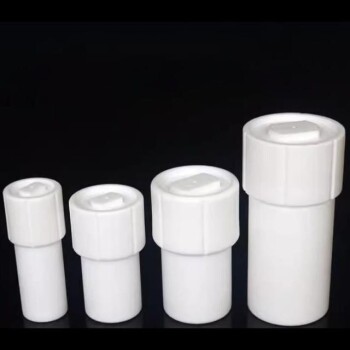
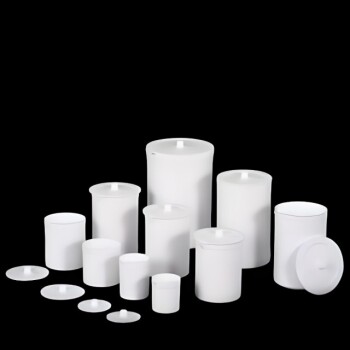
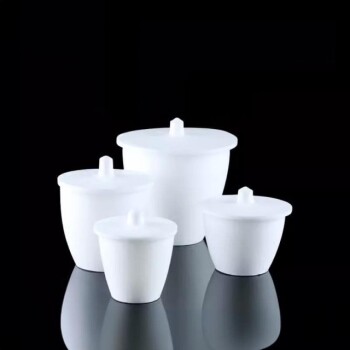
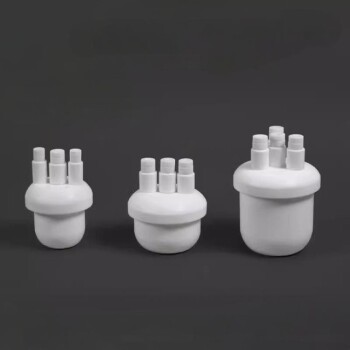
The Teflon (PTFE) liner serves two critical functions: it provides a chemically inert surface that prevents contamination from the steel, and it withstands the thermal stress of the reaction up to its material limits.
Impact on Boron Nitride Structure
Excitation of Water Molecules
Under these high-pressure, high-temperature conditions, water molecules gain substantial kinetic energy. This "excited" state allows water to penetrate the material more aggressively than it could at standard ambient conditions.
Expanding Interlayer Spacing
Hexagonal Boron Nitride (h-BN) is composed of layers stacked tightly together. The excited water molecules effectively insert themselves into the h-BN structure, physically expanding the spacing between these layers.
Weakening van der Waals Forces
The primary force holding h-BN layers together is the van der Waals force. As the interlayer spacing expands due to water penetration, these forces are significantly weakened, transforming the material from a rigid, tightly stacked structure into a "loose" state.
Why This Pre-Treatment Matters
Enabling Ultrasonic Exfoliation
The hydrothermal treatment is rarely the final step; it is usually a precursor to exfoliation. Because the layers are already loosened, subsequent ultrasonic exfoliation becomes much more efficient.
Increasing Yield
Without this high-pressure pre-treatment, exfoliation is energy-intensive and often yields thicker flakes. The reactor treatment ensures a higher yield of thinner, higher-quality Boron Nitride nanosheets.
Understanding the Trade-offs
Temperature Limitations
While effective, the Teflon liner imposes a hard temperature ceiling. Generally, these reactors should not exceed 200°C to 230°C for extended periods, as the liner may deform or degrade, potentially compromising the seal.
Safety Implications
Operating a sealed vessel under heat generates immense pressure. If the reactor is overfilled (leaving insufficient headspace for expansion) or overheated, there is a risk of rupture. Rigorous adherence to fill-ratio guidelines is mandatory.
Making the Right Choice for Your Goal
To determine if this equipment matches your specific processing needs, consider your desired output:
- If your primary focus is high-yield exfoliation: This reactor is essential to "pre-loosen" the h-BN structure, significantly reducing the energy required for later ultrasonic processing.
- If your primary focus is surface chemical modification: The subcritical water environment provides the necessary kinetic energy to promote hydrolysis or functionalization that would not occur in open-air boiling.
By controlling the pressure and temperature within this specialized vessel, you convert a passive solvent into a powerful tool for structural modification.
Summary Table:
| Feature | Function in BN Treatment | Benefit for Material Science |
|---|---|---|
| Stainless Steel Shell | Withstands internal saturated steam pressure | Allows water to reach 200°C+ without vaporizing |
| Teflon (PTFE) Liner | Provides chemical inertness and corrosion resistance | Prevents metal contamination and ensures sample purity |
| Sealed Environment | Creates subcritical aqueous conditions | Forces water molecules into h-BN interlayer spaces |
| Structural Impact | Weakens van der Waals forces between layers | Loosens material for easier ultrasonic exfoliation |
| Process Efficiency | Pre-treatment for nanosheet production | Increases yield of thinner, high-quality flakes |
Elevate Your Material Research with KINTEK
Ready to achieve superior exfoliation and high-yield results? KINTEK specializes in precision-engineered high-temperature high-pressure reactors and autoclaves designed to meet the rigorous demands of hydrothermal synthesis.
Our extensive laboratory portfolio includes:
- Specialized Reactors: Teflon-lined, vacuum, and high-pressure systems for precise material modification.
- Processing Systems: Advanced crushing, milling, and hydraulic presses for material preparation.
- Thermal Solutions: Comprehensive high-temperature furnaces and cooling solutions like ULT freezers and freeze dryers.
- Premium Consumables: High-quality PTFE products, ceramics, and crucibles to maintain experiment integrity.
Don't let equipment limitations hold back your breakthroughs. Partner with KINTEK for reliable, high-performance tools tailored for researchers and industrial labs alike. Contact us today to find the perfect solution for your lab!
References
- Yang Soo Kim, Jong Seok Kim. Enhancing Thermal Conductivity in Epoxy Composites with Functionalized Boron Nitride Nanosheets. DOI: 10.3740/mrsk.2023.33.12.503
This article is also based on technical information from Kintek Solution Knowledge Base .
Related Products
- Stainless High Pressure Autoclave Reactor Laboratory Pressure Reactor
- Custom PTFE Teflon Parts Manufacturer for Reagent Wide Mouth Fine Mouth Sample High Temperature Bottles
- Mini SS High Pressure Autoclave Reactor for Laboratory Use
- Custom PTFE Teflon Parts Manufacturer for Hydrothermal Synthesis Reactor Polytetrafluoroethylene Carbon Paper and Carbon Cloth Nano-growth
- Custom PTFE Teflon Parts Manufacturer for Microwave Digestion Tank
People Also Ask
- Why is a laboratory high-pressure reactor used in the hydrothermal synthesis of hydroxyapatite catalysts?
- Why is a laboratory high-pressure reactor necessary for synthesizing fly ash-based zeolite? Achieve Pure Crystallization
- What role does a laboratory high-pressure reactor play in the leaching process of spent cathode materials? Optimize Recovery
- What conditions do laboratory high-pressure reactors provide for HTC? Optimize Your Biochar Production Processes
- How are high-pressure reactors used to prepare metaphosphate electrocatalysts? Master In-Situ Precursor Growth