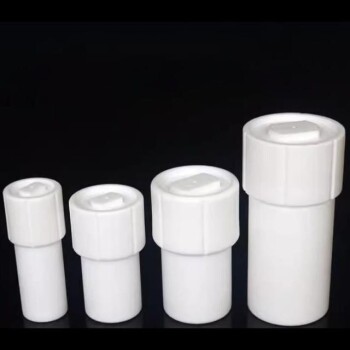
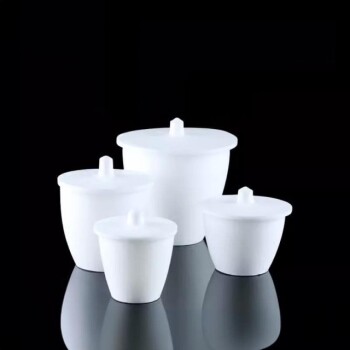
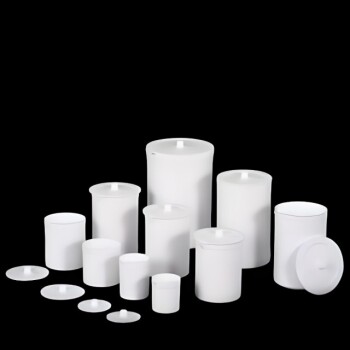
A Teflon-lined high-pressure reactor is the critical hardware required to synthesize high-purity Zinc Sulfide (ZnS) nanopowders, as it simultaneously manages extreme physical conditions and strict chemical purity. It provides a sealed environment that sustains temperatures around 220°C to drive crystallization while utilizing an inert liner to prevent the metallic reactor walls from contaminating the sensitive nanomaterials.
The reactor serves a dual purpose: the sealed vessel creates the high-pressure conditions necessary to keep solvents liquid above their boiling points, while the Teflon lining acts as an impermeable shield to ensure the final product remains chemically pure and stoichiometrically accurate.
Creating the Hydrothermal Environment
To understand why this specific reactor is used, one must look at the physical requirements of hydrothermal synthesis. The process relies on manipulating the state of the solvent to force chemical reactions that would not occur under standard conditions.
Overcoming Solvents' Boiling Points
The reactor functions as an autoclave, creating a strictly closed system.
This design allows organic solvents or water to remain in a liquid state at temperatures significantly higher than their normal boiling points.
Without this high-pressure containment, the solvent would simply evaporate, halting the reaction required for ZnS formation.
Enhancing Reaction Kinetics
The elevated temperatures achieved within the sealed vessel drastically improve diffusion kinetics.
This thermal energy allows the system to overcome energy barriers, facilitating the rearrangement of metal atoms directly within the liquid phase.
Consequently, this enables the direct synthesis of highly ordered nanocrystals, often eliminating the need for subsequent high-temperature drying or annealing steps.
The Role of the Teflon Lining
While the steel shell handles the pressure, the internal Teflon lining addresses the chemical sensitivity of Zinc Sulfide synthesis.
Ensuring Chemical Inertness
Teflon is utilized primarily for its superior corrosion resistance and chemical inertness.
Inside the reactor, the chemical precursors are subjected to harsh conditions that would corrode standard metals.
The lining ensures the reaction proceeds without degrading the vessel itself.
Preventing Ionic Contamination
The most critical function of the liner is preventing metal ion leaching from the reactor's steel walls.
Direct contact between the solution and the steel shell would introduce impurities, altering the composition of the nanopowder.
By isolating the solution, the Teflon ensures the Zinc Sulfide powder maintains high purity and an accurate stoichiometric ratio.
Understanding the Trade-offs
While the Teflon-lined reactor is the standard for this application, it imposes specific operational limits that must be respected to maintain safety and equipment integrity.
Temperature Limitations
The Teflon lining is the limiting factor regarding the maximum operating temperature.
While the steel shell can withstand extreme heat, the Teflon liner typically operates safely around 220°C; exceeding this can cause the liner to deform or degrade, potentially leaking corrosive chemicals into the steel shell.
Volume constraints
These reactors generally require a specific filling ratio (often 60-80%) to generate the correct internal pressure.
Underfilling may result in insufficient pressure to keep solvents liquid, while overfilling can lead to dangerous pressure spikes that threaten the structural integrity of the vessel.
Making the Right Choice for Your Goal
When setting up your synthesis parameters, focusing on the specific role of the reactor ensures you optimize for the right outcome.
- If your primary focus is Phase Purity: Rely on the integrity of the Teflon liner to prevent contamination and strictly monitor the stoichiometry of your precursor solution before sealing.
- If your primary focus is Crystal Quality: Prioritize the temperature and pressure settings to maximize diffusion kinetics, ensuring the solvent remains liquid to facilitate atomic rearrangement.
By balancing the thermal capabilities of the pressure vessel with the chemical protection of the liner, you ensure the reproducible creation of high-quality Zinc Sulfide nanopowders.
Summary Table:
| Feature | Function in ZnS Synthesis | Benefit to Nanopowder |
|---|---|---|
| High-Pressure Seal | Maintains solvents in liquid state above boiling points | Enhances reaction kinetics and crystal growth |
| Teflon (PTFE) Liner | Provides a chemically inert barrier against corrosion | Prevents metal ion contamination and ensures purity |
| Thermal Regulation | Sustains temperatures up to 220°C | Facilitates atomic rearrangement for ordered crystals |
| Closed System | Prevents evaporation of precursors/solvents | Maintains accurate stoichiometric ratios |
Elevate Your Material Synthesis with KINTEK Precision
Achieving high-purity Zinc Sulfide nanopowders requires equipment that can withstand the dual challenges of extreme pressure and chemical reactivity. KINTEK specializes in advanced laboratory solutions, providing high-performance high-temperature high-pressure reactors and autoclaves designed specifically for sensitive hydrothermal and solvothermal processes.
From our robust Teflon-lined vessels to our comprehensive range of crushing and milling systems and PTFE consumables, we empower researchers and industrial manufacturers to achieve superior stoichiometric accuracy and phase purity.
Ready to optimize your synthesis results? Contact KINTEK today to find the perfect reactor for your lab!
Related Products
- Custom PTFE Teflon Parts Manufacturer for Reagent Wide Mouth Fine Mouth Sample High Temperature Bottles
- Custom PTFE Teflon Parts Manufacturer for Hydrothermal Synthesis Reactor Polytetrafluoroethylene Carbon Paper and Carbon Cloth Nano-growth
- Custom PTFE Teflon Parts Manufacturer for Microwave Digestion Tank
- Stainless High Pressure Autoclave Reactor Laboratory Pressure Reactor
- Customizable High Pressure Reactors for Advanced Scientific and Industrial Applications
People Also Ask
- What makes PTFE bottles suitable for static leaching? Ensure Zero-Contamination for Glass Testing
- Why Use PTFE Sample Bottles for Coal Demineralization? Ensure Chemical Stability and Data Integrity
- Why are PTFE containers necessary for selective HF etching of MAX phases? Ensure Safe & Pure MXene Synthesis
- Why use high-quality PTFE containers for CO2 reduction electrolytes? Eliminate silicon contamination and ensure data.
- Why is a PTFE container required for acid leaching of silicon nanosheets? Ensure High Purity and Safety