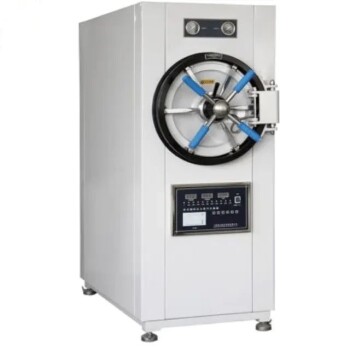
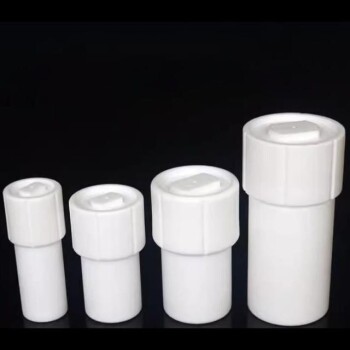
The necessity of a Teflon-lined stainless steel autoclave lies in its dual capability to withstand significant internal pressure while resisting extreme chemical corrosion. Specifically, the synthesis of TiO2 nanobelts requires a strong alkali hydrothermal treatment—often involving high-concentration solutions like 10 M NaOH—at temperatures around 180 °C. The stainless steel exterior contains the immense pressure generated by the heated solvent, while the inner Teflon (PTFE) liner creates an inert barrier that prevents the caustic solution from destroying the vessel or contaminating your sample.
Core Takeaway The autoclave provides a sealed, high-pressure environment that forces titanium precursors to dissolve and recrystallize into specific nanostructures. The Teflon liner is critical for process integrity: it allows the use of aggressive alkaline solvents required for exfoliation without compromising the purity of the final material or the structural safety of the reactor.
The Role of the Reaction Environment
To understand why this specific equipment is required, you must look at the thermodynamic conditions necessary to alter the crystal structure of titanium dioxide.
Facilitating Hydrothermal Treatment
Standard atmospheric conditions are insufficient for dissolving certain titanium precursors. The autoclave creates a hydrothermal environment where solvents are heated above their boiling points.
This trapped heat generates internal pressure, allowing precursors that are typically insoluble to undergo dissolution and subsequent recrystallization.
Driving Exfoliation and Reorganization
The primary reference highlights that TiO2 nanobelt synthesis involves a "strong alkali hydrothermal treatment."
Under these specific conditions (180 °C and high pressure), the TiO2 particles undergo exfoliation. The environment forces the material to reorganize into titanate nanobelts with uniform aspect ratios, a transformation that would not occur in an open vessel.
Why Material Selection Matters
The "Teflon-lined stainless steel" configuration is not arbitrary; it solves two competing engineering challenges simultaneously.
Chemical Inertness of the Teflon Liner
The synthesis process utilizes highly corrosive agents, such as 10 M NaOH. Direct contact between this solution and a metal vessel would lead to rapid corrosion.
The Polytetrafluoroethylene (PTFE) liner provides essential chemical resistance. It ensures that the reaction environment remains pure. Without the liner, metal ions (impurities) from the steel wall could leach into the solution, contaminating the TiO2 nanobelts and altering their photocatalytic properties.
Structural Integrity of Stainless Steel
While Teflon is chemically resistant, it is mechanically soft and cannot withstand high pressures on its own, especially at elevated temperatures.
The stainless steel outer shell acts as a pressure-bearing exoskeleton. It provides the mechanical strength required to contain the internal forces generated at 180 °C, ensuring the reactor remains safe and sealed throughout the synthesis.
Impact on Morphology and Surface Area
The precise control offered by this equipment directly influences the physical properties of the nanomaterial.
Controlling Crystal Morphology
By creating a sealed system, researchers can precisely adjust temperature and pressure parameters. This allows for the "directional control" of the crystal growth.
This control is what dictates whether the titanium dioxide forms into nanowires, mesoporous structures, or—in this specific case—nanobelts.
Enhancing Surface Area via Acid Etching
Secondary processing steps also rely on this equipment. Supplementary data indicates that autoclaves are used during acid etching (e.g., in sulfuric acid at 100 °C).
This controlled etching creates "island-like" structures on the nanobelt surface. This process significantly increases the specific surface area (e.g., from 35 m²/g to 75 m²/g), providing more active sites for subsequent catalytic applications.
Understanding the Trade-offs
While this equipment is standard for hydrothermal synthesis, it introduces specific limitations you must manage.
Thermal Limits of Teflon
The Teflon liner is the thermal bottleneck of the system. While the steel can handle very high heat, PTFE liners can deform or degrade if temperatures exceed their specific rating (often starting around 200°C - 250°C).
You must ensure your synthesis protocol does not exceed the thermal tolerance of the specific liner you are using, or you risk contaminating the sample with decomposed polymer.
Batch Processing Constraints
Autoclaves are inherently batch reactors. This creates a trade-off between the high quality/uniformity of the nanobelts and the quantity produced.
Scaling up production often requires larger or multiple autoclaves, rather than a simple continuous flow process, due to the high-pressure requirements.
Making the Right Choice for Your Goal
When designing your synthesis experiment, consider how the autoclave's features align with your specific objectives.
- If your primary focus is Structural Uniformity: Prioritize precise temperature control to ensure consistent exfoliation and reorganization of the nanobelts.
- If your primary focus is Material Purity: Ensure your Teflon liner is inspected for scratches or defects to prevent any interaction between the 10 M NaOH and the steel shell.
- If your primary focus is Surface Area: utilize the autoclave for secondary acid etching steps to maximize nucleation sites for future loading (e.g., Ag3PO4 nanoparticles).
The Teflon-lined autoclave is not merely a vessel; it is an active instrument that enables the extreme thermodynamic conditions required to engineer the crystal lattice of TiO2.
Summary Table:
| Feature | Purpose in TiO2 Nanobelt Synthesis | Benefit |
|---|---|---|
| Teflon (PTFE) Liner | Resists 10 M NaOH & corrosive agents | Prevents contamination and vessel corrosion |
| Stainless Steel Shell | Withstands high internal pressure at 180°C | Ensures structural safety and reactor integrity |
| Sealed Environment | Creates hydrothermal conditions | Enables precursor dissolution and recrystallization |
| Precise Control | Regulates temperature and pressure | Dictates nanobelt morphology and surface area |
Elevate Your Nanomaterial Research with KINTEK
Precision synthesis requires equipment that can handle the toughest chemical environments. KINTEK specializes in high-performance laboratory solutions, providing researchers with premium Teflon-lined high-temperature high-pressure reactors and autoclaves designed specifically for hydrothermal treatments and chemical vapor deposition.
Whether you are synthesizing TiO2 nanobelts, conducting battery research, or performing acid etching, our comprehensive portfolio—including muffle furnaces, crushing systems, and hydraulic presses—ensures your lab maintains the highest standards of purity and safety.
Ready to optimize your synthesis process? Contact us today to find the perfect equipment for your application!
References
- Neerugatti KrishnaRao Eswar, Giridhar Madras. Enhanced sunlight photocatalytic activity of Ag3PO4 decorated novel combustion synthesis derived TiO2 nanobelts for dye and bacterial degradation. DOI: 10.1039/c5pp00092k
This article is also based on technical information from Kintek Solution Knowledge Base .
Related Products
- Stainless High Pressure Autoclave Reactor Laboratory Pressure Reactor
- Mini SS High Pressure Autoclave Reactor for Laboratory Use
- Desktop Fast High Pressure Laboratory Autoclave Sterilizer 16L 24L for Lab Use
- Laboratory High Pressure Horizontal Autoclave Steam Sterilizer for Lab Use
- Portable High Pressure Laboratory Autoclave Steam Sterilizer for Lab Use
People Also Ask
- Why is a laboratory high-pressure reactor used in the hydrothermal synthesis of hydroxyapatite catalysts?
- What role does a laboratory high-pressure reactor play in the leaching process of spent cathode materials? Optimize Recovery
- Why is a laboratory high-pressure reactor necessary for synthesizing fly ash-based zeolite? Achieve Pure Crystallization
- What conditions do laboratory high-pressure reactors provide for HTC? Optimize Your Biochar Production Processes
- What is the function of a high-pressure reactor autoclave? Enhancing Cu/N Co-Doped Carbon Catalyst Synthesis