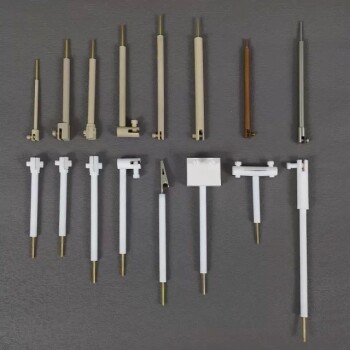
The three-electrode system is deployed in Linear Polarization Resistance (LPR) testing to decouple the measurement of voltage from the flow of current. By using distinct electrodes for driving current and sensing potential, this configuration eliminates significant measurement errors, enabling the precise calculation of interfacial potential differences at the specimen surface.
By dedicating specific electrodes to current flow and voltage sensing, this system removes electrical noise and resistance errors, allowing for the detection of minute changes in instantaneous corrosion rates.
The Architecture of Accuracy
To understand why this system is necessary, one must first understand the distinct role each component plays in the electrolytic cell.
The Working Electrode (The Subject)
This is the carbon steel specimen (or other material) you are actually testing. It is the site where the corrosion reaction occurs and is the focal point of the measurement.
The Counter Electrode (The Conductor)
Typically made of an inert material like stainless steel, this electrode acts as the other half of the circuit. Its primary purpose is to allow the current to flow through the electrolyte, facilitating the polarization of the working electrode.
The Reference Electrode (The Standard)
Often a silver/silver chloride (Ag/AgCl) half-cell, this electrode provides a stable voltage benchmark. Crucially, no current flows through this electrode, ensuring its potential remains constant and unaffected by the resistance of the solution.
Why Separation is Critical for LPR
The primary goal of LPR is to measure interfacial potential differences with extreme precision. A two-electrode system cannot achieve this reliably in many environments.
Eliminating Voltage Drop Errors
If you used the same electrode to carry current and measure voltage, the electrical resistance of the solution would skew the reading (a phenomenon known as IR drop). The three-electrode setup isolates the voltage measurement, bypassing this error source entirely.
High Sensitivity in Complex Environments
This configuration provides the sensitivity required to monitor instantaneous corrosion rates. This is particularly vital in challenging environments containing microorganisms and organic salts, where solution resistance and chemical complexity can easily distort less sophisticated measurements.
Understanding the Trade-offs
While the three-electrode system is the gold standard for accuracy, it introduces specific complexities that must be managed.
Instrumentation Complexity
This setup requires a potentiostat capable of managing three distinct leads rather than a simple resistance meter. The electronics must actively feedback control to maintain the desired potential difference between the working and reference electrodes.
Reference Electrode Maintenance
The accuracy of the entire system hinges on the stability of the reference electrode. Unlike the rugged stainless steel counter electrode, the Ag/AgCl reference can drift or degrade over time, requiring regular calibration and maintenance to prevent false corrosion rate readings.
Optimizing Your Corrosion Monitoring
When configuring your LPR testing, your choice of setup defines the reliability of your data.
- If your primary focus is high-precision accuracy: Utilize the full three-electrode system to eliminate solution resistance errors, especially in media containing organic salts or biological activity.
- If your primary focus is real-time monitoring: Rely on the three-electrode configuration to capture instantaneous corrosion rates rather than long-term averages.
The three-electrode system is not just a configuration choice; it is a fundamental requirement for isolating the true electrochemical behavior of your material from the electrical noise of the environment.
Summary Table:
| Component | Electrode Type | Primary Function | Key Advantage |
|---|---|---|---|
| Working Electrode | Specimen Material | Site of corrosion reaction | Subject of the study |
| Counter Electrode | Inert (e.g., Stainless Steel) | Completes the electrical circuit | Facilitates current flow |
| Reference Electrode | Stable half-cell (e.g., Ag/AgCl) | Provides a voltage benchmark | Zero current flow for stability |
| The System | Potentiostat-controlled | Decouples voltage from current | Eliminates IR drop errors |
Elevate Your Electrochemical Research with KINTEK
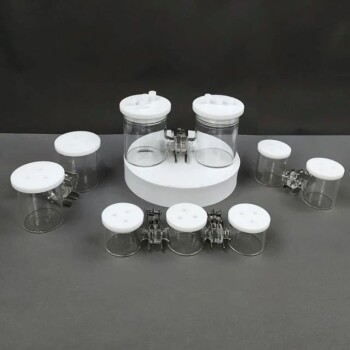
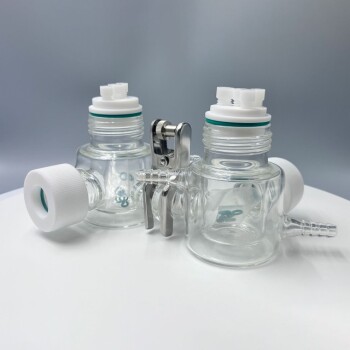
Precision in Linear Polarization Resistance (LPR) testing starts with the right equipment. KINTEK specializes in high-performance laboratory solutions, providing the specialized electrolytic cells and electrodes needed to maintain stable benchmarks and eliminate measurement noise. Whether you are analyzing carbon steel specimens or testing in complex organic salt environments, our precision-engineered tools ensure you capture accurate, instantaneous corrosion rates.
From advanced potentiostat-compatible cells to a comprehensive range of laboratory equipment and consumables, we empower researchers to achieve superior data integrity. Contact us today to optimize your laboratory setup!
References
- Mohamed Riyadh Ismail, S.Z.H. Shah. Effect of Acetate on Microbiologically Influenced Corrosion of Internal Pipeline Surfaces. DOI: 10.3390/met13121974
This article is also based on technical information from Kintek Solution Knowledge Base .
Related Products
- H Type Electrolytic Cell Triple Electrochemical Cell
- Electrolytic Electrochemical Cell Gas Diffusion Liquid Flow Reaction Cell
- PTFE Electrolytic Cell Electrochemical Cell Corrosion-Resistant Sealed and Non-Sealed
- Electrolytic Electrochemical Cell with Five-Port
- Customizable PEM Electrolysis Cells for Diverse Research Applications
People Also Ask
- What is a H type cell? A Guide to Divided Electrochemical Cells for Accurate Experiments
- How should the electrolyte be prepared and added to the H-type electrolytic cell? Best Practices for Purity and Safety
- What is the technical necessity of using an H-type electrolytic cell for NO3RR tests? Protect Your Ammonia Yields
- How does the design of an H-type electrolytic cell benefit the neutral water electrolysis process for metal recovery?
- What is the primary function of an H-type electrolytic cell in NitRR? Ensure Accurate Product Yields