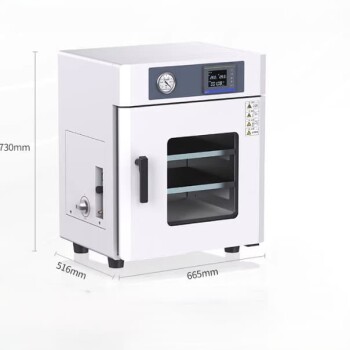
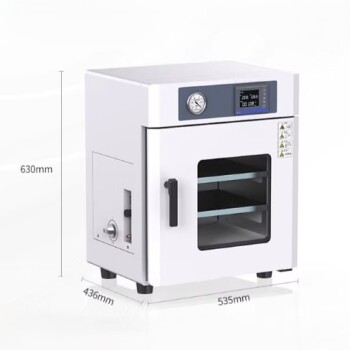
The utilization of an industrial-grade drying oven is a critical standardization step designed to remove residual moisture and washing solvents from processed peanut shells before experimentation. By subjecting the biomass to a controlled temperature of 60ºC for 24 hours, researchers establish a consistent baseline for the subsequent pyrolysis process.
The primary objective of pre-drying is to isolate the chemical behavior of the biomass. Eliminating physical moisture ensures that the heating rate remains consistent and that water found in the resulting bio-oil is attributed solely to chemical dehydration during the reaction, rather than the raw feedstock.
The Impact on Experimental Integrity
To derive accurate data from pyrolysis experiments, the feedstock must be chemically stable and physically consistent. The drying oven addresses three specific variables that could otherwise compromise the results.
Preserving Accurate Heating Rates
Moisture acts as a heat sink. If processed peanut shells retain water, a significant portion of the initial thermal energy is consumed by evaporation rather than heating the biomass material.
This interference alters the heating rate during the early stages of pyrolysis. By removing moisture beforehand, the experiment ensures that the applied heat is immediately directed toward the thermal decomposition of the biomass, maintaining the intended temperature profile.
Distinguishing Chemical vs. Physical Water
One of the key products of pyrolysis is bio-oil, which naturally contains water. However, it is vital to distinguish where this water comes from.
Chemical dehydration occurs during the pyrolysis reaction, producing water as a byproduct. If the feedstock is not pre-dried, physical moisture (water trapped in the shell) mixes with this chemical water. Pre-drying ensures that any water measured in the bio-oil is a result of the reaction itself, allowing for accurate chemical analysis.
Elimination of Solvents
Processing peanut shells often involves washing steps that may leave behind trace solvents.
The drying protocol effectively evaporates these residual solvents along with the moisture. This prevents foreign chemical compounds from entering the pyrolysis reactor, which could otherwise skew the composition of the resulting gas, liquid, or solid products.
Understanding the Trade-offs
While pre-drying is essential, the parameters must be carefully selected to avoid unintended consequences.
Temperature Sensitivity
The specific temperature of 60ºC is chosen deliberately. It is high enough to facilitate evaporation but low enough to prevent the premature thermal degradation of the biomass components (cellulose, hemicellulose, and lignin).
Exceeding this temperature risks starting the pyrolysis process inside the drying oven, which would alter the elemental composition of the sample before the actual experiment begins.
Oxidation Risks
While the primary focus is moisture removal, prolonged exposure to heat in an air atmosphere can lead to slight surface oxidation.
In more sensitive contexts (such as coal analysis), inert atmospheres like nitrogen are used during drying to prevent this. However, for peanut shells at 60ºC, the risk is managed by keeping the temperature moderate, prioritizing moisture removal over strict atmospheric control.
Making the Right Choice for Your Goal
When designing your sample preparation protocol, your drying parameters should align with your specific analytical focus.
- If your primary focus is Thermal Kinetics: Ensure complete moisture removal to guarantee that the heating curve reflects the biomass properties, not water evaporation.
- If your primary focus is Bio-oil Quality: Prioritize the removal of washing solvents to prevent the contamination of your liquid yield.
Standardizing your feedstock through controlled pre-drying is the only way to ensure that your pyrolysis data reflects the chemistry of the biomass, not the variability of its environment.
Summary Table:
| Factor | Impact of Pre-Drying | Benefit for Pyrolysis |
|---|---|---|
| Moisture Content | Removes physical water and residual solvents | Prevents heat sink effects and ensures consistent heating rates |
| Chemical Analysis | Isolates water produced by chemical dehydration | Allows accurate measurement of bio-oil purity and reaction byproducts |
| Temperature Control | Maintained at 60ºC for 24 hours | Evaporates moisture without premature thermal degradation of biomass |
| Feedstock Integrity | Standardizes physical state of the biomass | Ensures data reflects material chemistry, not environmental variability |
Elevate Your Research Precision with KINTEK
Don't let residual moisture compromise your experimental integrity. KINTEK specializes in high-performance laboratory equipment designed for rigorous material preparation. Whether you are conducting biomass pyrolysis or advanced material synthesis, our comprehensive range of industrial-grade drying ovens, high-temperature furnaces (muffle, vacuum, and CVD), and crushing systems ensures your feedstock is perfectly standardized.
From pellet presses for sample preparation to high-pressure reactors for chemical analysis, KINTEK provides the tools researchers need to achieve reproducible, high-quality data. Contact KINTEK today to optimize your laboratory workflow and discover how our advanced heating and processing solutions can drive your innovation forward.
References
- L.I. Gurevich Messina, Ana Lea Cukierman. Effect of acid pretreatment and process temperature on characteristics and yields of pyrolysis products of peanut shells. DOI: 10.1016/j.renene.2017.07.065
This article is also based on technical information from Kintek Solution Knowledge Base .
Related Products
- Laboratory Scientific Electric Heating Blast Drying Oven
- 56L Vertical Laboratory Vacuum Drying Oven
- 23L Laboratory Vacuum Drying Oven
- High Temperature Muffle Oven Furnace for Laboratory Debinding and Pre Sintering
People Also Ask
- How does a laboratory electric drying oven contribute to the formation of the initial coating? Expert Insights
- What role does a precision laboratory drying oven play in the synthesis of GO-PANI nanocomposites? Protect Material Integrity
- What role does a laboratory drying oven play in the preparation of zinc oxide nanoparticle precursors?
- What is the necessity of using a laboratory drying oven when processing MoO3/GO composite nanopowders? Find out here.
- What is the role of a laboratory drying oven in cellulose citrate production? Ensure Material Stability & Purity