The primary purpose of using an ultrasonic homogenizer on LiNi0.5Mn1.5O4 (LNMO) samples is to mechanically disintegrate soft agglomerates that naturally form during powder storage. By utilizing high-frequency vibrations to disperse the powder into a solution like sodium hexametaphosphate, the homogenizer prepares the sample for laser diffraction. This step guarantees that the analyzer measures the true size distribution of individual particles rather than the artificially large dimensions of clustered aggregates.
Core Takeaway Particle size analysis is only as accurate as the sample preparation; without homogenization, analyzers will misinterpret clumps of powder as single, large particles. Ultrasonic treatment ensures the data reflects the fundamental material properties of the LNMO rather than the artifacts of storage and handling.
The Mechanism of Dispersion
High-Frequency Disintegration
An ultrasonic homogenizer transmits high-frequency vibrations into the sample mixture.
When treating LNMO, the powder is typically suspended in a dispersant solution, such as sodium hexametaphosphate.
The energy from these vibrations creates intense shear forces that physically pull apart particles that have clumped together.
Addressing Soft Agglomerates
During the storage of LNMO powder, particles tend to stick together to form soft agglomerates.
These are not permanent chemical bonds, but physical clusters that form due to time and static interactions.
The ultrasonic treatment is specifically calibrated to break these weak bonds without damaging the fundamental particle structure.
Ensuring Data Integrity
True Particle Sizing
The ultimate goal of this pre-treatment is to facilitate accurate laser diffraction analysis.
Laser diffraction assumes it is measuring distinct entities; if agglomerates remain, the machine reports a particle size distribution that is skewed much larger than reality.
By fully dispersing the sample, you ensure the instrument measures the individual crystal size of the LNMO.
Achieving Suspension Stability
Homogenization does more than just break clumps; it creates a uniform, stable suspension.
As noted in broader contexts regarding nanocomposites, controlling the ultrasonic power allows for a highly dispersed state.
This stability is critical for reproducibility, ensuring that the hydrodynamic properties measured are consistent across different test runs.
Understanding the Trade-offs
The Risk of Over-Processing
While dispersion is necessary, there is a risk of applying too much ultrasonic energy.
Excessive vibration can lead to particle attrition, where the primary LNMO particles themselves are fractured.
This results in data that suggests the material is finer than it actually is, which is just as inaccurate as measuring agglomerates.
The Risk of Under-Processing
Conversely, insufficient processing time or power will fail to break up all storage agglomerates.
This leads to "ghost" peaks in your data, indicating large particles that do not exist.
The challenge lies in finding the precise window of operation that separates clusters without shattering the constituent particles.
Making the Right Choice for Your Goal
To ensure your LNMO characterization is valid, you must align your preparation method with your analytical objectives.
- If your primary focus is Fundamental Material Analysis: Ensure the ultrasonic energy is sufficient to fully revert storage agglomerates to their primary particle state.
- If your primary focus is Process Consistency: Standardize the specific ultrasonic power and duration to eliminate variables between different batches.
Accurate particle sizing is not just about the measurement tool, but about presenting that tool with a true representation of your material.
Summary Table:
| Feature | Impact on LNMO Sample Preparation |
|---|---|
| Primary Action | Disintegrates soft agglomerates formed during storage |
| Mechanism | High-frequency vibrations & shear forces |
| Dispersant | Commonly used with sodium hexametaphosphate |
| Analytical Goal | Precise laser diffraction for true individual particle sizing |
| Key Risk | Over-processing (particle attrition) vs. Under-processing (ghost peaks) |
Elevate Your Battery Material Research with KINTEK
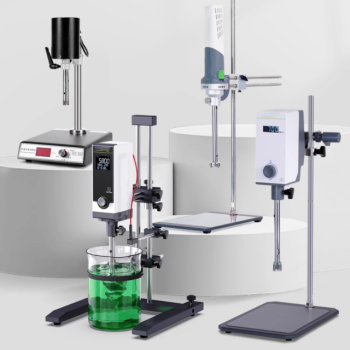
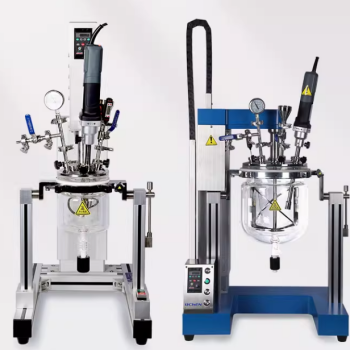
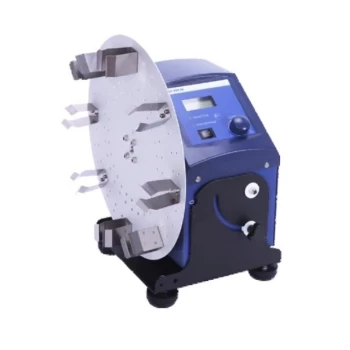
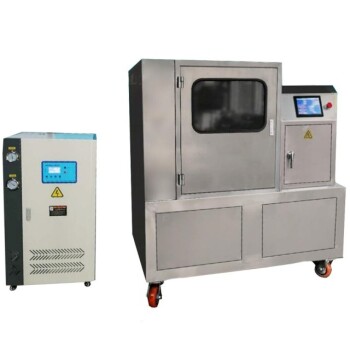
Precision in particle size analysis starts with superior sample preparation. KINTEK specializes in high-performance laboratory equipment designed to meet the rigorous demands of battery research and material science. Whether you are working with LNMO, specialized cathodes, or advanced nanocomposites, our range of ultrasonic homogenizers, shakers, and cooling solutions ensures your samples are perfectly dispersed and stabilized.
Beyond sample prep, KINTEK offers a comprehensive portfolio including:
- High-Temperature Furnaces (Muffle, Tube, Vacuum, CVD/PECVD) for synthesis.
- Crushing, Milling, & Sieving Systems for consistent powder processing.
- Hydraulic Presses (Pellet, Hot, Isostatic) for electrode fabrication.
- High-Pressure Reactors & Autoclaves for advanced chemical processing.
- Electrolytic Cells & Battery Research Tools for performance testing.
Don't let sample artifacts compromise your data integrity. Contact our technical experts today to find the ideal equipment for your laboratory workflow.
Contact KINTEK for a Professional Solution
Related Products
- High Shear Homogenizer for Pharmaceutical and Cosmetic Applications
- High Performance Lab Homogenizer for Pharma Cosmetics and Food R&D
- Lab Sterile Slapping Type Homogenizer for Tissue Mashing and Dispersing
- Laboratory High Throughput Tissue Grinding Mill Grinder
- Laboratory Disc Rotary Mixer for Efficient Sample Mixing and Homogenization
People Also Ask
- Why Use a High Shear Homogenizer for Cathode Slurries? Optimize Double-Layer Solid-State Battery Production
- What is the function of high-shear dispersion equipment in corona-resistant nanocomposites? Elevate Your Insulation
- What is the necessity of using an industrial-grade high-shear homogenizer for biomass washing? Ensure Process Efficiency
- What are the advantages of using a high-shear homogenizer for BED/GMA coatings? Achieve Superior Nano-Dispersion
- What role does a high-shear homogenizer play in ODC catalyst suspensions? Unlock Superior Electrochemical Efficiency