Continuous stirring is utilized to facilitate the uniform mixing of active metal precursor solutions, such as rhodium nitrate, with the catalyst support powders. This mechanical action is essential during the drying impregnation phase to ensure the solution penetrates the support pores evenly, preventing the active components from clustering in specific areas.
In the absence of continuous agitation, metal precursors settle unevenly, leading to inefficient "hot spots" on the catalyst surface. Stirring guarantees a high degree of active component dispersion, which is the foundational requirement for maximizing low-temperature catalytic activity.
The Mechanics of Impregnation
Eliminating Concentration Gradients
When a catalyst support, such as ceria-zirconia, is mixed with a precursor solution, there is a natural tendency for the metal ions to accumulate unevenly.
Continuous stirring disrupts this tendency, preventing the formation of local concentration gradients. By keeping the mixture in constant motion, the equipment ensures that every particle of the support is exposed to the same concentration of the rhodium components.
Overcoming Mass Transfer Resistance
The catalyst support is often defined by a complex network of porous ceramic structures.
Mechanical agitation—whether through stirring or a laboratory shaker—helps overcome liquid-phase mass transfer resistance. This dynamic environment forces the fluid into the deep internal micropores of the carrier, ensuring the active metals are not just coating the surface but are deeply loaded into the structure.
Impact on Performance
Enhancing Low-Temperature Activity
The primary goal of the impregnation stage is to achieve a high degree of dispersion of the active metals.
When the rhodium components are spread uniformly rather than clumped together, the resulting catalyst exhibits significantly improved activity. This is particularly critical for methane reforming applications where efficiency at lower temperatures is a key performance metric.
Ensuring Long-Term Stability
Uniform distribution does more than just boost immediate performance; it dictates the lifespan of the catalyst.
By achieving deep loading and avoiding surface clustering, the process produces a more robust catalyst structure. This uniformity is essential for maintaining long-term stability under the harsh conditions of reforming reactions.
Common Pitfalls to Avoid
The Risk of Static Drying
A common error in catalyst preparation is allowing the mixture to remain static during the drying phase.
Without the shear force of stirring, the evaporation of the solvent drives the metal precursors to the outer edge of the support particles. This results in an "egg-shell" distribution where the core of the support remains barren, significantly wasting the potential of the catalyst volume.
Incomplete Pore Penetration
Simply soaking the support is often insufficient for high-performance applications.
Without the kinetic energy provided by continuous agitation, the precursor solution may fail to displace the air within smaller micropores. This results in a catalyst that has poor metal loading internally, limiting its overall reactive surface area.
Optimizing Your Catalyst Preparation
To achieve a commercial-grade methane reforming catalyst, you must align your mixing strategy with your specific performance goals.
- If your primary focus is low-temperature efficiency: Prioritize stirring speeds that maximize the dispersion of rhodium nitrate to prevent agglomeration on the ceria-zirconia support.
- If your primary focus is long-term operational stability: Ensure the agitation is vigorous enough to overcome mass transfer resistance for deep pore loading, protecting the active sites from rapid degradation.
The quality of your mixing process directly dictates the efficiency of your final reaction.
Summary Table:
| Factor | Impact of Continuous Stirring | Risk of Static Drying |
|---|---|---|
| Metal Dispersion | High degree of uniform dispersion | Uneven clustering and "hot spots" |
| Pore Penetration | Deep loading into internal micropores | Surface-only "egg-shell" distribution |
| Concentration | Eliminates local gradients | High concentration gradients |
| Performance | Enhanced low-temperature activity | Wasted catalyst volume and poor efficiency |
| Durability | Long-term stability under harsh conditions | Rapid degradation of active sites |
Elevate Your Catalyst Performance with KINTEK Precision Equipment
Don’t let poor mixing compromise your research outcomes. KINTEK specializes in providing the high-performance laboratory equipment and consumables essential for precise catalyst preparation and material science.
Whether you are developing methane reforming catalysts or advanced battery materials, our comprehensive range includes:
- Laboratory Shakers and Homogenizers for perfect dispersion and mass transfer.
- High-Temperature Muffle & Tube Furnaces for precise calcination and drying.
- Crushing, Milling & Sieving Systems for uniform support preparation.
- Hydrothermal Autoclaves & Reactors for advanced chemical synthesis.
From high-temperature furnaces to specialized PTFE and ceramic consumables, KINTEK provides the tools you need to ensure uniformity, stability, and efficiency in every batch.
Ready to optimize your laboratory workflow? Contact our technical experts today to find the perfect solution for your specific application requirements!
References
- MH Mohamed Halabi. Sorption enhanced catalytic reforming of methane for pure hydrogen production:experimental and modeling. DOI: 10.6100/ir709035
This article is also based on technical information from Kintek Solution Knowledge Base .
Related Products
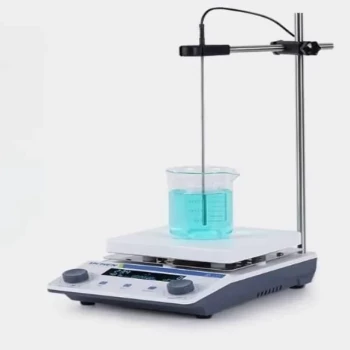
- Laboratory Small Constant Temperature Heated Magnetic Stirrer Heater and Stirrer
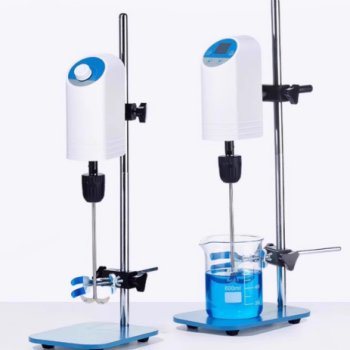
- High Performance Laboratory Stirrers for Diverse Applications
- Custom PTFE Teflon Parts Manufacturer for Magnetic Stirring Bar
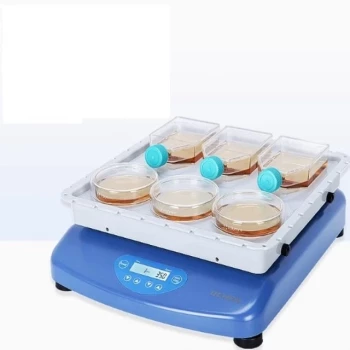
- Laboratory Vortex Mixer Orbital Shaker Multifunctional Rotation Oscillation Mixer
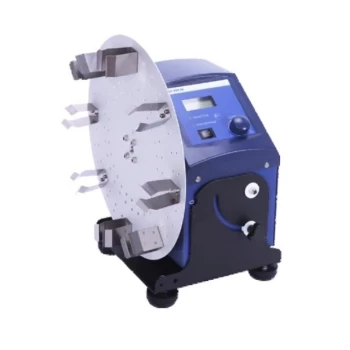
- Laboratory Disc Rotary Mixer for Efficient Sample Mixing and Homogenization
People Also Ask
- What role does a magnetic stirrer with heating play in ZnO nanoparticle synthesis? Precision Control for Quality Results
- What role does a constant temperature heating magnetic stirrer play in MFC-HAp synthesis? Achieve Material Homogeneity
- What is the function of a laboratory magnetic stirrer in Ni–Cr–P electrodeposition? Optimize Ion Transport & Coating
- Why is a laboratory magnetic stirrer required for benzoic acid esters? Boost Reaction Speed & Yield with High RPM
- What role does a laboratory magnetic stirrer play in TiO2 and TiO2-Ag sol preparation? Master Chemical Kinetics