The primary reason for refining electrolytic manganese residue to 200 mesh is to maximize the material's specific surface area. This physical transformation ensures a high contact rate between the residue and reducing agents like coke, which is critical for the efficient release of sulfur during the subsequent high-temperature reductive roasting process.
Core Takeaway: Refining electrolytic manganese residue to a 200-mesh fineness (with a 90% passing rate) is a strategic pretreatment step that converts inert bulk waste into a highly reactive powder. By increasing the specific surface area, operators can ensure rapid chemical kinetics and thorough sulfur removal, which are essential for successful material recovery.
The Impact of Surface Area on Reaction Kinetics
Maximizing Specific Surface Area
Reducing the particle size to 200 mesh exponentially increases the specific surface area of the manganese residue. In chemical processing, the reaction rate is often limited by the available surface where the solid residue and the reducing agent interact.
Enhancing Contact Activity
A finer powder allows for a more intimate and uniform mixture between the manganese residue and the reducing agent, such as coke. This intimate contact ensures that the reduction reaction occurs simultaneously throughout the material, rather than being restricted to the outer shells of larger clumps.
Accelerating Chemical Reaction Rates
With a higher surface-to-volume ratio, the chemical energy required to initiate the reaction is more effectively distributed. This leads to a faster and more complete conversion of manganese compounds, reducing the overall time required in the roasting furnace.
Optimizing the Reductive Roasting Environment
Facilitating Sulfur Element Release
Electrolytic manganese residue typically contains sulfur that must be eliminated during processing. Refining the material to 200 mesh allows the reductive roasting process to penetrate the core of each particle, facilitating the rapid release of sulfur elements into the gas phase.
Improving Heat and Mass Transfer
Small, uniform particles enhance heat transfer efficiency, allowing the entire batch to reach the target roasting temperature quickly. Furthermore, the reduced particle size lowers the internal diffusion resistance, allowing gases to move freely through the material bed during the reaction.
Ensuring Microscopic Uniformity
Consistent particle size distribution ensures that the chemical composition of the feed remains stable. This microscopic uniformity prevents localized "cold spots" or incomplete reactions that often occur when larger, uncrushed aggregates are present in the furnace.
Strategic Trade-offs in Fine Grinding
Energy Consumption vs. Reactivity
While 200 mesh provides excellent reactivity, the energy required for industrial-grade crushing and milling increases as the target size decreases. Operators must balance the cost of additional grinding against the yield improvements gained from faster reaction kinetics.
Dust Management Challenges
Refining material to such a fine state increases the risk of dust formation during transport and charging. If the material is too fine or poorly sieved, it can lead to material loss through the furnace exhaust or create environmental hazards in the workspace.
Equipment Wear and Maintenance
Milling equipment, such as ball mills, experiences higher rates of media wear when producing ultra-fine powders. It is essential to use high-precision sieving to remove any impurities or oversized particles that could compromise the quality of the final processed residue.
How to Apply This to Your Process
Making the Right Choice for Your Goal
- If your primary focus is Maximum Sulfur Removal: Ensure a strict 90% passing rate at 200 mesh to provide the necessary surface area for complete reductive roasting.
- If your primary focus is Energy Efficiency: Optimize your milling circuit to hit the 200-mesh target without over-grinding, as particles significantly smaller than 75 μm may offer diminishing returns.
- If your primary focus is Operational Safety: Implement enclosed sieving and transport systems to manage the fine dust generated by the 200-mesh refinement process.
By precisely controlling the particle size during pretreatment, you transform a challenging waste product into a consistent, reactive raw material ready for high-efficiency recovery.
Summary Table:
| Key Factor | 200-Mesh Target | Impact on Process |
|---|---|---|
| Surface Area | Maximum specific area | Accelerates chemical reaction kinetics and kinetics |
| Contact Rate | High intimacy with coke | Ensures uniform reduction throughout the material |
| Sulfur Release | Core particle penetration | Facilitates rapid migration of sulfur to gas phase |
| Thermal Transfer | Microscopic uniformity | Improves heat efficiency and prevents cold spots |
| Mass Transfer | Reduced particle size | Lowers internal diffusion resistance for gases |
Optimize Your Manganese Residue Recovery with KINTEK
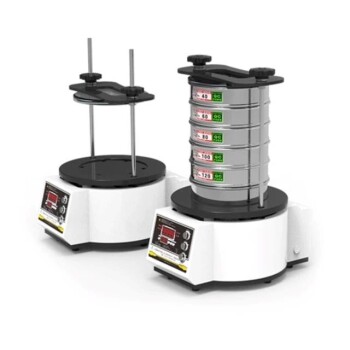
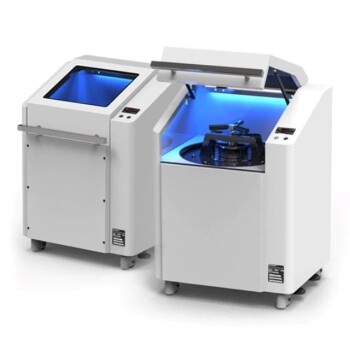
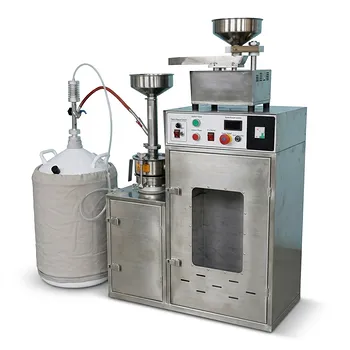
Precise particle refinement is the foundation of efficient material recovery. KINTEK specializes in advanced laboratory and industrial solutions, providing high-performance crushing and milling systems, precision sieving equipment, and a comprehensive range of high-temperature furnaces (muffle, rotary, and atmosphere) tailored for reductive roasting.
Whether you need to maximize sulfur removal or improve reaction kinetics, our equipment ensures you achieve a consistent 200-mesh fineness with superior thermal efficiency. Don't let processing bottlenecks hinder your yields—leverage our expertise in high-temperature high-pressure reactors and material processing tools.
Contact us today to find the perfect equipment for your pretreatment stage!
References
- Linfeng Zhang, Senlin Tian. Hazard-Free Treatment of Electrolytic Manganese Residue and Recovery of High-Concentration SO2 Using High-Temperature Reduction Roasting Process. DOI: 10.3390/separations10050288
This article is also based on technical information from Kintek Solution Knowledge Base .
Related Products
- Laboratory Test Sieves and Sieving Machines
- Three-dimensional electromagnetic sieving instrument
- Laboratory Vibratory Sieve Shaker Machine for Dry and Wet Three-Dimensional Sieving
- Sealed Jaw Crusher High Efficiency Environmental Protection Safe and Reliable
- Laboratory Jaw Crusher
People Also Ask
- What are laboratory test sieves used for? A Guide to Particle Size Analysis
- How do you calculate the sieve test? Master Particle Size Distribution for Quality Control
- How does a lab test sieve contribute to biomass charcoal powder preparation? Achieve Uniform Particle Size
- What are the specifications for test sieves? A Guide to ASTM & ISO Standards for Accurate Particle Analysis
- What materials are required for sieving? Achieve Accurate Particle Size Analysis