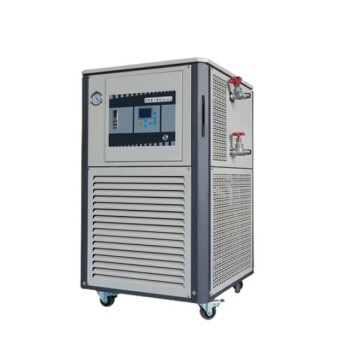
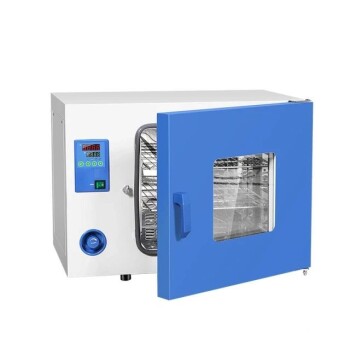
High-precision temperature control is the technical linchpin of the melt diffusion process, ensuring sulfur achieves the exact viscosity required to penetrate the complex CoSe2@CNF/CNT nanofiber matrix. Without this precision, the sulfur will either fail to permeate the micro-nano pores or undergo excessive volatilization, leading to a cathode with poor electrochemical activity and inconsistent performance.
High-precision heating equipment acts as a critical safeguard against thermal fluctuations that cause uneven sulfur distribution or active material loss. By maintaining a stable thermal field, it enables uniform capillary action, which is essential for the structural integrity and capacity of the final CoSe2@CNF/CNT-S composite.
The Mechanics of Fluidity and Capillary Action
Optimizing Sulfur Viscosity
Sulfur must be maintained within a specific temperature window above its melting point to ensure it remains in a liquid state with optimal fluidity. High-precision equipment allows for the fine-tuning of this liquid state, ensuring the sulfur is thin enough to move but stable enough not to vaporize.
Facilitating Deep Pore Penetration
The CoSe2@CNF/CNT support contains intricate micro-nano pores that require capillary action to be filled effectively. Precise temperature control ensures that the molten sulfur flows uniformly into these cavities, creating a dense and well-distributed active material layer.
Maintaining Material Integrity and Composition
Preventing Active Material Loss
Sulfur and its alloys are highly susceptible to volatilization when temperatures exceed the targeted range. High-precision vacuum ovens or tube furnaces prevent these "temperature spikes," ensuring that the intended mass of sulfur remains within the carbon host rather than escaping as gas.
Ensuring Electrochemical Activity
The performance of the CoSe2@CNF/CNT-S cathode depends on the homogeneity of the sulfur loading. Accurate heating prevents the formation of large sulfur clusters on the surface of the nanofibers, which would otherwise impede ion transport and reduce the cycle life of the battery.
Understanding the Trade-offs and Pitfalls
The Risk of Thermal Gradients
In lower-quality heating systems, "cold spots" or "hot spots" can develop within the reactor. Cold spots lead to incomplete melting and surface-only loading, while hot spots can cause local overheating that triggers unwanted chemical phases or structural damage to the nanofiber support.
Volatilization vs. Viscosity
There is a narrow margin between the temperature required for low-viscosity flow and the temperature that triggers rapid sulfur evaporation. Relying on equipment with high thermal hysteresis (lag) makes it nearly impossible to hit this "sweet spot," resulting in either clogged pores or depleted active materials.
How to Apply This to Your Synthesis Process
Implementing Precision Heating
When selecting or configuring your heating protocol for sulfur loading, consider the specific requirements of your support structure.
- If your primary focus is maximizing sulfur loading density: Prioritize equipment that offers a stable, long-duration thermal soak to allow capillary forces to reach the deepest pores of the CNT/CNF matrix.
- If your primary focus is preventing material waste: Utilize a high-precision vacuum oven to lower the melting point and facilitate diffusion at lower temperatures, thereby minimizing the risk of volatilization.
- If your primary focus is large-scale consistency: Invest in tube furnaces with multi-zone temperature control to ensure a perfectly uniform thermal field across the entire batch of cathode material.
Mastering the thermal environment is not merely a process step; it is the fundamental requirement for transforming a raw nanofiber support into a high-performance energy storage material.
Summary Table:
| Factor | Role of Precision Temperature Control | Impact on Cathode Performance |
|---|---|---|
| Sulfur Viscosity | Maintains optimal fluidity for deep pore penetration | Ensures high loading density and uniform distribution |
| Volatilization | Prevents temperature spikes above the vapor point | Minimizes active material loss and maintains composition |
| Thermal Uniformity | Eliminates hot/cold spots within the reactor | Prevents structural damage and ensures consistent activity |
| Capillary Action | Stabilizes the thermal field for consistent flow | Facilitates deep penetration into micro-nano pores |
Elevate Your Battery Research with KINTEK’s Precision Heating Solutions
Achieving the perfect sulfur loading in CoSe2@CNF/CNT nanofibers requires more than just heat; it requires absolute thermal stability. KINTEK specializes in high-performance laboratory equipment designed for advanced material synthesis. Our range of high-precision vacuum ovens, tube furnaces (including multi-zone models), and atmosphere furnaces provides the exact temperature control needed to optimize sulfur viscosity while eliminating the risk of volatilization.
Whether you are focusing on maximizing energy density or ensuring large-scale batch consistency, KINTEK’s solutions—from CVD and PECVD systems to high-temperature reactors and essential ceramic crucibles—ensure your electrochemical materials meet the highest performance standards.
Ready to optimize your melt diffusion process and enhance your material integrity? Contact KINTEK today to find the perfect heating solution for your lab!
References
- Juan Ao, Xinghui Wang. CoSe2 nanoparticles-decorated carbon nanofibers as a hierarchical self-supported sulfur host for high-energy lithium-sulfur batteries. DOI: 10.1007/s40843-022-2462-x
This article is also based on technical information from Kintek Solution Knowledge Base .
Related Products
- High Temperature Constant Temperature Heating Circulator Water Bath Chiller Circulator for Reaction Bath
- Automatic High Temperature Heated Hydraulic Press Machine with Heated Plates for Lab
- Multi Heating Zones CVD Tube Furnace Machine Chemical Vapor Deposition Chamber System Equipment
- Laboratory Small Constant Temperature Heated Magnetic Stirrer Heater and Stirrer
- Manual High Temperature Heated Hydraulic Press Machine with Heated Plates for Lab
People Also Ask
- What is the necessity of a circulating water bath in chlorate production? Optimize Yield & Purity with Precision
- How do constant temperature circulators impact weight-loss immersion tests? Ensure Precision in Corrosion Analysis
- How does a constant temperature circulator support the leaching reaction of gold scrap? Optimize Gold Recovery Results
- Why is a constant temperature water bath used for precursor storage in CVD? Achieve Stable Nanocrystalline SiC Deposition
- Why is a high-precision constant temperature water bath necessary for anaerobic digestion? Ensure Success at 37±0.02°C