Ideally, biomass hydrothermal carbonization (HTC) requires a stirred high-pressure reactor because it is the only reliable method to maintain water in a liquid, subcritical state at temperatures well above its boiling point while ensuring reaction homogeneity. By sustaining pressures up to 80 bar and temperatures between 150–270 °C, the reactor prevents water vaporization, allowing it to act as a potent solvent and catalyst for converting biomass into hydrochar.
Core Insight The reactor serves a dual purpose: the high pressure forces water to remain liquid at high temperatures to facilitate hydrolysis and polymerization, while the stirring mechanism guarantees that heat and reactants are distributed evenly, preventing inconsistent product quality.
The Role of High Pressure: Maintaining the Subcritical State
Preventing Water Vaporization
The fundamental requirement of HTC is keeping water in a liquid phase at temperatures where it would normally boil (typically 150–270 °C). The high-pressure reactor maintains a sealed environment, often reaching pressures up to 80 bar, which suppresses boiling and creates subcritical water.
Water as a Reaction Medium and Catalyst
In this subcritical state, the physical and chemical properties of water change drastically. The reactor’s environment increases the ion product of water, allowing it to act as an acid-base catalytic medium. This enables the effective hydrolysis of polysaccharides into monosaccharides without needing external catalysts.
Eliminating Pre-Drying Requirements
Because the reactor maintains a liquid environment, it allows for the direct processing of wet biomass, such as sewage sludge or animal manure. This eliminates the energy-intensive step of pre-drying raw materials, as the process relies on the moisture already present in the biomass.
The Role of Stirring: Ensuring Consistency
Achieving Thermal Uniformity
Without active mixing, large temperature gradients can occur within the reactor, leading to "cold spots" where reactions are incomplete. The integrated stirring mechanism ensures a uniform temperature distribution throughout the vessel, which is critical for standardized results.
Enhancing Mass Transfer
Biomass is often heterogeneous and solid. Stirring promotes rigorous contact between the solid biomass particles and the subcritical water molecules. This improved solid-liquid contact accelerates the diffusion of reactants, ensuring the carbonization process penetrates the biomass structure thoroughly.
Guaranteeing Product Homogeneity
The combination of uniform heat and consistent mixing prevents the formation of heterogeneous products. Stirring ensures that the resulting hydrochar and liquid byproducts possess consistent chemical and physical properties, such as uniform porosity and stable carbon content.
Chemical Transformations Facilitated
Driving Complex Reactions
The controlled environment facilitates a specific sequence of reactions: hydrolysis, dehydration, decarboxylation, and polymerization. These reactions strip oxygen and hydrogen from the biomass, leaving behind a carbon-rich structure.
Enhancing Hydrochar Properties
The reactor conditions promote the formation of spherical, porous carbon materials rich in oxygen-containing functional groups. These structural changes significantly improve the material's performance in applications like adsorption (e.g., removing heavy metals like Cadmium) and combustion.
Understanding the Trade-offs
Operational Complexity and Safety
Operating at pressures up to 80 bar and temperatures exceeding 200 °C introduces significant safety considerations. These reactors require robust construction, pressure relief systems, and strict safety protocols, which increases the initial capital investment and operational complexity compared to atmospheric processes.
Energy Consumption
While the process saves energy by avoiding pre-drying, maintaining high temperatures and pressures over extended periods (often hours) requires a continuous energy input. You must balance the energy saved in drying against the energy consumed to maintain the reactor's thermodynamic equilibrium.
Making the Right Choice for Your Goal
If you are designing an HTC experiment, the configuration of your reactor determines the quality of your data.
- If your primary focus is Fundamental Kinetics: You must use a stirred reactor to eliminate mass transfer limitations, ensuring reaction rates are measured accurately.
- If your primary focus is Product Uniformity: Stirring is non-negotiable to prevent a mix of raw and carbonized material in the final batch.
- If your primary focus is Energy Efficiency: Focus on the high-pressure capability to process wet feedstock directly, avoiding the cost of dehydration.
The stirred high-pressure reactor is not just a vessel; it is a process control tool that dictates the chemical path and physical quality of your final carbon material.
Summary Table:
| Feature | Function in HTC | Key Benefit |
|---|---|---|
| High Pressure (up to 80 bar) | Maintains water in subcritical liquid state | Facilitates hydrolysis & avoids energy-intensive pre-drying |
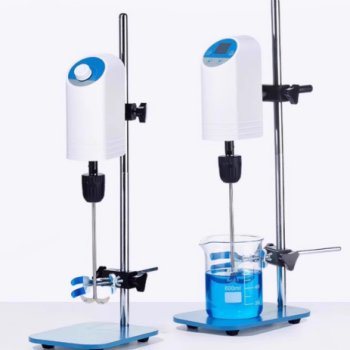
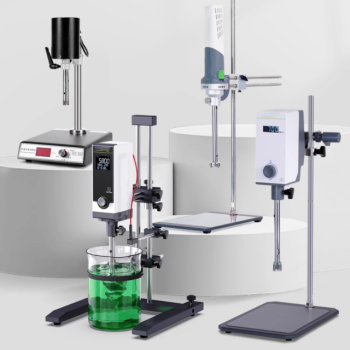
| Stirring Mechanism | Ensures thermal and mass transfer uniformity | Prevents cold spots and guarantees consistent hydrochar quality |
| Temperature (150-270 °C) | Provides energy for chemical transformation | Drives dehydration, decarboxylation, and polymerization |
| Sealed Environment | Increases ion product of water | Allows water to act as a natural acid-base catalyst |
Elevate Your Biomass Research with KINTEK
Unlock the full potential of your carbonization studies with KINTEK’s premium stirred high-pressure reactors and autoclaves. Specifically engineered for demanding Hydrothermal Carbonization (HTC) processes, our reactors provide the precise pressure and temperature control necessary to produce high-quality, uniform hydrochar.
Why choose KINTEK?
- Comprehensive Laboratory Solutions: From high-temperature furnaces and high-pressure reactors to specialized crushing, milling, and sieving equipment.
- Precision Engineering: Our reactors ensure optimal solid-liquid contact and thermal stability for repeatable research outcomes.
- End-to-End Support: We supply essential consumables like PTFE products, ceramics, and crucibles to keep your lab running efficiently.
Ready to optimize your biomass conversion? Contact our technical experts today to find the perfect reactor for your application!
References
- L. Hansen, H. Spliethoff. Comparison of Fuels and Effluents Originating from Washing and Hydrothermal Carbonisation of Residual Biomass. DOI: 10.1007/s12649-021-01613-9
This article is also based on technical information from Kintek Solution Knowledge Base .
Related Products
- Mini SS High Pressure Autoclave Reactor for Laboratory Use
- Stainless High Pressure Autoclave Reactor Laboratory Pressure Reactor
- Customizable High Pressure Reactors for Advanced Scientific and Industrial Applications
- Customizable Laboratory High Temperature High Pressure Reactors for Diverse Scientific Applications
- High Pressure Laboratory Autoclave Reactor for Hydrothermal Synthesis
People Also Ask
- Why use high-pressure reactors for molecular sieve synthesis? Unlock Superior Crystallinity and Framework Control
- Why are high-pressure reactors or autoclaves necessary for the synthesis of new functional materials? Unlock Precision.
- What is the function of a high-pressure reactor autoclave? Enhancing Cu/N Co-Doped Carbon Catalyst Synthesis
- What are the advantages of using a high-pressure reactor like an autoclave? Maximize Liquefaction Speed & Yield
- How are high-pressure reactors used to prepare metaphosphate electrocatalysts? Master In-Situ Precursor Growth