Precise sieving and particle size characterization are critical for drop-tube reactor (DTR) experiments because the residence time of a particle is fundamentally dictated by its size. In these systems, smaller particles are highly susceptible to buoyancy and circulatory flow, while larger particles follow more direct, gravity-driven trajectories. By isolating specific size ranges—typically between 63 and 200 micrometers—researchers can eliminate physical uncertainties and build accurate computational models for chemical kinetic evaluations.
Core Takeaway: Particle size is the primary variable governing aerodynamic behavior and thermal exposure within a reactor. Precise characterization is the only way to ensure that the data collected reflects true chemical kinetics rather than physical inconsistencies in particle trajectory.
The Relationship Between Particle Size and Residence Time
Aerodynamic Behavior and Trajectories
The physical path a particle takes through a drop-tube reactor is not uniform. Smaller particles often experience buoyancy effects that lead to circulatory flow, significantly increasing their time spent in the heated zone.
Larger particles tend to follow a more linear, downward trajectory governed by gravity. Without precise sieving, a sample containing a wide distribution of sizes will produce "blurred" data, as different particles will have vastly different thermal histories.
Impact on Thermal Exposure
Residence time directly determines the total heat transfer to the particle. If the size distribution is poorly controlled, it becomes impossible to determine if a reaction reached a certain stage due to the material's reactivity or simply because it stayed in the reactor longer.
Enhancing Computational and Kinetic Accuracy
Lagrangian Particle Tracking
Researchers utilize Lagrangian particle tracking models to simulate the behavior of individual particles within the reactor flow. These models require exact input data regarding particle diameter to predict drag and buoyancy forces accurately.
Precise characterization using laser particle size analyzers provides the high-resolution data needed for these models. This allows for a direct comparison between experimental results and simulated predictions.
Eliminating Physical Uncertainties
The ultimate goal of many DTR experiments is to evaluate chemical kinetic parameters. By using a narrow, sieved range of particles, researchers can treat physical parameters (like drag and heat transfer coefficients) as constants.
This isolation ensures that any observed changes in the sample are the result of chemical reactions. It prevents "physical noise" from obscuring the fundamental science of the fuel or material being studied.
Broader Material Implications
Influence on Reactivity and Solubility
Beyond the reactor's aerodynamics, particle size governs the available surface area for reactions. Smaller particles provide more contact area, which can drastically increase reactivity, solubility, and extraction efficiency.
In industrial applications, such as biomass pelletization or ceramic synthesis, controlling this size ensures homogeneous mixing. This uniformity prevents defects like open-pore structures or unreacted mineral aggregates in the final product.
Permeability and Flow Behavior
In filtration combustion or powder-filling applications, particle size determines the permeability of the material layer. Precise sieving optimizes the flow of gases through the powder, ensuring stable combustion waves and consistent nitriding results.
Understanding the Trade-offs and Pitfalls
Limitations of Mechanical Sieving
While standard sieves are effective, they are limited by the physical mesh. Overloading a sieve or failing to account for particle shape (such as elongated fibers) can lead to inaccurate size fractions that disrupt reactor modeling.
The Challenge of Fine Powders
As particles get smaller, especially below 45 micrometers, interparticle forces like static electricity and Van der Waals forces become dominant. This can cause agglomeration, where multiple fine particles stick together and behave like a single large particle, defeating the purpose of the initial sieving.
How to Apply This to Your Project
Recommendations for Material Characterization
When preparing raw materials for high-precision thermal experiments, your approach should vary based on your specific analytical goal:
- If your primary focus is Kinetic Modeling: Use high-precision laser diffraction after sieving to provide the exact diameter inputs required for Lagrangian tracking codes.
- If your primary focus is Industrial Scalability: Focus on standard sieving to determine the "bulk" behavior and permeability, ensuring the particle distribution matches the flow requirements of large-scale kilns or reactors.
- If your primary focus is Material Structural Integrity: Prioritize fine sieving (e.g., below 75 micrometers) to maximize contact efficiency and ensure a homogeneous liquid phase during sintering.
Controlling particle size is the foundational step in transforming unpredictable powder behavior into a precise, repeatable scientific measurement.
Summary Table:
| Factor | Impact on DTR Experiments | Benefit of Precise Characterization |
|---|---|---|
| Residence Time | Size dictates trajectory (buoyancy vs. gravity) | Eliminates thermal history "blurring" |
| Kinetic Data | Surface area affects reaction rates | Isolates chemical kinetics from physical noise |
| Modeling | Input for drag & buoyancy simulations | Enables accurate Lagrangian particle tracking |
| Material Flow | Affects permeability and mixing uniformity | Ensures stable combustion and product integrity |
Elevate Your Research Precision with KINTEK
Precise material preparation is the backbone of reliable kinetic data. KINTEK specializes in high-performance laboratory equipment designed to eliminate uncertainty in your experiments.
Our comprehensive range includes:
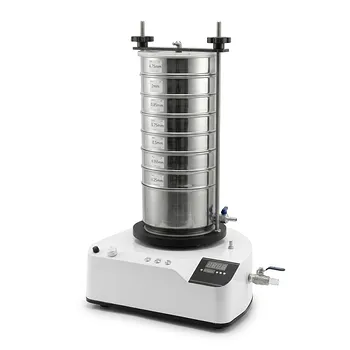
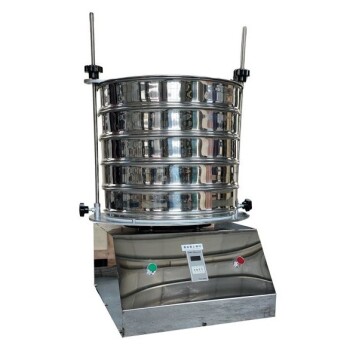
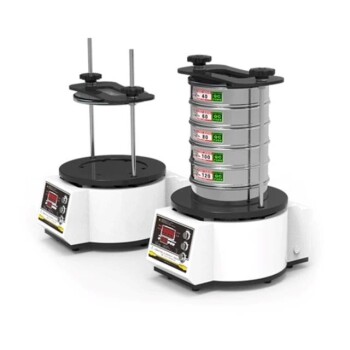
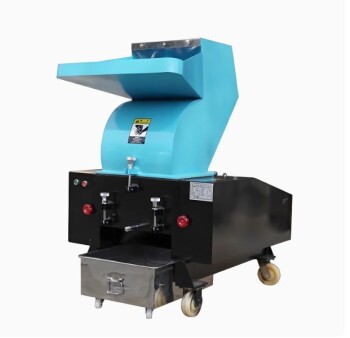
- Precision Sieving & Milling: Advanced sieving equipment, crushing systems, and milling tools for exact size fractions.
- Thermal Processing: High-temperature furnaces (muffle, tube, vacuum) and high-pressure reactors/autoclaves for controlled environments.
- Specialized Consumables: High-quality ceramics, crucibles, and PTFE products to maintain material integrity.
Whether you are a researcher refining chemical models or a distributor seeking reliable supply and OEM/ODM support, KINTEK provides the tools needed to transform unpredictable powder behavior into repeatable scientific results.
Ready to enhance your lab's accuracy and efficiency?
Contact KINTEK Today for a Tailored Solution!
References
- Fengbo An, Andreas Richter. Detailed analysis of the particle residence time distribution in a pressurized drop‐tube reactor. DOI: 10.1002/aic.18026
This article is also based on technical information from Kintek Solution Knowledge Base .
Related Products
- Three-dimensional electromagnetic sieving instrument
- Laboratory Vibratory Sieve Shaker Machine for Dry and Wet Three-Dimensional Sieving
- Laboratory Test Sieves and Sieving Machines
- Laboratory Wet Three-Dimensional Vibratory Sieve Shaker Machine
- Laboratory Test Sieves and Vibratory Sieve Shaker Machine
People Also Ask
- Why is sieving equipment essential for the classification of processed bio-activated carbon? Optimize Performance
- What are the limitations of sieving? Understanding the Constraints of Particle Size Analysis
- What are advantages and disadvantages of sieving method? A Guide to Reliable & Cost-Effective Particle Sizing
- How is sieving important? The Critical Role of Particle Size Analysis in Quality Control
- What is sieving and how does it work? A Guide to Accurate Particle Size Analysis