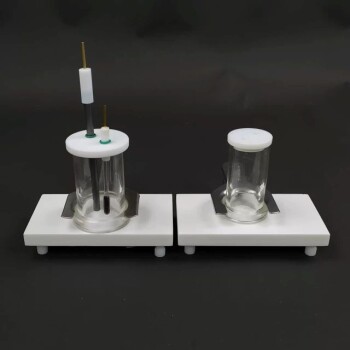
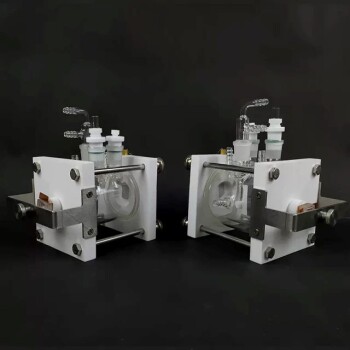
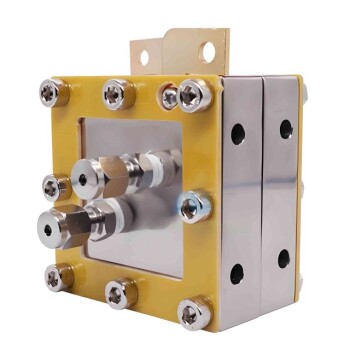
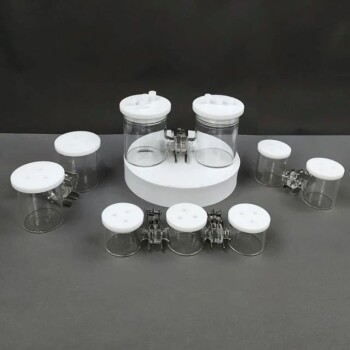
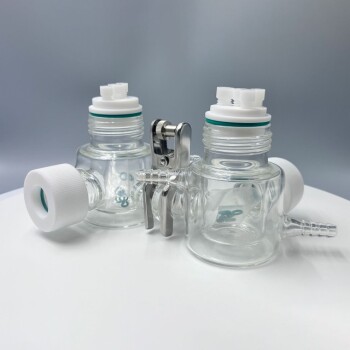
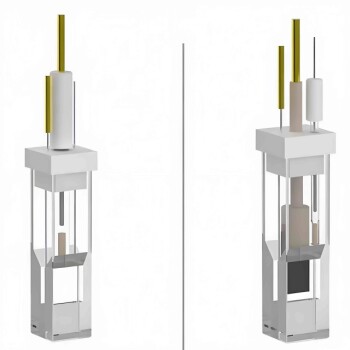
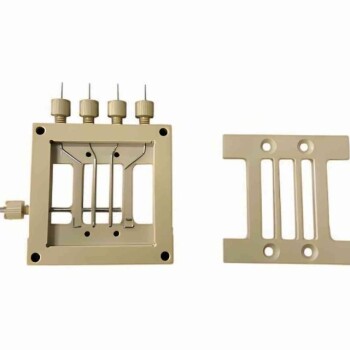
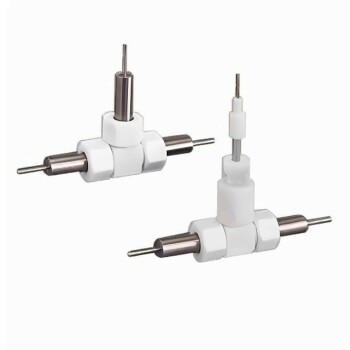
A laboratory electrolytic cell is essential because it provides the controlled environment required to monitor the real-time stability of a metal's equilibrium potential. By recording the Open Circuit Potential (OCP) over a set duration, this apparatus allows you to calculate the precise Potential Difference (PD) between two distinct materials, such as 13Cr and P110. This calculation is the only reliable method to quantify the thermodynamic driving force that leads to galvanic corrosion.
Core Insight: The electrolytic cell does more than measure voltage; it identifies the "victim" metal in a pairing. By establishing which material has the more negative potential, you can predict which component will act as the anode and suffer accelerated corrosion before the materials are ever coupled in the field.
Establishing the Corrosion Driving Force
To accurately assess risk, you must look beyond simple material properties and examine how those materials behave in a specific fluid environment. The electrolytic cell facilitates this through two primary mechanisms.
Monitoring Equilibrium Stability
Corrosion potentials are not static; they fluctuate until the metal surface reaches a steady state with the electrolyte. A laboratory cell allows for real-time monitoring of the OCP.
This ensures that the data you collect reflects the equilibrium potential stability of the metal, rather than a transient or unstable initial reading.
Calculating Potential Difference (PD)
Once stability is reached, the cell allows you to compare the OCP of different alloys, such as 13Cr, 9Cr, or P110.
By subtracting the potential of one metal from another, you derive the Potential Difference (PD). This value represents the driving force for galvanic corrosion; a larger PD generally indicates a higher risk of severe corrosion current.
Interpreting the Data for Risk Assessment
The raw data from the electrolytic cell translates directly into predictive insights regarding material longevity.
Identifying the Anode
The most critical output of OCP measurement is determining which metal in a couple will corrode. The material with the more negative potential will effectively become the sacrificial element.
Practical Application: P110 vs. 13Cr
For example, if the electrolytic cell measures a more negative potential for P110 compared to 13Cr, the P110 will act as the anode.
In a real-world coupling, this means the P110 component will suffer accelerated corrosion, while the 13Cr remains protected.
Understanding the Constraints
While the electrolytic cell is the standard for measuring OCP, it is vital to understand the context of the results to avoid misinterpretation.
The Importance of Electrolyte Specificity
The OCP is not an intrinsic property of the metal alone; it is a property of the metal-electrolyte interface.
The data derived is only valid for the specific electrolyte used in the cell. If the lab fluid differs significantly from the actual service environment (in terms of pH, temperature, or chemical composition), the predicted driving force may be inaccurate.
Making the Right Choice for Your Project
The goal of using an electrolytic cell is to convert electrochemical data into actionable engineering decisions.
- If your primary focus is Material Selection: Choose material pairs with the smallest possible Potential Difference (PD) to minimize the driving force for galvanic corrosion.
- If your primary focus is Asset Protection: Identify the material with the most negative OCP to implement targeted mitigation strategies, such as coatings or cathodic protection, on that specific component.
Accurate OCP measurement is the difference between guessing at corrosion risks and engineering them out of your system.
Summary Table:
| Feature | Purpose in OCP Measurement | Benefit for Corrosion Analysis |
|---|---|---|
| Real-time Monitoring | Tracks equilibrium stability over time | Ensures data reflects steady-state, not transient readings |
| PD Calculation | Measures potential difference between alloys | Quantifies the thermodynamic driving force of corrosion |
| Anode Identification | Detects more negative potential materials | Predicts which component will suffer accelerated corrosion |
| Controlled Interface | Replicates specific fluid environments | Validates material behavior in service-specific conditions |
Secure Your Materials with Precision Analysis
Don’t leave your asset integrity to chance. KINTEK provides the specialized electrolytic cells, high-performance electrodes, and battery research tools you need to accurately quantify corrosion driving forces and material longevity.
Whether you are performing complex electrochemical studies or routine material selection, our comprehensive range of laboratory equipment—including high-temperature reactors, autoclaves, and precision milling systems—ensures your data is reliable and actionable.
Ready to engineer out corrosion risks? Contact KINTEK today for expert laboratory solutions!
References
- Chuanzhen Zang, Zhanghua Lian. Study on the Galvanic Corrosion between 13Cr Alloy Tubing and Downhole Tools of 9Cr and P110: Experimental Investigation and Numerical Simulation. DOI: 10.3390/coatings13050861
This article is also based on technical information from Kintek Solution Knowledge Base .
Related Products
- Electrolytic Electrochemical Cell for Coating Evaluation
- PTFE Electrolytic Cell Electrochemical Cell Corrosion-Resistant Sealed and Non-Sealed
- Quartz Electrolytic Electrochemical Cell for Electrochemical Experiments
- Electrolytic Electrochemical Cell Gas Diffusion Liquid Flow Reaction Cell
- Flat Corrosion Electrolytic Electrochemical Cell
People Also Ask
- What is the volume range of the coating evaluation electrolytic cell? A Guide to Choosing the Right Size
- How does the design of an electrochemical electrolytic cell influence the coating uniformity? Optimize Your Catalysts
- What is the correct shutdown and disassembly procedure after an experiment? Ensure Safety and Protect Your Equipment
- How do the electrochemical cell and three-electrode testing system collaborate? Optimize Zinc Anode Deposition Control
- What is the difference between a voltaic cell and an electrochemical cell? Understand the Two Types of Energy Conversion