High-pressure sterilization at 121°C is mandatory because it is the specific thermal threshold required to destroy resilient microbial spores, not just active bacteria. Treating fungal media and biomass samples at this temperature for 20 minutes creates a truly sterile microenvironment, eliminating the natural microbial load found on raw materials like rice straw.
Sterilization is not merely a cleaning step; it is a prerequisite for data validity. By completely eliminating environmental competitors, you ensure that any observed biological activity is the direct result of your specific target fungi, rather than random contamination.
The Biological Necessity of 121°C
Overcoming Natural Resistance
Standard boiling at 100°C is insufficient for scientific applications. While it kills active bacteria, it often fails to destroy dormant bacterial spores.
High-pressure equipment allows steam to reach 121°C. This temperature is critical because it is high enough to penetrate and destroy the protective outer shells of these spores, preventing them from germinating later.
The "Dirty" Nature of Biomass
Raw biomass materials, such as rice straw, are naturally populated with a vast array of environmental microorganisms. These native microbes are well-adapted to the substrate and can rapidly outgrow introduced species if not removed.
Without high-pressure sterilization, the biomass remains a "noisy" environment biologically. This makes it impossible to establish a controlled baseline for your experiment.
Ensuring Experimental Validity
Eliminating Resource Competition
When you inoculate target fungi—such as Phanerochaete chrysosporium or Thermomyces lanuginosus—they need exclusive access to nutrients to function efficiently.
Sterilization removes competition. This allows your target fungi to perform directional biodegradation without fighting native microbes for the carbon and nitrogen sources within the media.
Attributing Cause and Effect
The primary goal of this preparation is to prove causality. You need to know that the biodegradation effects you observe are caused solely by the fungi you introduced.
If the media is not sterilized at 121°C, any data you collect is compromised. You cannot confirm if the biomass breakdown was caused by your fungus or by a surviving environmental contaminant.
Common Pitfalls and Considerations
The Risk of Incomplete Sterilization
Reducing the temperature or time (e.g., to preserve sensitive compounds) is a common error. If the core of the biomass does not reach 121°C for the full 20 minutes, pockets of contamination will survive.
Chemical Alteration of Substrates
It is important to acknowledge that high heat can slightly alter the chemical structure of biomass. However, in biodegradation studies, the priority is absolute sterility to ensure the validity of the biological agent's performance.
Applying This to Your Research
To ensure your data stands up to peer review, align your sterilization protocol with your specific experimental goals:
- If your primary focus is attribution of effect: You must use high-pressure sterilization at 121°C to guarantee that all degradation is attributable only to your inoculated strain.
- If your primary focus is process efficiency: You must ensure a competitor-free environment so your target fungi can achieve maximum biodegradation rates without inhibition.
Reliable science begins with a clean baseline; high-pressure sterilization provides the blank canvas your fungi need to perform.
Summary Table:
| Parameter | Standard Boiling (100°C) | High-Pressure Sterilization (121°C) |
|---|---|---|
| Microbial Target | Active bacteria only | Active bacteria + Resilient spores |
| Effect on Biomass | Incomplete decontamination | Complete elimination of native microbes |
| Data Validity | High risk of contamination/noise | Controlled, reproducible results |
| Biological Goal | General cleaning | Total sterility & directional biodegradation |
Elevate Your Research Precision with KINTEK
Don't let contamination compromise your experimental validity. KINTEK provides industry-leading high-pressure high-pressure reactors and autoclaves designed specifically for the rigorous demands of biomass treatment and fungal media preparation.
Our specialized laboratory solutions ensure your samples reach the critical 121°C threshold with absolute reliability. Whether you are conducting directional biodegradation studies or optimizing process efficiency, our comprehensive range—from high-temperature furnaces and crushing systems to high-precision autoclaves and cooling solutions—is engineered to give your target fungi the sterile environment they need to perform.
Ready to secure a clean baseline for your next breakthrough? Contact KINTEK today to find the perfect sterilization solution for your lab.
References
- Meng Li, Zhenzhong Gao. Synergistic effect of mixed fungal pretreatment on thermogravimetric characteristics of rice straw. DOI: 10.15376/biores.16.2.3978-3990
This article is also based on technical information from Kintek Solution Knowledge Base .
Related Products
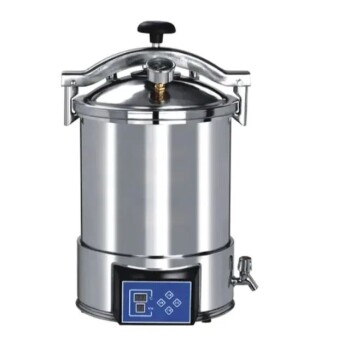
- Laboratory High Pressure Steam Sterilizer Vertical Autoclave for Lab Department
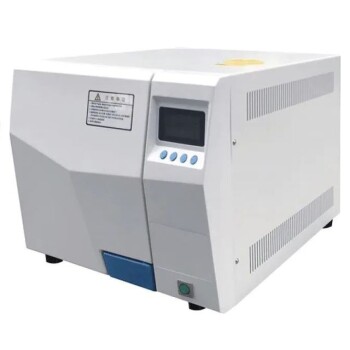
- Desktop Fast High Pressure Laboratory Autoclave Sterilizer 16L 24L for Lab Use
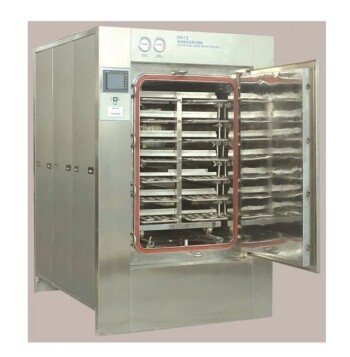
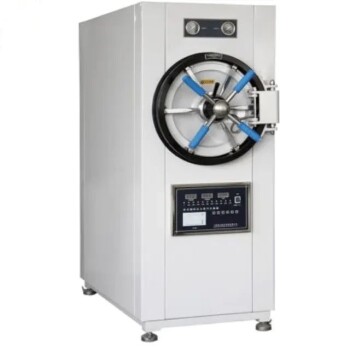
- Laboratory High Pressure Horizontal Autoclave Steam Sterilizer for Lab Use
- Portable High Pressure Laboratory Autoclave Steam Sterilizer for Lab Use
- Portable Digital Display Automatic Laboratory Sterilizer Lab Autoclave for Sterilization Pressure
People Also Ask
- What is the role of a laboratory high-pressure autoclave in the conversion of furfural to piperidine? Optimize Yields
- Why is a laboratory high-pressure autoclave sterilizer necessary? Ensure Accuracy in Antibacterial Research
- What function does a high-pressure laboratory autoclave serve in walnut shell pretreatment? Enhance Biomass Reactivity.
- How does a laboratory high-pressure autoclave function to control Mn3O4 morphology? Precision Particle Engineering
- Autoclave's Role in PAA & MA Nanosheet Assembly? Driving High-Pressure Solvothermal Chemical Integration