Maintaining a vacuum level of $10^{-5}$ mbar is essential to minimize residual oxygen and impurity molecules that react with copper at high temperatures. This specific pressure threshold prevents oxidation during the evaporation process, ensuring the deposited film achieves the high chemical purity and precise initial crystal structure necessary for subsequent transition into single-crystal copper.
Maintaining a high vacuum environment acts as a safeguard for material integrity. By drastically reducing the concentration of reactive gases, you ensure that the copper film retains its intrinsic properties and forms the foundational crystal structure required for high-performance applications.
Preventing Oxidation and Chemical Contamination
Eliminating Residual Oxygen and Moisture
At the high temperatures required for copper evaporation, copper becomes highly reactive to any remaining oxygen or moisture in the chamber. A pressure of $10^{-5}$ mbar effectively clears these contaminants, preventing the formation of oxide inclusions that would degrade the film's electrical and structural properties.
Ensuring High Chemical Purity
High vacuum levels ensure that the flux of copper atoms reaching the substrate is not "polluted" by collisions with residual gas molecules. This results in a film with high chemical purity, which is the primary prerequisite for advanced electronic and metallurgical applications.
Promoting Optimal Crystal Structure
Establishing the Initial Crystal Foundation
The quality of a copper film is determined during the first few layers of deposition. A high vacuum allows copper atoms to settle on the sapphire substrate without interference, creating an excellent initial crystal structure that is free from the defects caused by impurity gas trapping.
Enabling Single-Crystal Recrystallization
For many high-end applications, the goal is to transform the deposited film into single-crystal copper. This recrystallization process is only possible if the starting film is exceptionally clean and well-ordered, a state that cannot be achieved at higher (dirtier) pressures.
Enhancing Interface Dynamics
Improving Surface Wetting and Adhesion
Lower pressures reduce the "cushion" of gas molecules on the substrate surface, allowing for better contact between the copper and the substrate. This environment enhances wetting performance and reduces penetration resistance, which is critical for creating dense, pore-free layers.
Removing Surface Oxides from Substrates
Maintaining this vacuum level also helps in removing or preventing the re-formation of oxides on the substrate itself. This ensures that the interface between the copper and the sapphire substrate is atomically clean, promoting stronger adhesion and better epitaxial growth.
Understanding the Trade-offs
Equipment and Time Requirements
Achieving and maintaining $10^{-5}$ mbar requires sophisticated pumping systems, such as turbomolecular or cryo-pumps, which increase operational costs. Additionally, the "pump-down" time required to reach these pressures can lengthen production cycles compared to low-vacuum processes.
Diminishing Returns at Extreme Vacuums
While $10^{-5}$ mbar is a "sweet spot" for many copper applications, pushing to even lower pressures (e.g., $10^{-9}$ mbar) offers diminishing returns for standard films. The increased cost and complexity of Ultra-High Vacuum (UHV) systems are usually only justified for highly specialized semiconductor research or sensitive high-entropy alloy production.
Making the Right Choice for Your Project
Implementation Guidelines
- If your primary focus is single-crystal growth: You must strictly maintain $10^{-5}$ mbar or lower to ensure the initial crystal lattice is free of oxide defects that block recrystallization.
- If your primary focus is basic electrical conductivity: You might tolerate slightly higher pressures ($10^{-4}$ mbar), though this risks higher resistivity due to oxygen incorporation.
- If your primary focus is high-speed production: Invest in high-capacity pumping systems to reach the $10^{-5}$ mbar threshold quickly, rather than sacrificing vacuum quality for speed.
A precise vacuum environment is the invisible architecture that defines the ultimate quality and performance of your deposited copper films.
Summary Table:
| Key Benefit | Impact on Copper Film | Technical Necessity |
|---|---|---|
| Oxidation Prevention | Ensures high chemical purity | Removes reactive oxygen and moisture molecules. |
| Crystal Growth | Enables single-crystal recrystallization | Establishes a defect-free initial lattice foundation. |
| Interface Dynamics | Enhanced adhesion and wetting | Eliminates the gas "cushion" on the sapphire substrate. |
| Structural Integrity | Dense, pore-free layers | Prevents impurity gas trapping during deposition. |
Optimize Your Thin-Film Precision with KINTEK
Achieving the perfect vacuum environment is critical for high-performance material science. KINTEK specializes in providing researchers and manufacturers with state-of-the-art laboratory equipment designed for precision and reliability. Whether you are working on copper film deposition, semiconductor research, or advanced metallurgy, our portfolio has you covered:
- Deposition & Thermal Processing: High-performance CVD, PECVD, and MPCVD systems, along with a wide range of muffle, tube, and vacuum furnaces.
- Reaction & Synthesis: High-temperature high-pressure reactors, autoclaves, and electrolytic cells.
- Sample Preparation: Precision crushing, milling, sieving equipment, and hydraulic pellet presses.
- Lab Essentials: ULT freezers, cooling solutions, and high-quality consumables like PTFE products and ceramic crucibles.
Ready to elevate your lab's capabilities? Our experts are here to help you select the right tools for your specific vacuum and thermal requirements.
Contact KINTEK Today for a Consultation
References
- М. С. Комленок, Е. Д. Образцова. Crystallization of Copper Films on Sapphire Substrate for Large-Area Single-Crystal Graphene Growth. DOI: 10.3390/nano13101694
This article is also based on technical information from Kintek Solution Knowledge Base .
Related Products
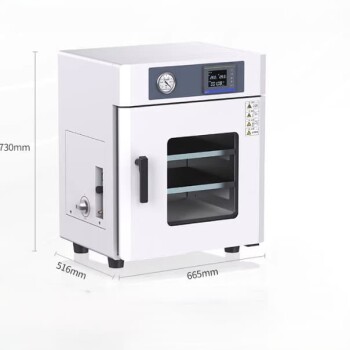
- 56L Vertical Laboratory Vacuum Drying Oven
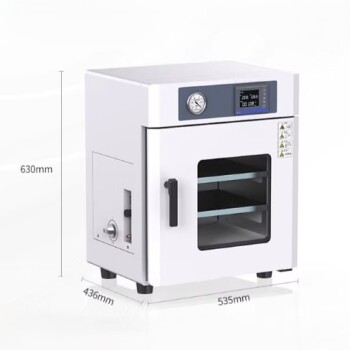
- 23L Laboratory Vacuum Drying Oven
- Chemical Vapor Deposition CVD Equipment System Chamber Slide PECVD Tube Furnace with Liquid Gasifier PECVD Machine
- Vacuum Cold Trap Direct Cold Trap Chiller
- Vacuum Cold Trap Chiller Indirect Cold Trap Chiller
People Also Ask
- Why is a laboratory vacuum drying oven recommended for rice straw residues? Protect Your Biomass Integrity
- What role does a laboratory vacuum drying oven play in the preparation of modified multi-walled carbon nanotubes?
- What is the importance of using a laboratory vacuum drying oven? Preserving Slow-Release Microcapsule Integrity
- Why is a Laboratory Vacuum Drying Oven recommended for PBAT microspheres? Protect Sensitive Polymer Integrity
- What role does a laboratory vacuum drying oven play in processing nanoparticle powder samples? Protect Sample Integrity