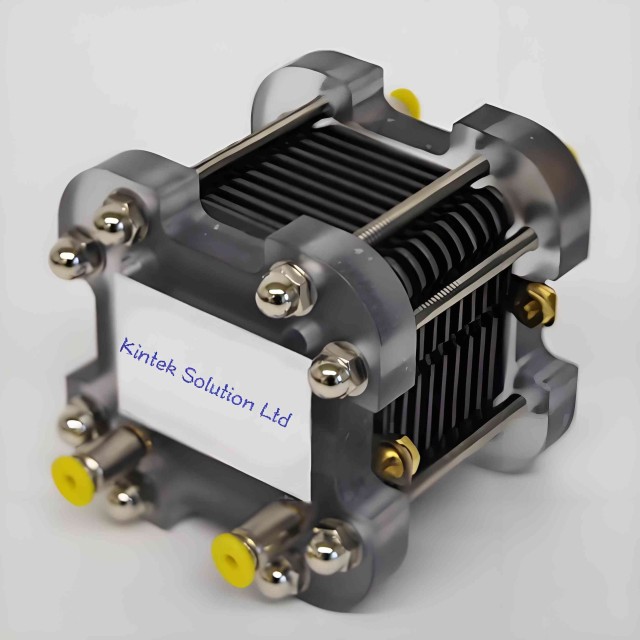
Electrochemical Consumables
FS Electrochemical Hydrogen Fuel Cells for Diverse Applications
Item Number : FSE
Price varies based on specs and customizations
- MEA Active Area
- 250px²
- Graphite Plate Dimensions
- 6.3 x 6.3 x 0.4 cm
- Fittings
- 4 x 1/8" Push-to-connect

Shipping:
Contact us to get shipping details Enjoy On-time Dispatch Guarantee.
Why Choose Us
Easy ordering process, quality products, and dedicated support for your business success.
Introduction
The FS Electrochemical Cell is engineered for ease of use, allowing individual cells to be disassembled and reassembled. This modularity makes it simple to scale the FS to different power levels and integrate equipment and sensors. Whether for research and development or professional training, the FS fuel cell is an excellent learning tool that provides hands-on experience with promising fuel cell technology. It's an advanced research tool, perfect for exploring various fuel cell lab or conducting professional training that has a practical application.
This electrochemical cell can be combined with MEAs without closed independent flow channels, allowing reactant flows on each side of the MEA. Only a flathead screwdriver (1/4 inch) and a torque wrench (1 in/lb, 3/8 inch nut) are necessary to assemble the FS Electrochemical Cell, enabling you to create your own applications.
Features:
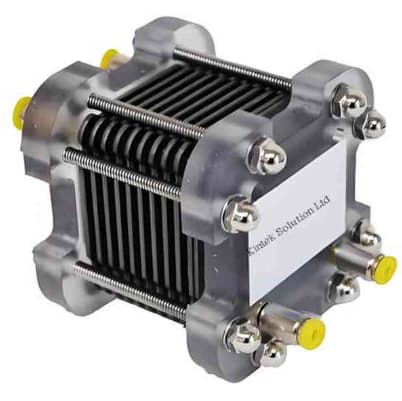
- 1-cell and 5-cell FS Hydrogen Fuel Cell configurations available: Adapt to your specific power needs.
- Closed cathode design: Ensures efficient operation.
- Open cathode with cooling fan: Provides optimal temperature regulation and oxygen supply.
- Modular and scalable: Easily adaptable to different power levels and integration requirements.
- Durable and resistant: Constructed from high-quality, acid and alkali-resistant materials.
- Precision manufactured: Ensures reliable and consistent performance.
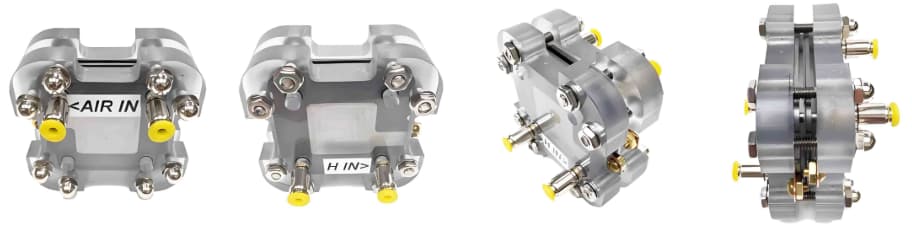
1-cell FS Hydrogen Fuel Cell
5-cell FS Hydrogen Fuel Cell
Benefits and Customer Value:
- Versatility: Suitable for both research and professional training, offering hands-on experience with fuel cell technology.
- Ease of Assembly: Simple tools are all that's needed for assembly, allowing for quick setup and customization.
- Reliability: Built with high-quality, durable materials that are acid and alkali resistant, ensuring long-lasting and consistent performance.
- Efficiency: Optimized design for effective reactant flow and cooling, leading to reliable energy generation.
- Customization: Supports tailored performance for various applications through customizable manufacturing services.
- One-Stop Solution: KINTEK simplifies procurement by providing a comprehensive range of electrochemical instruments and consumables.
Technical Parameters:
| Parameter | Description |
|---|---|
| MEA Active Area | 3.2 x 80px (250px2) |
| MEA Membrane Area | 5.3 x 132.5px |
| Fittings | 4 x 1/8" Push-to-connect (2 per reactant side) |
| Graphite Plate Overall Dimensions (L x W x D) | 6.3 x 6.3 x 0.4 cm |
Please note that the FS Electrochemical Cell does not come with guide dowels. 1/8" guide dowels are recommended for assembly of the stack to aid in the alignment of the components.
Discover how our customizable electrochemical cell can power your next breakthrough. For tailored solutions and to discuss your specific needs, connect with us today and let our experts assist you in achieving your project goals. Don't miss out on the opportunity to elevate your electrochemical endeavors with reliable, high-performance products. Contact us to learn more
Designed for You
KinTek provide deep custom made service and equipment to worldwide customers, our specialized teamwork and rich experienced engineers are capable to undertake the custom tailoring hardware and software equipment requirements, and help our customer to build up the exclusive and personalized equipment and solution!
Would you please drop your ideas to us, our engineers are ready for you now!
Trusted by Industry Leaders

FAQ
What Are The Materials Used In Electrochemical Cell?
What Are The Examples Of Electrochemical Material?
REQUEST A QUOTE
Our professional team will reply to you within one business day. Please feel free to contact us!
Related Products
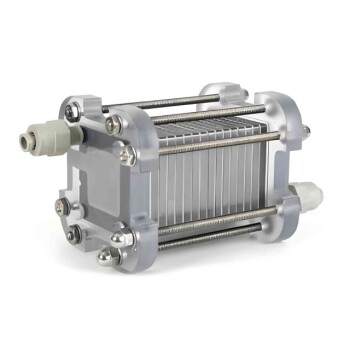
Customizable Fuel Cell Stack Components for Diverse Applications
Introducing the FS Fuel Cell Stack Components. This modular assembly is designed for ease of use and offers reliable performance for various electrochemical applications, particularly in hydrogen fuel cell research and development, and educational settings.
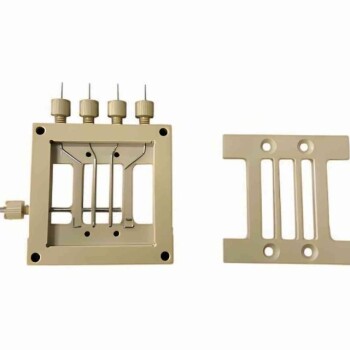
Custom Ion Conductivity Test Fixtures for Fuel Cell Research
Custom ion conductivity test fixtures for precise PEM/AEM fuel cell research. High-precision, customizable.
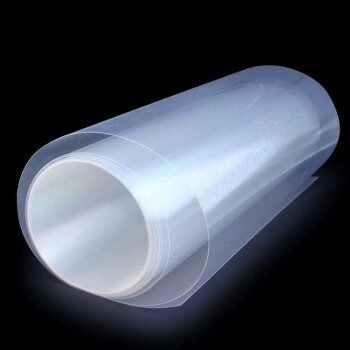
Proton Exchange Membrane for Batteries Lab Applications
Thin proton exchange membrane with low resistivity; high proton conductivity; low hydrogen permeation current density; long life; suitable for electrolyte separators in hydrogen fuel cells and electrochemical sensors.

Customizable PEM Electrolysis Cells for Diverse Research Applications
Custom PEM test cell for electrochemical research. Durable, versatile, for fuel cells & CO2 reduction. Fully customizable. Get a quote!

Thin-Layer Spectral Electrolysis Electrochemical Cell
Discover the benefits of our thin-layer spectral electrolysis cell. Corrosion-resistant, complete specifications, and customizable for your needs.

Multifunctional Electrolytic Electrochemical Cell Water Bath Single Layer Double Layer
Discover our high-quality Multifunctional Electrolytic Cell Water Baths. Choose from single or double-layer options with superior corrosion resistance. Available in 30ml to 1000ml sizes.

Polyethylene Separator for Lithium Battery
The polyethylene separator is a key component of lithium-ion batteries, located between the positive and negative electrodes. They allow the passage of lithium ions while inhibiting electron transport. The performance of the separator affects the capacity, cycle and safety of the battery.

Double Layer Five-Port Water Bath Electrolytic Electrochemical Cell
Experience optimal performance with our Water Bath Electrolytic Cell. Our double-layer, five-port design boasts corrosion resistance and longevity. Customizable to fit your specific needs. View specs now.

Double-Layer Water Bath Electrolytic Electrochemical Cell
Discover the temperature-controllable electrolytic cell with a double-layer water bath, corrosion resistance, and customization options. Complete specifications included.

Customizable CO2 Reduction Flow Cell for NRR ORR and CO2RR Research
The cell is meticulously crafted from high-quality materials to ensure chemical stability and experimental accuracy.

Electrolytic Electrochemical Cell with Five-Port
Streamline your laboratory consumables with Kintek's Electrolytic Cell with five-port design. Choose from sealed and non-sealed options with customizable electrodes. Order now.

Customizable Swagelok Type Test Cells for Advanced Battery Research Electrochemical Analysis
The KINTEK Swagelok-type test cell is a modular, T-shaped device constructed from high-quality, chemically inert materials.

Side Window Optical Electrolytic Electrochemical Cell
Experience reliable and efficient electrochemical experiments with a side window optical electrolytic cell. Boasting corrosion resistance and complete specifications, this cell is customizable and built to last.

Optical Water Bath Electrolytic Electrochemical Cell
Upgrade your electrolytic experiments with our Optical Water Bath. With controllable temperature and excellent corrosion resistance, it's customizable for your specific needs. Discover our complete specifications today.

Electrolytic Electrochemical Cell Gas Diffusion Liquid Flow Reaction Cell
Looking for a high-quality gas diffusion electrolysis cell? Our liquid flow reaction cell boasts exceptional corrosion resistance and complete specifications, with customizable options available to suit your needs. Contact us today!

Flat Corrosion Electrolytic Electrochemical Cell
Discover our flat corrosion electrolytic cell for electrochemical experiments. With exceptional corrosion resistance and complete specifications, our cell guarantees optimal performance. Our high-quality materials and good sealing ensure a safe and durable product, and customization options are available.

PTFE Electrolytic Cell Electrochemical Cell Corrosion-Resistant Sealed and Non-Sealed
Choose our PTFE Electrolytic Cell for reliable, corrosion-resistant performance. Customize specifications with optional sealing. Explore now.

Super Sealed Electrolytic Electrochemical Cell
Super-sealed electrolytic cell offers enhanced sealing capabilities, making it ideal for experiments that require high airtightness.

Electrolytic Electrochemical Cell for Coating Evaluation
Looking for corrosion-resistant coating evaluation electrolytic cells for electrochemical experiments? Our cells boast complete specifications, good sealing, high-quality materials, safety, and durability. Plus, they're easily customizable to meet your needs.

Chemical Vapor Deposition CVD Equipment System Chamber Slide PECVD Tube Furnace with Liquid Gasifier PECVD Machine
KT-PE12 Slide PECVD System: Wide power range, programmable temp control, fast heating/cooling with sliding system, MFC mass flow control & vacuum pump.
Related Articles

Electrochemistry The Science Behind Electrochemical Cells
Electrochemistry is important because it helps us understand the behavior of materials and substances in different environments.
Benefits of Electrochemical Cells for Energy Storage
Electrochemical cells are devices that convert chemical energy into electrical energy through the use of oxidation-reduction reactions. They are widely used in various applications such as energy storage, fuel cells, and batteries.

Electrochemical Cells: Generating Electricity and Driving Reactions
Electrochemical cells, like batteries, play a vital role in energy storage by converting chemical energy to electrical energy and vice versa. Explore the workings, types, and significance of these cells.
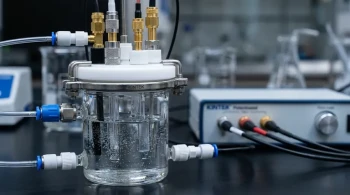
The Silence of the Seal: Why Electrochemical Precision is a Battle Against the Atmosphere
Precision in electrochemistry isn't just about voltage; it's about isolation. Discover how super-sealed cells defeat contamination and define reproducibility.
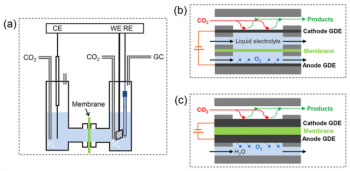
H-Type Electrochemical Cells vs. Flow-Cells
Comparison of H-Type Electrolytic Cells and Flow-Cells, focusing on their structures, advantages, and disadvantages in CO2 reduction systems.
The Architecture of Silence: Why Quartz Defines Electrochemical Precision
In electrochemistry, the vessel is as critical as the catalyst. Discover why quartz's unique properties make it the unseen hero of precise experimentation.
The Architecture of Accuracy: Inside the Five-Port Electrolytic Cell
Precision in electrochemistry relies on controlling the environment. Explore the engineering behind the five-port water bath cell and how it eliminates variables.
The Art of the Sealed System: Mastering the Five-Port Electrolytic Cell
Mastering the five-port electrolytic cell requires more than just chemistry; it demands a systematic approach to connections, temperature, and atmospheric control.
The Fragility of Precision: Mastering the Integrity of Five-Port Electrolytic Cells
Prevent leaks in electrolytic cells through systematic inspection and proper assembly. A guide to mastering experimental seal integrity and reliability.
Electrochemical Consumables: A Comprehensive Guide to Materials, Applications, and Selection
Discover the world of electrochemical consumables, including types of electrodes (working, auxiliary, and reference) and electrolytes, as well as factors to consider when selecting materials for your electrochemical experiments or applications.
Overcoming Challenges with H-Type Electrolytic Cell Operation
Understanding the components and operation of the H-type electrolytic cell is crucial in producing high-quality chemicals and overcoming the challenges that come with its operation.
Applications of H-Type Electrolytic Cell in Metal Extraction
H-type electrolytic cells uses an electrolyte solution to dissolve the metal ions and an electric current to separate the metal ions from the solution.