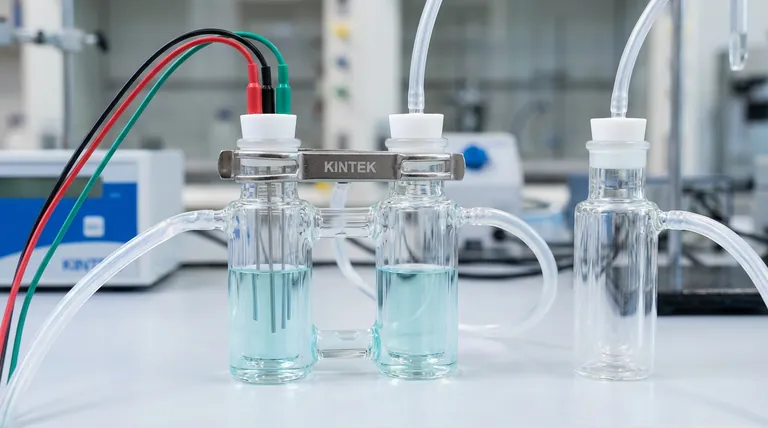
Blog The Thermodynamics of Precision: Mastering the Double-Layer Electrolytic Cell
The Thermodynamics of Precision: Mastering the Double-Layer Electrolytic Cell

The Thermodynamics of Precision: Mastering the Double-Layer Electrolytic Cell

8 hours ago

The most dangerous moment in any electrochemical experiment is not when the reaction fails. It is when the reaction succeeds, but the data is wrong.

We often view the electrolytic cell as a simple vessel—a bucket for chemistry. This is a mistake. The double-layer water-bath electrolytic cell is a precision instrument designed to isolate your experiment from the chaos of the outside world.

Its primary function is not just to hold liquid, but to enforce thermodynamic tyranny. It dictates the temperature, ensuring that the only variable changing is the one you are testing.

Operating it requires a shift in mindset. You are not just mixing chemicals; you are constructing a controlled environment. As Atul Gawande might suggest, the difference between a breakthrough and background noise is often a checklist.

The Physics of Preparation

Most experiments fail before the power supply is ever turned on. They fail in the physical setup.

Stability is the prerequisite for accuracy. A wobbling cell introduces variables you cannot account for.

  • The Physical Anchor: Secure the cell to the laboratory stand. Tighten the knobs until the unit is vertically rigid.
  • The Safety Net: If you are working with corrosive electrolytes, placing a leak-proof pad underneath is not paranoia—it is insurance.
  • The Geometry of Reaction: Install the working, counter, and reference electrodes. Their spacing defines the electric field. If the spacing changes between experiments, your data is no longer comparable.

Note: Electrode immersion is a balancing act. The active surface must be submerged, but the conductive rods must remain dry. Capillarity is a subtle enemy; ensure the electrolyte level is precise.

The Thermal Shield: Configuring the Water Bath

The defining feature of this equipment is the "double layer"—the jacket. This is your thermal shield.

Chemistry is slave to temperature. A fluctuation of a few degrees can alter reaction kinetics, diffusivity, and viscosity. The water bath eliminates this variable.

  1. Plumbing: Connect the inlet and outlet pipes. These connections must be hermetic. A water leak is not just a mess; it is a breach of thermal integrity.
  2. Circulation: Ensure the water flows freely. Stagnant pockets of water create thermal gradients.
  3. The Wait: Set the temperature and wait. This is the hardest part for the eager engineer. The electrolyte inside the cell needs time to reach thermal equilibrium with the jacket.

The Electrical Nervous System

The electrochemical workstation is the brain; the wires are the nerves. If the nerves are crossed, the system collapses.

Connecting the electrode leads requires deliberate attention.

  • Mapping: Verify the Working, Counter, and Reference leads.
  • Polarity: Check the main power supply. Reversing polarity is not a minor error; it is often a fatal blow to sensitive electrodes or the cell itself.

Once the physical and electrical systems are linked, double-check your software parameters. Scanning voltage, potential windows, and current ranges must be typed in, read, and read again.

The Art of Observation

Once you hit "Start," your role shifts from architect to observer.

The software will capture the quantitative data—current, potential, time. But it cannot see what is happening. You must provide the qualitative context.

Watch for the visible signatures of chemistry:

  • Bubble generation: Is gas evolving at the expected rate?
  • Chromatics: Is the solution changing color?
  • Deposition: Is matter forming on the electrode surface?

If the system behaves erratically—unexpected noise in the data or sudden spikes—intervention is necessary. A loose connection or a gas bubble trapped on an electrode face can ruin an hour of work.

Operational Matrix

Success in electrochemistry is rarely about brilliance. It is about removing sources of failure.

Phase The "Silent" Risk The Engineering Solution
Setup Geometric inconsistency Rigidly fix electrode spacing and depth.
Thermal Kinetic fluctuation Allow full equilibration time before starting.
Electrical Reversed polarity Double-verify lead connections to the workstation.
Execution Unnoticed anomalies Visually monitor electrode surfaces for bubbles/deposits.

Conclusion: The Romanticism of Reliability

There is a quiet romance in a perfectly reproducible experiment. It means you have tamed the variables.

The double-layer electrolytic cell is the tool that allows you to assert this control. But the tool is only as good as the hands that set it up.

At KINTEK, we understand that your research is built on the integrity of your equipment. We provide the glass and steel so you can provide the science.

Contact Our Experts to discuss how our precision electrochemical equipment can stabilize your research and secure your data.

Visual Guide
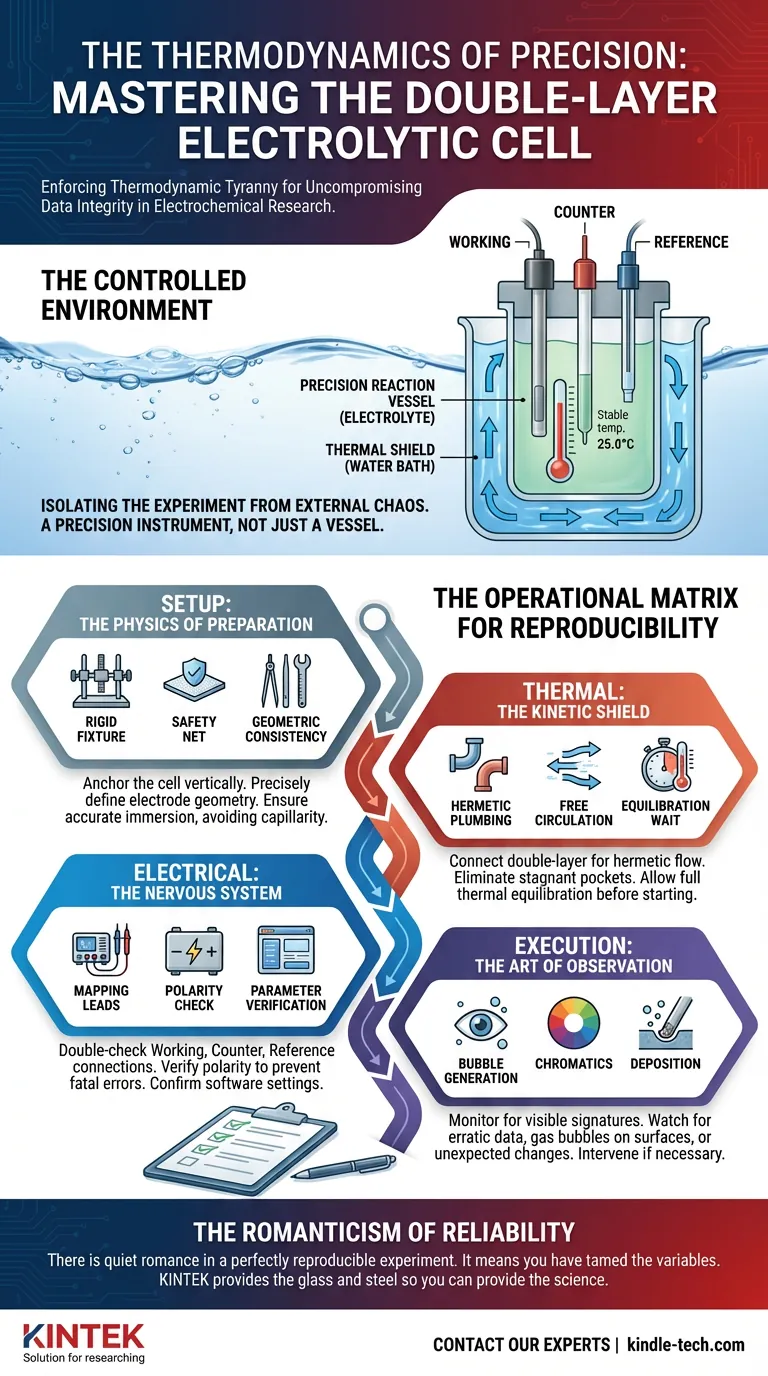
The Thermodynamics of Precision: Mastering the Double-Layer Electrolytic Cell Visual Guide

Related Products

Related Articles

Related Products

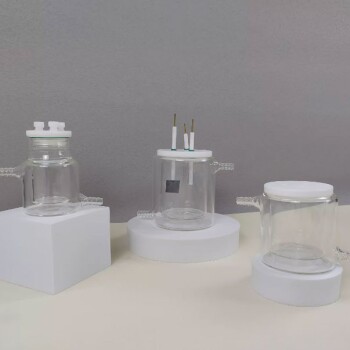
Double-Layer Water Bath Electrolytic Electrochemical Cell

Double-Layer Water Bath Electrolytic Electrochemical Cell

Discover the temperature-controllable electrolytic cell with a double-layer water bath, corrosion resistance, and customization options. Complete specifications included.

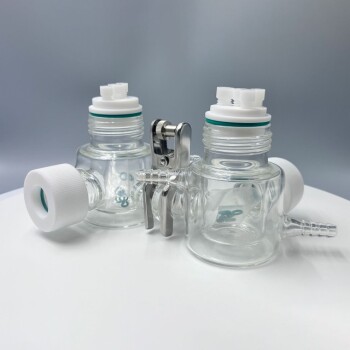
Super Sealed Electrolytic Electrochemical Cell

Super Sealed Electrolytic Electrochemical Cell

Super-sealed electrolytic cell offers enhanced sealing capabilities, making it ideal for experiments that require high airtightness.

H-Type Double-Layer Optical Electrolytic Electrochemical Cell with Water Bath

H-Type Double-Layer Optical Electrolytic Electrochemical Cell with Water Bath

Double-layer H-type optical water bath electrolytic cells, with excellent corrosion resistance and a wide range of specifications available. Customization options are also available.

Electrolytic Electrochemical Cell with Five-Port

Electrolytic Electrochemical Cell with Five-Port

Streamline your laboratory consumables with Kintek's Electrolytic Cell with five-port design. Choose from sealed and non-sealed options with customizable electrodes. Order now.

Electrolytic Electrochemical Cell for Coating Evaluation

Electrolytic Electrochemical Cell for Coating Evaluation

Looking for corrosion-resistant coating evaluation electrolytic cells for electrochemical experiments? Our cells boast complete specifications, good sealing, high-quality materials, safety, and durability. Plus, they're easily customizable to meet your needs.

PTFE Electrolytic Cell Electrochemical Cell Corrosion-Resistant Sealed and Non-Sealed

PTFE Electrolytic Cell Electrochemical Cell Corrosion-Resistant Sealed and Non-Sealed

Choose our PTFE Electrolytic Cell for reliable, corrosion-resistant performance. Customize specifications with optional sealing. Explore now.

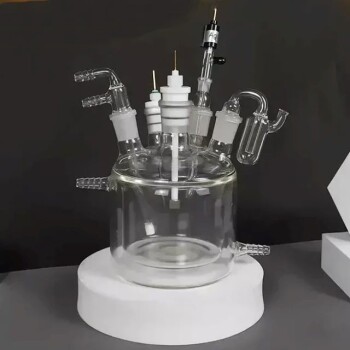
Double Layer Five-Port Water Bath Electrolytic Electrochemical Cell

Double Layer Five-Port Water Bath Electrolytic Electrochemical Cell

Experience optimal performance with our Water Bath Electrolytic Cell. Our double-layer, five-port design boasts corrosion resistance and longevity. Customizable to fit your specific needs. View specs now.

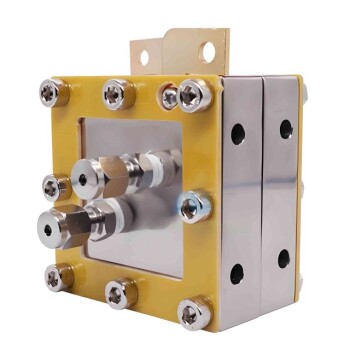
Customizable PEM Electrolysis Cells for Diverse Research Applications

Customizable PEM Electrolysis Cells for Diverse Research Applications

Custom PEM test cell for electrochemical research. Durable, versatile, for fuel cells & CO2 reduction. Fully customizable. Get a quote!

Side Window Optical Electrolytic Electrochemical Cell

Side Window Optical Electrolytic Electrochemical Cell

Experience reliable and efficient electrochemical experiments with a side window optical electrolytic cell. Boasting corrosion resistance and complete specifications, this cell is customizable and built to last.

H Type Electrolytic Cell Triple Electrochemical Cell

H Type Electrolytic Cell Triple Electrochemical Cell

Experience versatile electrochemical performance with our H-type Electrolytic Cell. Choose from membrane or non-membrane sealing, 2-3 hybrid configurations. Learn more now.

Quartz Electrolytic Electrochemical Cell for Electrochemical Experiments

Quartz Electrolytic Electrochemical Cell for Electrochemical Experiments

Looking for a reliable quartz electrochemical cell? Our product boasts excellent corrosion resistance and complete specifications. With high-quality materials and good sealing, it's both safe and durable. Customize to meet your needs.

Electrolytic Electrochemical Cell Gas Diffusion Liquid Flow Reaction Cell

Electrolytic Electrochemical Cell Gas Diffusion Liquid Flow Reaction Cell

Looking for a high-quality gas diffusion electrolysis cell? Our liquid flow reaction cell boasts exceptional corrosion resistance and complete specifications, with customizable options available to suit your needs. Contact us today!

FS Electrochemical Hydrogen Fuel Cells for Diverse Applications

FS Electrochemical Hydrogen Fuel Cells for Diverse Applications

KINTEK's FS Electrochemical Cell: Modular PEM fuel cell stack for R&D and training. Acid-resistant, scalable, and customizable for reliable performance.

Flat Corrosion Electrolytic Electrochemical Cell

Flat Corrosion Electrolytic Electrochemical Cell

Discover our flat corrosion electrolytic cell for electrochemical experiments. With exceptional corrosion resistance and complete specifications, our cell guarantees optimal performance. Our high-quality materials and good sealing ensure a safe and durable product, and customization options are available.

Thin-Layer Spectral Electrolysis Electrochemical Cell

Thin-Layer Spectral Electrolysis Electrochemical Cell

Discover the benefits of our thin-layer spectral electrolysis cell. Corrosion-resistant, complete specifications, and customizable for your needs.

Customizable Swagelok Type Test Cells for Advanced Battery Research Electrochemical Analysis

Customizable Swagelok Type Test Cells for Advanced Battery Research Electrochemical Analysis

The KINTEK Swagelok-type test cell is a modular, T-shaped device constructed from high-quality, chemically inert materials.

Customizable CO2 Reduction Flow Cell for NRR ORR and CO2RR Research

Customizable CO2 Reduction Flow Cell for NRR ORR and CO2RR Research

The cell is meticulously crafted from high-quality materials to ensure chemical stability and experimental accuracy.

Gold Electrochemical Sheet Electrode Gold Electrode

Gold Electrochemical Sheet Electrode Gold Electrode

Discover high-quality gold sheet electrodes for safe and durable electrochemical experiments. Choose from complete models or customize to meet your specific needs.

Glassy Carbon Sheet RVC for Electrochemical Experiments

Glassy Carbon Sheet RVC for Electrochemical Experiments

Discover our Glassy Carbon Sheet - RVC. Perfect for your experiments, this high-quality material will elevate your research to the next level.

Custom PTFE Teflon Parts Manufacturer for Acid and Alkali Resistant Chemical Powder Material Scoops

Custom PTFE Teflon Parts Manufacturer for Acid and Alkali Resistant Chemical Powder Material Scoops

Known for its excellent thermal stability, chemical resistance and electrical insulating properties, PTFE is a versatile thermoplastic material.


Leave Your Message