Introduction
Definition of a rotary evaporator
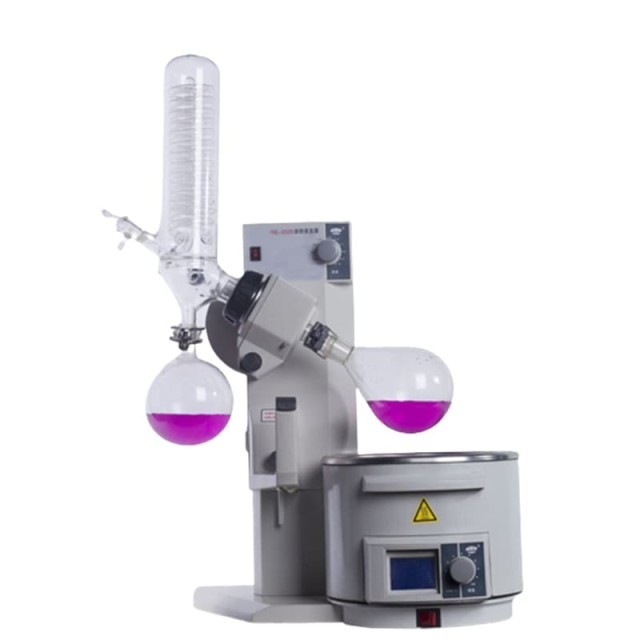
A rotary evaporator, also known as a rotovap, is a laboratory instrument that is used to efficiently and gently remove solvents from samples by evaporation. It consists of a rotating flask that is placed in a heating bath, a condenser for recovering the evaporated solvent, and a vacuum system for creating a reduced pressure environment.
The rotation of the flask causes the liquid inside to form a thin film on the walls of the flask, increasing the surface area and allowing for more efficient evaporation. The rotary evaporator is a versatile and widely used tool in the laboratory, particularly in the chemical and pharmaceutical industries.
Purpose and uses of a rotary evaporator
What is Distillation
Distillation is a method of separation that relies on the difference in boiling points between the components of a mixture. The process involves heating the mixture to a temperature at which one or more of the components will evaporate, and then condensing the vapor back into a liquid form. By repeating this process multiple times, it is possible to separate the components of a mixture based on their relative volatilities.
Two main purposes
A rotary evaporator, also known as a rotovap, is a laboratory instrument that is specifically designed to perform distillation efficiently and gently. The rotovap is composed of a number of different components, including a rotating flask, an evaporating flask, a condenser, and a vacuum pump. The rotation of the flask causes the liquid inside to form a thin film on the walls of the flask, increasing the surface area and allowing for more efficient evaporation.
The rotovap is used for two main purposes. The first is to concentrate non-volatile components in a mixture. This is particularly useful in the food and beverage industry, where it is used to concentrate the purest and freshest flavors from a variety of fruits and herbs. For example, by removing the water from a blood orange, it is possible to obtain a more concentrated and flavorful extract.
The second main use of a rotovap is to extract the volatile aroma and flavor molecules from mixtures gently and at low temperatures. This is particularly useful in the production of perfumes, essential oils, and other fragrances. By using a rotovap, it is possible to extract the desired flavors from a blend of alcohol, herbs, and fruit without heating the mixture up. This allows for the preservation of delicate and sensitive aroma and flavor molecules, which can be lost when exposed to high temperatures.
Key to understanding any distillation process
The key to understanding any distillation process is to remember that it is a separation technique that relies on differences in the boiling points of the components of a mixture. In the case of a rotary evaporator, also known as a rotovap, the goal is to separate a mixture into its individual components based on their relative volatilities, using the process of evaporation and condensation.
One of the major advantages of using a rotovap for distillation is its ability to separate food compounds from one another without altering them. Traditional distillation methods can be harsh and can cause damage to delicate compounds, such as flavor and aroma molecules. The gentle and low-temperature evaporation process of a rotovap, on the other hand, allows for the preservation of these delicate compounds.
For example, in the food and beverage industry, a rotovap can be used to separate sugars, acids, and other non-volatile components from the volatile aroma and flavor molecules in a mixture. This allows for the production of more concentrated and flavorful extracts, without altering the delicate flavor and aroma compounds.
Similarly, in the production of perfumes and essential oils, a rotovap can be used to extract the volatile aroma and flavor molecules from a mixture of herbs, fruits, and alcohol, without exposing them to high temperatures that can cause damage. This allows for the preservation of the delicate and sensitive aroma and flavor molecules, which can be lost when exposed to high temperatures.
Basic structure of rotary evaporator
The rotary evaporator consists of several key components that work together to separate a mixture into its individual components based on their relative volatilities.
- Motor Unit: The motor unit is responsible for rotating the evaporation flask or vial containing the sample. This rotation creates a thin film of the mixture on the walls of the flask, increasing the surface area and allowing for more efficient evaporation.
- Vapor Duct: The vapor duct is the axis for sample rotation and serves as a vacuum-tight conduit for the vapor being drawn off the sample.
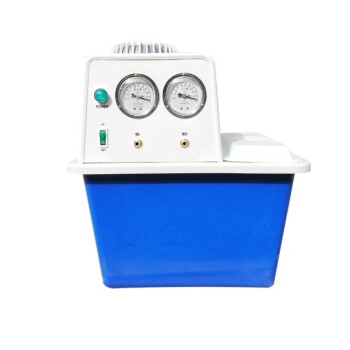
- Vacuum System: The vacuum system is used to substantially reduce the pressure within the evaporator system. This reduction in pressure lowers the boiling point of the solvent, allowing it to evaporate at a much lower temperature, preserving delicate compounds.
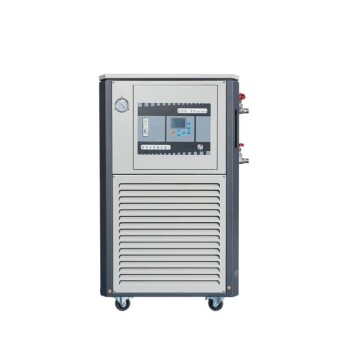
- Heated Fluid Bath: A heated fluid bath, typically water, is used to heat the sample. The temperature of the bath is controlled to ensure that the sample is heated to the optimal temperature for evaporation.
- Condenser: The condenser is used to cool and condense the vapor back into a liquid form. It can be a coil passing coolant or a "cold finger" into which coolant mixtures such as dry ice and acetone are placed.
- Condensate-Collecting Flask: The condensate-collecting flask is placed at the bottom of the condenser and is used to catch the distilling solvent after it re-condenses.
- Lifting Mechanism: A mechanical or motorized mechanism is used to quickly lift the evaporation flask from the heating bath. This allows for easy removal of the flask for cleaning or sample replacement.
- Reflux splitter, which is used to control the reflux ratio of the distillate.
- Splash head, which is used to protect the condenser from overflowing distillate.
- Safety shield, to protect the operator from any splashes or spills.
When the solvent has a low boiling point and the compound is solid at room temperature and pressure. This method is particularly convenient for separating solvents such as n-hexane or ethyl acetate from compounds. However, it can also be used to separate a solvent from a sample containing a liquid compound if the solvent and the liquid compound have minimal co-evaporation (azeotropic behavior) and a sufficient difference in boiling points at the chosen temperature and reduced pressure.
key components of the rotary evaporator
The rotary evaporator is specifically designed to perform distillation in a gentle, precise, and efficient manner. Two key components of the rotovap that contribute to its unique capabilities are the vacuum system and the rotating evaporating flask.
First, the solvent is removed under vacuum, which lowers its boiling point. This eliminates the need for high-temperature distillation that can damage delicate compounds, such as flavor and aroma molecules. By reducing the pressure, the boiling point of the solvent is lowered, allowing it to evaporate at a much lower temperature, preserving the delicate compounds.
Second, the rotation of the evaporating flask, which is immersed in a heated water bath, increases the surface area of the product, greatly speeding distillation. The rotation creates a thin film of the mixture on the walls of the flask, increasing the surface area and allowing for more efficient evaporation. Additionally, the forced convection created by the rotation keeps the mixture evenly mixed and heated, promoting stable and even evaporation.
The combination of the vacuum system and the rotating evaporating flask allows for gentle, precise, and efficient distillation not found in conventional distilling apparatuses. The rotovap can be used in a variety of industries such as food, beverage, fragrance, and pharmaceuticals, where a gentle distillation process is crucial to preserve delicate compounds.
Advantages of Using a Rotary Evaporator
- Efficient and Gentle: The rotary evaporator is designed to remove solvents from samples in an efficient and gentle manner. The rotation of the flask causes the liquid inside to form a thin film on the walls of the flask, increasing the surface area and allowing for more efficient evaporation.
- Low-temperature Operation: The rotary evaporator operates at a low temperature, which is beneficial for preserving delicate compounds such as flavor and aroma molecules.
- High Recovery: The rotary evaporator has a high recovery rate of solvents, making it a cost-effective method of separating compounds.
- Versatile: The rotary evaporator can be used for a wide range of applications, including distillation, extraction, and concentration. It is commonly used in the chemical, pharmaceutical, and food and beverage industries.
- Easy to Operate: The rotary evaporator is easy to operate, making it accessible to researchers with a wide range of skill levels.
- Safe: Rotary evaporators are equipped with a variety of safety features, such as safety shields and automatic lifting mechanisms, to protect the operator from spills and splashes.
- High-quality Results: Rotary evaporators provide high-quality results by allowing for precise control of temperature and pressure during the evaporation process, resulting in pure and accurate results.
- Automation: Many rotary evaporators are equipped with automation features such as automatic lifting mechanisms, continuous feed systems, and programmed temperature control, which increase the efficiency and speed of the process.
The Disadvantage of Using a Rotary Evaporator
A key disadvantage of using a rotary evaporator is the potential for "bumping", which occurs when a sample boils unevenly and causes a portion of the material to be lost. This is more likely to happen with samples that have a high propensity to foam or bump, such as mixtures of ethanol and water. Experienced users can take precautions to prevent bumping, such as taking homogeneous phases into the evaporation, carefully regulating the strength of the vacuum, or using added agents such as boiling chips. However, even with these precautions, mishaps during evaporation can still occur. Furthermore, Rotary evaporators can also be equipped with special traps and condenser arrays to prevent or minimize bumping or foaming, but those are usually not standard in most of the Rotary evaporators.
Some components of a rotary evaporator are fragile, such as the evaporation flask and the condenser, and need to be handled with care.
Rotary evaporators are designed to handle relatively small sample sizes, making them less suitable for large-scale production processes.
Conclusion
The rotary evaporator is a versatile and widely used tool in the laboratory for separating solvents from compounds. It is particularly useful for separating low boiling solvents from solid compounds, and it operates at low temperatures, preserving delicate compounds.
Related Products
- Electric Rotary Kiln Small Rotary Furnace for Activated Carbon Regeneration
- Inclined Rotary Plasma Enhanced Chemical Vapor Deposition PECVD Equipment Tube Furnace Machine
- Electric Rotary Kiln Small Rotary Furnace Biomass Pyrolysis Plant
- Inclined Rotary Plasma Enhanced Chemical Vapor Deposition PECVD Equipment Tube Furnace Machine
- Laboratory Vacuum Tilt Rotary Tube Furnace Rotating Tube Furnace
Related Articles
- A Comprehensive Guide to Rotary Kilns: Applications, Types, and Working Principles
- 6 Ways To activated carbon regeneration
- Rotary Furnaces: A Comprehensive Guide to Advanced Materials Processing
- Mastering Rotary Kilns: A Comprehensive Guide to Operation, Applications, and Maintenance
- Maximize Rotary Furnace Performance: Design Advancements for Efficient Material Processing