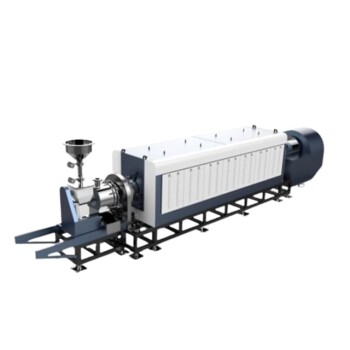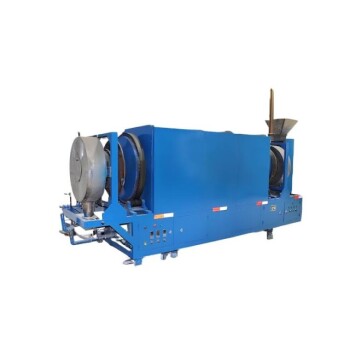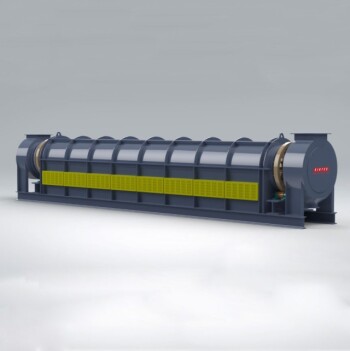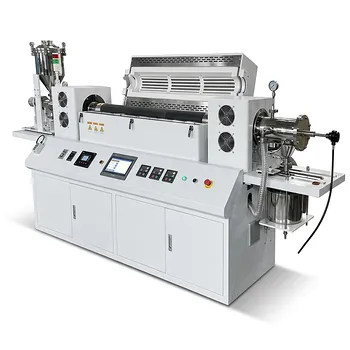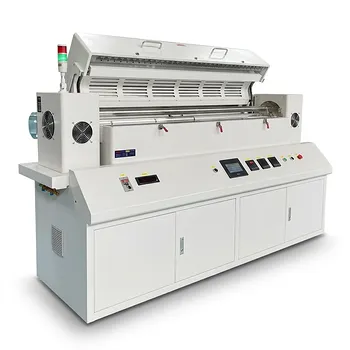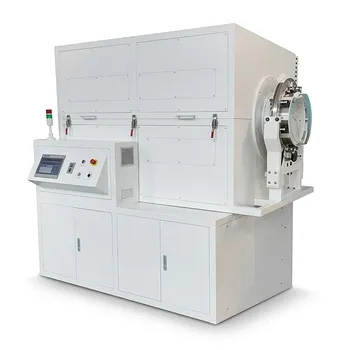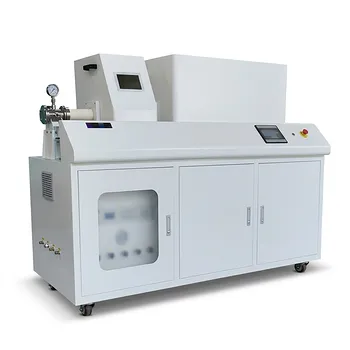
Does this story sound familiar? Your team has developed a promising new material or chemical process at the bench scale. The science is solid. But when you try to produce larger quantities in your lab’s new rotary kiln, everything falls apart. Yields are inconsistent. The product is either burnt or under-processed. After weeks of troubleshooting, you’re no closer to a solution, and the entire project is at risk.
You’re not alone. This is a frustratingly common scenario in materials science, chemical engineering, and R&D labs worldwide.
## The Vicious Cycle: When Tweaking Your Process Doesn't Work
When faced with inconsistent kiln results, the instinctive reaction is to blame the process parameters. So, the team gets to work:
- "Let's increase the temperature by 20 degrees."
- "Maybe we should slow down the rotation speed."
- "What if we reduce the feed rate by half?"
While logical, these adjustments rarely solve the core issue. You might see a slight improvement in one batch, only for the next to fail completely.
This trial-and-error cycle has significant business consequences. It leads to blown project timelines, wasted budgets on expensive raw materials, and a critical loss of confidence from management. A process that once held immense promise now looks like a costly dead end, all because the pilot-scale equipment can't replicate the initial success.
## The Real Culprit: It's Not Your Chemistry, It's Kiln Geometry
Here is the turning point: The problem isn’t your process. The problem is that you are trying to force your unique process into a generic piece of equipment.
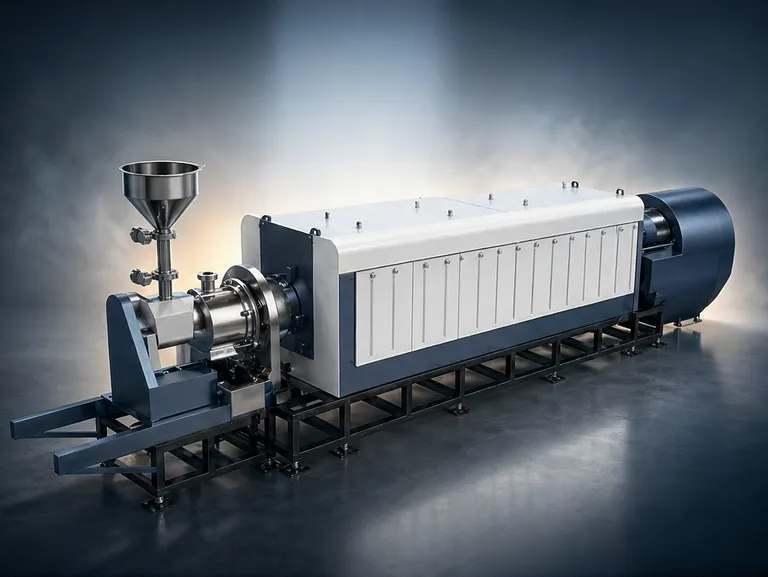
Many labs purchase a "standard" or "off-the-shelf" rotary kiln, assuming that a bigger version of a bench-top furnace will work the same way. This is a fundamental misunderstanding. A rotary kiln's physical dimensions are not just a container; they are active, critical variables in the thermal process itself.
The 'one-size-fits-all' approach fails because of two key principles:
### Length Dictates Retention Time
Think of it like baking a cake. The recipe gives you a specific time and temperature for a reason. A kiln's length, combined with its rotation and incline, determines how long your material stays inside the hot zone—its retention time. If the kiln is too short, your material will exit before the chemical reaction is complete, no matter how high you crank the temperature. It's like pulling the cake out of the oven after 10 minutes instead of 30.
### Diameter Dictates Heat Transfer
Now, imagine trying to cook a single, massive steak that's a foot thick. Even if the oven is at the right temperature, the heat will never reach the center before the outside is burnt to a crisp. A kiln's diameter works the same way. It determines the depth of the material bed tumbling inside. If the diameter is too large for your process, the particles in the center of the pile will never get exposed to the correct temperature, resulting in an under-processed, non-uniform product.
This is why tweaking operational settings fails. You are trying to compensate for a fundamental design flaw with minor adjustments. It’s like trying to win a Formula 1 race with a city bus by simply pressing the accelerator harder—the core design is wrong for the objective.
## The Solution: Design the Kiln Around Your Process
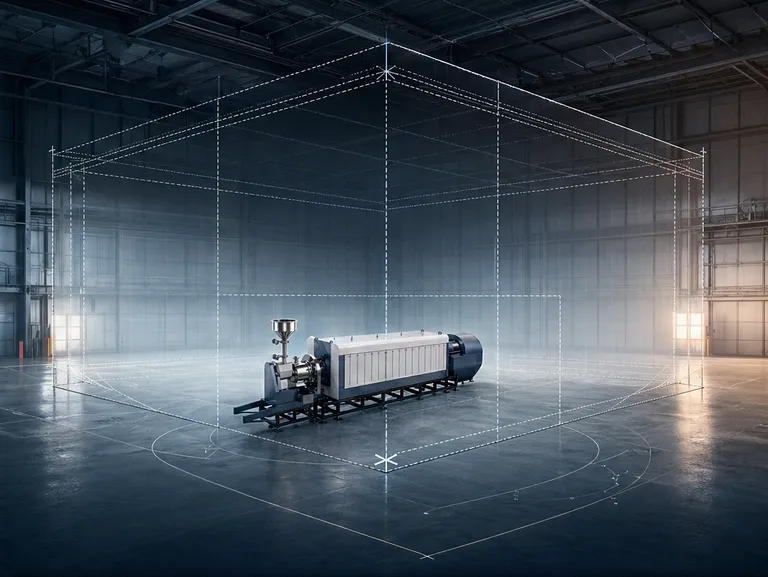
To get consistent, scalable results, you must stop trying to fit your process into a pre-built kiln. Instead, you need a kiln that is engineered to the specific requirements of your process.
This is where a partnership-based approach becomes critical. At KINTEK, we don't offer a catalog of 'standard' lab kilns, because we know that for serious R&D, they create more problems than they solve.
Our methodology is the reverse of the common approach. We begin with your process:
- What is the exact retention time your material requires?
- What is its thermal conductivity and reaction profile?
- What is your target throughput?
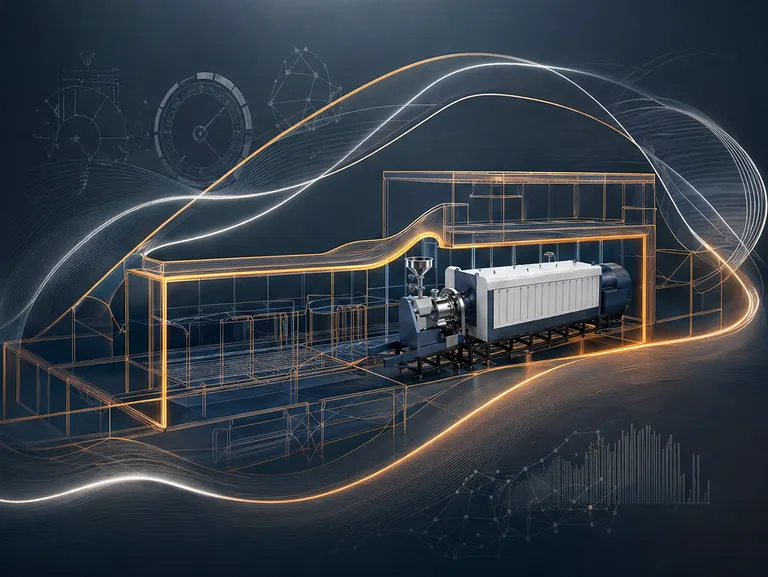
We use these specific answers to calculate the precise dimensions—the optimal length-to-diameter ratio—that will guarantee your material is processed perfectly every time. The kiln becomes a physical embodiment of your successful process, not an obstacle to it. This engineered approach ensures that every particle is exposed to the right temperature for the right amount of time, eliminating the guesswork and inconsistency.
## Beyond Troubleshooting: From Consistent Results to Accelerated Innovation
When you stop fighting your equipment, you unlock new potential. With a rotary kiln custom-designed for your process, the benefits extend far beyond simply fixing a problem:
- Achieve True Repeatability: Generate consistent, reliable data batch after batch, giving you the confidence to move forward.
- De-Risk Your Scale-Up: Create a solid data package that proves your process is viable and ready for pilot or full-scale production.
- Accelerate R&D Cycles: Move from concept to validated results faster, saving months of frustrating troubleshooting.
- Explore New Frontiers: Tackle more sensitive or complex materials that demand absolute precision in thermal processing.
Ultimately, the right equipment allows you to focus your energy on innovation, not on compensating for hardware limitations.
Don't let the wrong equipment derail your next breakthrough. Your process is unique, and your equipment should be too. If you are tired of battling inconsistent results and want to ensure your process can scale successfully, our team is here to help you design a solution built for your specific goals. Contact Our Experts to discuss the unique challenges of your project.
Related Products
- Electric Rotary Kiln Small Rotary Furnace Biomass Pyrolysis Plant
- Electric Rotary Kiln Continuous Working Small Rotary Furnace Heating Pyrolysis Plant
- Electric Rotary Kiln Small Rotary Furnace for Activated Carbon Regeneration
- Electric Rotary Kiln Pyrolysis Furnace Plant Machine Calciner Small Rotary Kiln Rotating Furnace
- Vacuum Sealed Continuous Working Rotary Tube Furnace Rotating Tube Furnace
Related Articles
- Mastering Rotary Kilns: A Comprehensive Guide to Operation, Applications, and Maintenance
- Your Rotary Kiln Isn't an Oven: The Secret to Consistent Thermal Processing
- Why Your Rotary Kiln Results Are Unpredictable—And How to Finally Fix Them
- Why Your Lab's Rotary Kiln Fails: It’s Not Your Process, It’s the Parts
- Stop Asking About 'Temperature Range': The Real Key to Rotary Kiln Success