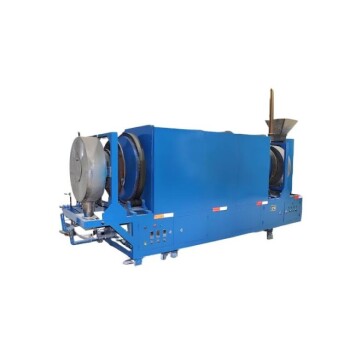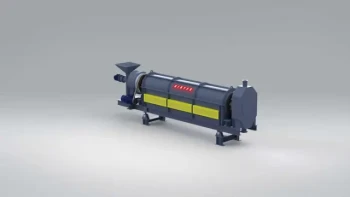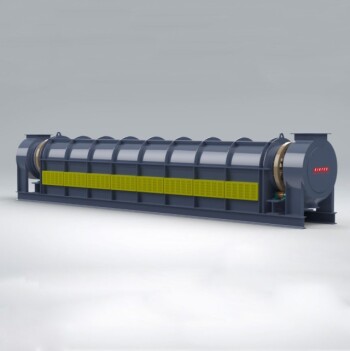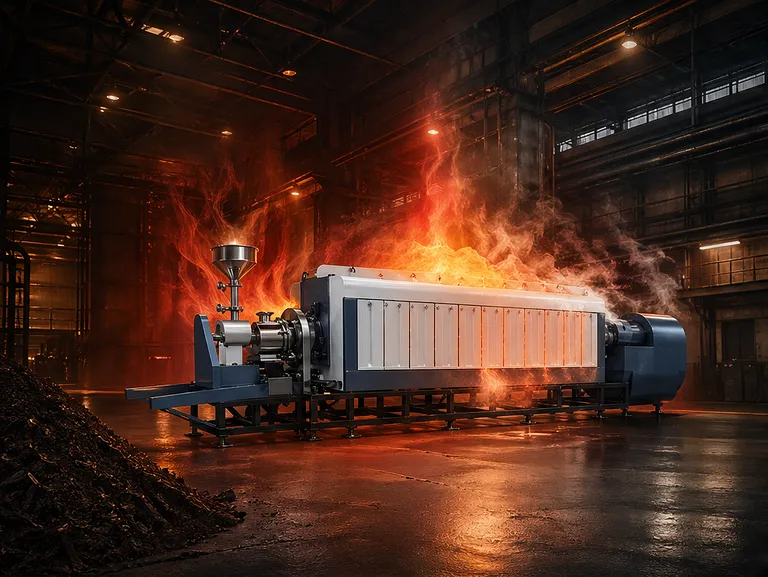
You’re looking at the numbers again. Your rotary kiln has been running at full tilt, yet the throughput is disappointingly low and the energy costs are alarmingly high. It feels like you’re burning fuel just to watch it go up the smokestack, with little to show for it. You know your process could be more efficient, but you’ve tried everything you can think of, and you’re still stuck.
This scenario is a constant source of frustration for plant managers and process engineers alike.
The Vicious Cycle of Inefficiency
When faced with an underperforming kiln, the immediate reaction is to start tweaking the parameters. It’s a familiar dance:
- "Let's increase the temperature to speed up the reaction."
- "Maybe if we slow down the feed rate, we'll get better conversion."
- "The raw material is too wet; let's extend the residence time."
Each adjustment seems logical, but they rarely solve the fundamental problem. Instead, you get caught in a loop of trial and error. The results are marginal improvements at best, and often, one "fix" creates a new problem elsewhere.
The business consequences of this struggle are severe and tangible. Persistently high energy consumption inflates your operational costs, eroding profit margins. Missed production targets lead to project delays and can damage your reputation for reliability. Most critically, this hidden inefficiency acts as a permanent ceiling on your ability to scale, preventing you from seizing new market opportunities.
The Real Culprit: It's Not What You're Doing, But Where
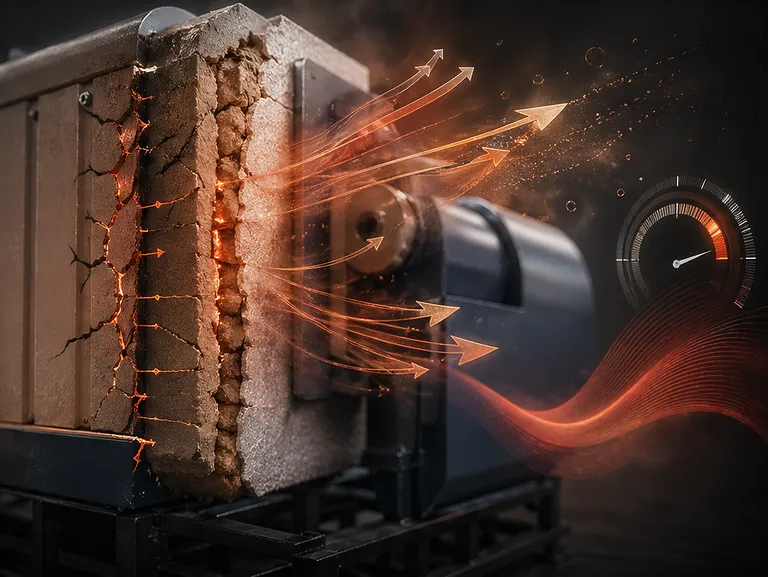
Here is the turning point: The problem isn't your kiln's power or your team's operational skill. The root cause of the inefficiency is that you are forcing one machine to do two jobs it wasn't designed for.
Most traditional rotary kilns combine two fundamentally different processes: low-temperature drying and high-temperature chemical reaction (like calcination). The first part of the kiln, the "drying zone," is tasked with evaporating water from your raw materials. Only then can the material move to the hotter zones for conversion.
This sounds sensible, but it hides a critical flaw in physics.
Why a Kiln Is a Terrible Dryer
A rotary kiln is designed to facilitate high-temperature reactions. In it, material largely slides and tumbles along the bottom shell. This creates very limited contact between the bulk of the material and the hot gas flowing over it. You are essentially trying to dry a large, dense pile of material by blowing hot air over the top of it.
This is incredibly inefficient. Trying to compensate by cranking up the gas temperature is like using a blowtorch to boil a pot of water—you'll waste enormous amounts of energy for a slow, uneven result. The tweaks you were making failed because they couldn't overcome this basic limitation of poor heat transfer.
The Right Tool for the Right Job: A Dedicated Rotary Dryer
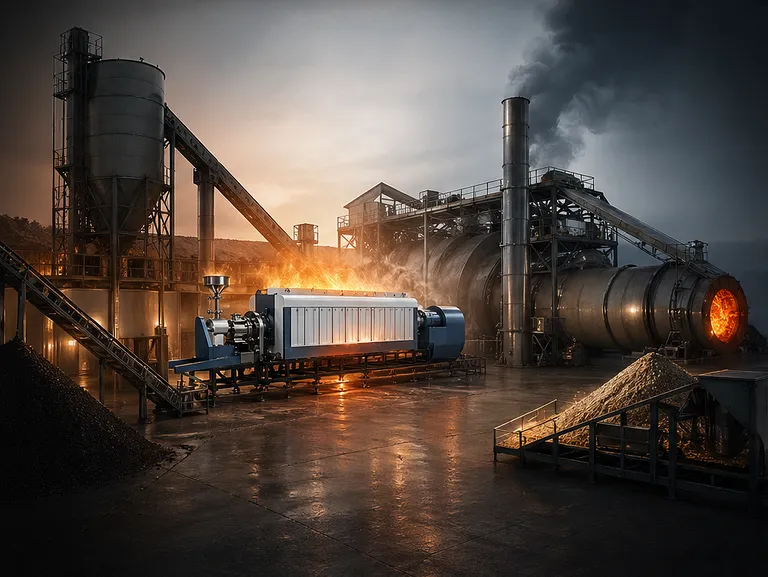
To truly solve this problem, you must stop asking your kiln to be a dryer. The solution is to decouple the process: use a machine built for drying to do the drying, and let the kiln excel at its real job—high-temperature conversion.
This is where a dedicated rotary dryer becomes not just an add-on, but a strategic necessity. A purpose-built rotary dryer is engineered from the ground up for maximum drying efficiency. Unlike a kiln, it contains internal structures called "lifters" or "flights".
As the dryer rotates, these lifters continuously pick up the material and shower it through the entire stream of hot gas. This action maximizes the surface area of the material exposed to heat, resulting in dramatically faster, more uniform, and more energy-efficient drying.
KINTEK's high-efficiency rotary dryers are the embodiment of this principle. They are not just another piece of equipment; they are designed based on a first-principles understanding of thermal dynamics. By handling the moisture removal upstream, they deliver a consistently dry, pre-heated feed to your kiln, setting it up for optimal performance.
Beyond a Fix: Unlocking a New Level of Performance
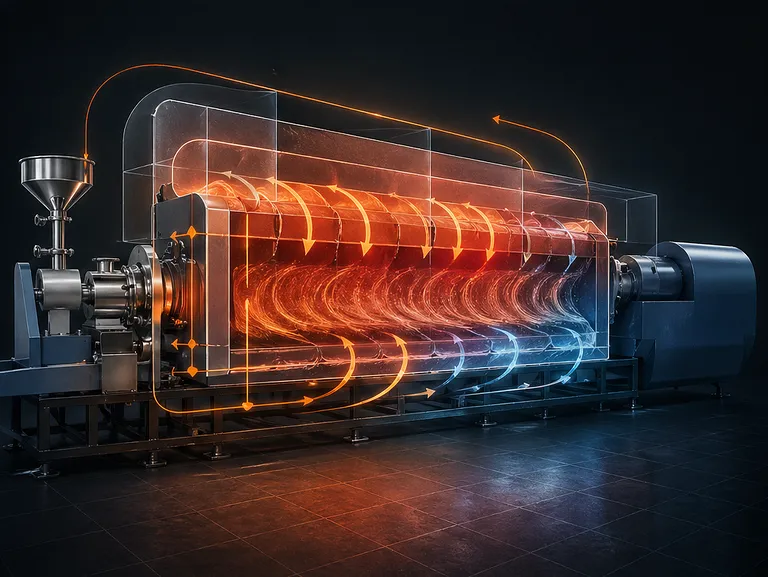
When you liberate your kiln from the inefficient burden of drying, you don't just fix a problem—you transform your entire operation. Your kiln, now fed a perfectly prepared material, can finally operate at its peak design potential.
This unlocks a cascade of powerful benefits:
- Massive Throughput Gains: With the kiln focused solely on high-temperature reaction, residence times can be shortened, dramatically increasing the tons-per-hour output.
- Drastic Energy Savings: Each piece of equipment operates in its sweet spot. The dryer removes water efficiently at low temperatures, and the kiln converts material efficiently at high temperatures. Your overall fuel consumption per ton of product plummets.
- Superior Process Stability: Feeding a dry, consistent material into the kiln eliminates the massive temperature fluctuations caused by evaporating water, leading to a more stable process and higher-quality final product.
- Expanded Capabilities: You can now confidently process raw materials with higher moisture content that were previously uneconomical or technically impossible to handle.
You move from a state of constantly fighting your equipment to orchestrating a high-performance, predictable, and scalable production system.
Your challenge isn't just about reducing your energy bill; it's about unlocking the full potential of your production line. If you're ready to move beyond incremental tweaks and fundamentally re-engineer your process for maximum efficiency and throughput, our experts are here to help. We can analyze your current workflow and design a system that turns your biggest bottleneck into your greatest asset. Let's discuss how to tailor a solution for your specific materials and goals. Contact Our Experts.
Related Products
- Electric Rotary Kiln Small Rotary Furnace Biomass Pyrolysis Plant
- Electric Rotary Kiln Continuous Working Small Rotary Furnace Heating Pyrolysis Plant
- Electric Rotary Kiln Small Rotary Furnace for Activated Carbon Regeneration
- Electric Rotary Kiln Pyrolysis Furnace Plant Machine Calciner Small Rotary Kiln Rotating Furnace
- Vacuum Sealed Continuous Working Rotary Tube Furnace Rotating Tube Furnace
Related Articles
- Your Rotary Kiln Isn't an Oven: The Secret to Consistent Thermal Processing
- Your Rotary Kiln Process is Failing. The Problem Isn't Temperature—It's Purity.
- Your Rotary Kiln is Wasting Energy and Money. The Reason is Hiding in Plain Sight.
- Why More Fuel Isn't Fixing Your Rotary Kiln—And What Will
- Mastering Rotary Kilns: A Comprehensive Guide to Operation, Applications, and Maintenance