Knowledge Does milling reduce particle size? Achieve Precise Control Over Your Material's Properties
Author avatar

Tech Team · Kintek Solution

Updated 1 week ago

Does milling reduce particle size? Achieve Precise Control Over Your Material's Properties


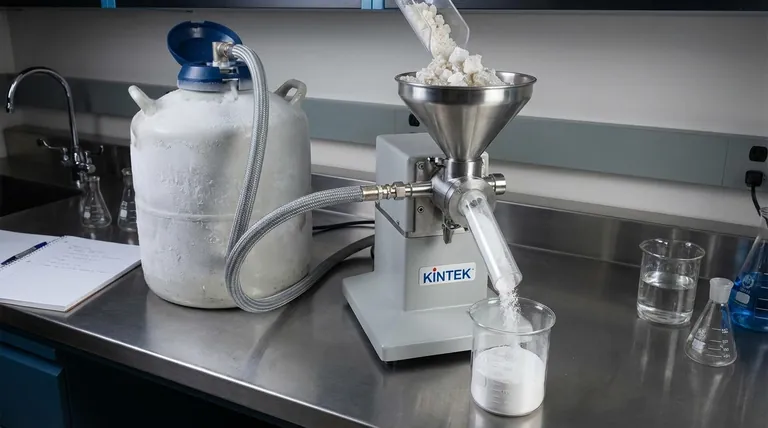
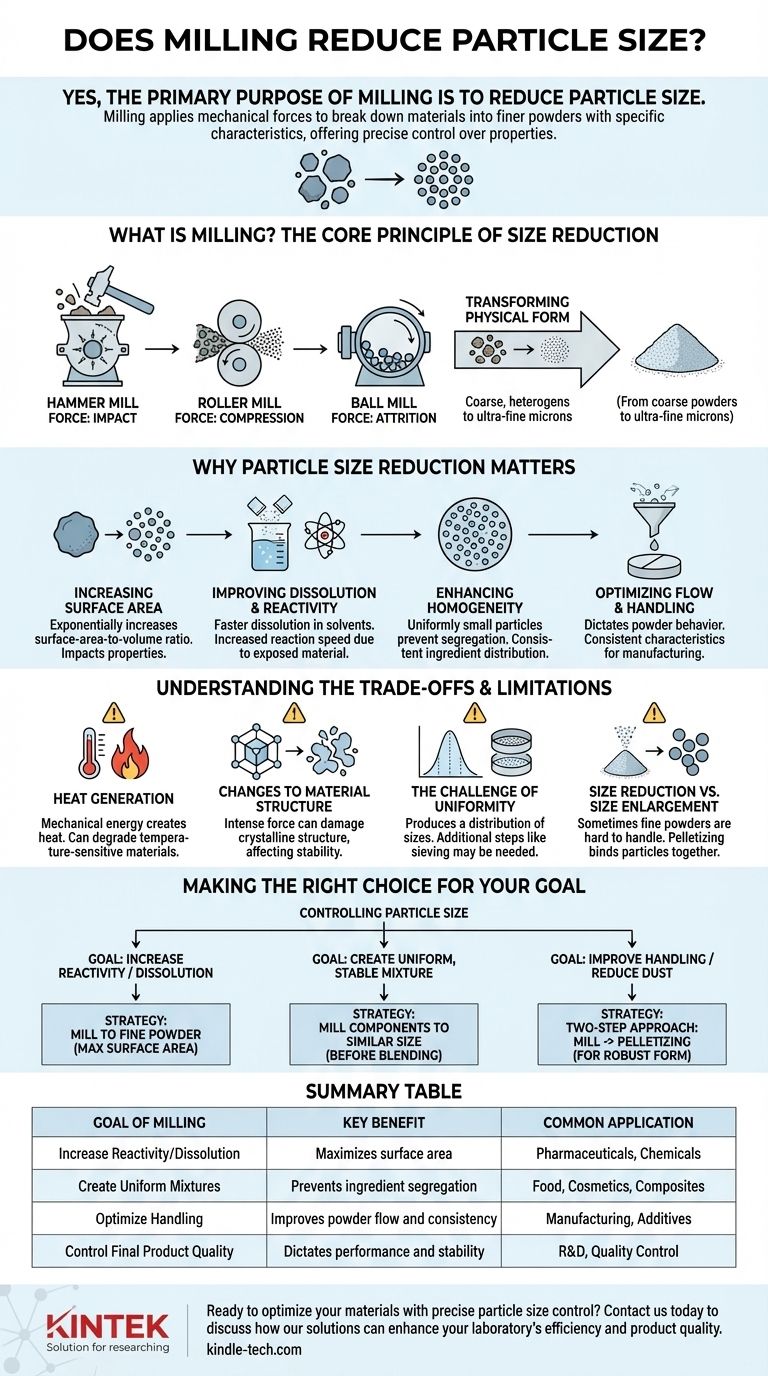
Yes, the primary purpose of milling is to reduce particle size. Milling is a mechanical process that breaks down solid materials into smaller pieces. By applying forces like impact, shear, or compression, it transforms larger particles, granules, or chunks into finer powders with specific characteristics.

Milling is the fundamental technique for particle size reduction. However, the ultimate goal is not just to make things smaller, but to gain precise control over a material's physical properties, which dictates its performance, handling, and consistency in any application.
Does milling reduce particle size? Achieve Precise Control Over Your Material's Properties

What is Milling? The Core Principle of Size Reduction

Milling, also known as grinding or comminution, is a foundational process in materials science. It is the mechanism by which mechanical energy is used to fracture solid structures.

The Application of Force

The core of any milling process is the application of force sufficient to break down the material. Different types of mills specialize in different forces, such as the impact of a hammer mill, the compression of a roller mill, or the attrition found in a ball mill.

Transforming Physical Form

This process takes a coarse, often heterogeneous material and transforms it into a powder with a much smaller particle size. The degree of size reduction can be controlled to produce particles ranging from coarse powders to ultra-fine particles measured in microns.

Why Particle Size Reduction Matters

Reducing particle size is rarely the end goal itself. Instead, it is a critical step performed to achieve one or more specific performance enhancements.

Increasing Surface Area

As a particle is broken down, its surface-area-to-volume ratio increases exponentially. This is the single most important consequence of milling, as it directly impacts many other properties.

Improving Dissolution and Reactivity

A larger surface area allows a substance to dissolve much faster in a solvent. It also increases the speed of chemical reactions, as more of the material is exposed and available to react at any given time.

Enhancing Homogeneity

When creating a mixture or blend, having uniformly small particles is essential. It allows for a much more consistent distribution of ingredients and prevents segregation, where different components separate over time due to variations in size and density.

Optimizing Flow and Handling

The size and shape of particles dictate how a powder behaves—whether it flows freely or tends to clump. Milling helps create powders with consistent characteristics for downstream manufacturing processes like tablet pressing or packaging.

Understanding the Trade-offs and Limitations

While powerful, milling is a process that must be carefully controlled. The energy applied to the material can have unintended consequences.

Heat Generation

The mechanical energy used in milling generates significant heat. For temperature-sensitive materials, such as certain pharmaceuticals or polymers, this can lead to degradation, melting, or a loss of efficacy.

Changes to Material Structure

The intense force of milling can damage the crystalline structure of a material, creating amorphous (non-crystalline) regions. This can negatively affect the material's stability, shelf-life, and behavior.

The Challenge of Uniformity

Milling produces a distribution of particle sizes, not a single uniform size. Achieving a very narrow distribution often requires additional steps, such as sieving or air classification, to separate out particles that are too large or too small.

Size Reduction vs. Size Enlargement

Sometimes, the goal is the opposite. Extremely fine powders can be difficult to handle, dusty, and may flow poorly. In these cases, processes like pelletizing or granulation are used to bind small particles together into larger, more manageable forms.

Making the Right Choice for Your Goal

Controlling particle size is about selecting the right process to achieve a specific outcome.

  • If your primary focus is increasing reaction speed or dissolution rate: Milling to achieve a fine powder with maximum surface area is your most effective strategy.
  • If your primary focus is creating a uniform, stable mixture: Milling individual components to a similar particle size is a critical first step before blending.
  • If your primary focus is improving material handling and reducing dust: You may need a two-step approach: use milling to create uniform base particles, then use a size-enlargement process like pelletizing to build them into a more robust form.

Ultimately, controlling particle size through processes like milling is fundamental to controlling your final product's performance and quality.

Summary Table:

Goal of Milling Key Benefit Common Application
Increase Reactivity/Dissolution Maximizes surface area Pharmaceuticals, Chemicals
Create Uniform Mixtures Prevents ingredient segregation Food, Cosmetics, Composites
Optimize Handling Improves powder flow and consistency Manufacturing, Additives
Control Final Product Quality Dictates performance and stability R&D, Quality Control

Ready to optimize your materials with precise particle size control?

At KINTEK, we specialize in providing the right lab equipment and consumables to meet your specific milling and particle size reduction needs. Whether you are developing new pharmaceuticals, creating uniform composite materials, or improving product consistency, our expertise can help you achieve superior results.

Contact us today to discuss how our solutions can enhance your laboratory's efficiency and product quality.

Visual Guide
Does milling reduce particle size? Achieve Precise Control Over Your Material's Properties Visual Guide

Related Products

People Also Ask

Related Products

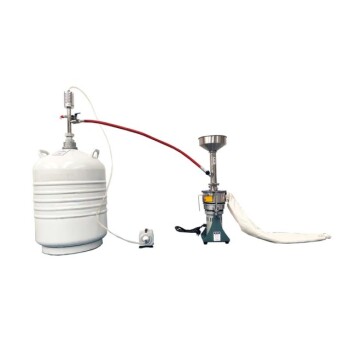
Liquid Nitrogen Cryogenic Grinder Mill Cryomill Airflow Ultrafine Pulverizer

Liquid Nitrogen Cryogenic Grinder Mill Cryomill Airflow Ultrafine Pulverizer

Discover the Liquid Nitrogen Cryogenic Grinding Machine, perfect for lab use, ultra-fine pulverization, and preserving material properties. Ideal for pharmaceuticals, cosmetics, and more.

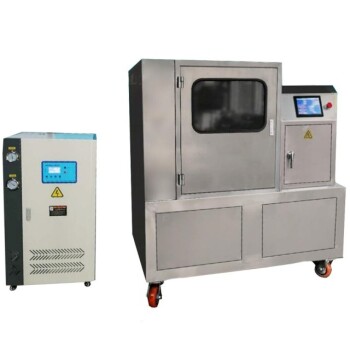
Low-Temperature Water-Cooled Touchscreen Vibratory Ultrafine Pulverizer

Low-Temperature Water-Cooled Touchscreen Vibratory Ultrafine Pulverizer

Low-temperature water-cooled vibratory pulverizer for ultrafine grinding. Preserves material integrity. Ideal for labs and production. Learn more.

High Energy Planetary Ball Mill Machine for Laboratory Horizontal Tank Type

High Energy Planetary Ball Mill Machine for Laboratory Horizontal Tank Type

The KT-P2000H uses a unique Y-axis planetary trajectory, and utilizes the collision, friction and gravity between the sample and the grinding ball.

Mini Planetary Ball Mill Machine for Laboratory Milling

Mini Planetary Ball Mill Machine for Laboratory Milling

Discover the KT-P400 desktop planetary ball mill, ideal for grinding and mixing small samples in the lab. Enjoy stable performance, long service life, and practicality. Functions include timing and overload protection.

Twin Screw Extruder Plastic Granulation Machine

Twin Screw Extruder Plastic Granulation Machine

Twin screw extruder plastic granulation machine is designed for the mixing and processing experiments of engineering plastics, modified plastics, waste plastics and masterbatches.

Lab Plastic PVC Calender Stretch Film Casting Machine for Film Testing

Lab Plastic PVC Calender Stretch Film Casting Machine for Film Testing

The cast film machine is designed for the molding of polymer cast film products and has multiple processing functions such as casting, extrusion, stretching, and compounding.

Metallographic Specimen Mounting Machine for Laboratory Materials and Analysis

Metallographic Specimen Mounting Machine for Laboratory Materials and Analysis

Precision metallographic mounting machines for labs—automated, versatile, and efficient. Ideal for sample prep in research and quality control. Contact KINTEK today!

Portable Digital Display Automatic Laboratory Sterilizer Lab Autoclave for Sterilization Pressure

Portable Digital Display Automatic Laboratory Sterilizer Lab Autoclave for Sterilization Pressure

Portable autoclave sterilization pressure is a device that uses pressure saturated steam to quickly and effectively sterilize items.

Single Punch Tablet Press Machine and Mass Production Rotary Tablet Punching Machine for TDP

Single Punch Tablet Press Machine and Mass Production Rotary Tablet Punching Machine for TDP

Rotary tablet punching machine is an automatic rotating and continuous tableting machine. It is mainly used for tablet manufacturing in the pharmaceutical industry, and is also suitable for industrial sectors such as food, chemicals, batteries, electronics, ceramics, etc. to compress granular raw materials into tablets.

Small Injection Molding Machine for Lab Use

Small Injection Molding Machine for Lab Use

The small injection molding machinehas fast and stable movements; good controllability and repeatability, super energy saving; the product can be automatically dropped and formed; the machine body is low, convenient for feeding, easy to maintain, and no height restrictions on the installation site.

Automatic Heated Hydraulic Press Machine with Heated Plates for Laboratory Hot Press 25T 30T 50T

Automatic Heated Hydraulic Press Machine with Heated Plates for Laboratory Hot Press 25T 30T 50T

Efficiently prepare your samples with our Automatic Heated Lab Press. With a pressure range up to 50T and precise control, it's perfect for various industries.

Laboratory Sterilizer Lab Autoclave Herbal Powder Sterilization Machine for Plant

Laboratory Sterilizer Lab Autoclave Herbal Powder Sterilization Machine for Plant

The herbal powder sterilization autoclave machine for Chinese medicine uses saturated steam for effective sterilization. It utilizes the heat and penetrative properties of steam, achieves sterilization after heat preservation, and maintains a good drying effect with a dedicated drying system.

Inclined Rotary Plasma Enhanced Chemical Vapor Deposition PECVD Equipment Tube Furnace Machine

Inclined Rotary Plasma Enhanced Chemical Vapor Deposition PECVD Equipment Tube Furnace Machine

Introducing our inclined rotary PECVD furnace for precise thin film deposition. Enjoy automatic matching source, PID programmable temperature control, and high accuracy MFC mass flowmeter control. Built-in safety features for peace of mind.

Single Punch Electric Tablet Press Machine TDP Tablet Punching Machine

Single Punch Electric Tablet Press Machine TDP Tablet Punching Machine

The electric tablet punching machine is a laboratory equipment designed for pressing various granular and powdery raw materials into discs and other geometric shapes. It is commonly used in pharmaceutical, healthcare products, food, and other industries for small batch production and processing. The machine is compact, lightweight, and easy to operate, making it suitable for use in clinics, schools, laboratories, and research units.

Automatic Laboratory Heat Press Machine

Automatic Laboratory Heat Press Machine

Precision automatic heat press machines for labs—ideal for material testing, composites, and R&D. Customizable, safe, and efficient. Contact KINTEK today!

Portable High Pressure Laboratory Autoclave Steam Sterilizer for Lab Use

Portable High Pressure Laboratory Autoclave Steam Sterilizer for Lab Use

Portable autoclave sterilization pressure is a device that uses pressure saturated steam to quickly and effectively sterilize items.

Lab Sterile Slapping Type Homogenizer for Tissue Mashing and Dispersing

Lab Sterile Slapping Type Homogenizer for Tissue Mashing and Dispersing

The slapping sterile homogenizer can effectively separate the particles contained in and on the surface of solid samples, ensuring that the mixed samples in the sterile bag are fully representative.

Benchtop Laboratory Freeze Dryer for Lab Use

Benchtop Laboratory Freeze Dryer for Lab Use

Premium benchtop laboratory freeze dryer for lyophilization, preserving samples with ≤ -60°C cooling. Ideal for pharmaceuticals & research.

Desktop Fast High Pressure Laboratory Autoclave Sterilizer 16L 24L for Lab Use

Desktop Fast High Pressure Laboratory Autoclave Sterilizer 16L 24L for Lab Use

The desktop fast steam sterilizer is a compact and reliable device used for rapid sterilization of medical, pharmaceutical, and research items.

Laboratory Vibratory Sieve Shaker Machine for Dry and Wet Three-Dimensional Sieving

Laboratory Vibratory Sieve Shaker Machine for Dry and Wet Three-Dimensional Sieving

KT-VD200 can be used for sieving tasks of dry and wet samples in the laboratory. The screening quality is 20g-3kg. The product is designed with a unique mechanical structure and an electromagnetic vibrating body with a vibration frequency of 3000 times per minute.


Leave Your Message