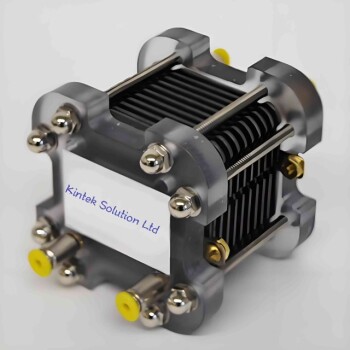
Optimizing electrode spacing is the most direct method for reducing the energy footprint of electro-oxidation. By decreasing the distance between the anode and cathode to an optimal range, specifically around 1.5 cm, you minimize the ohmic resistance of the fishmeal wastewater. This reduction allows the system to operate at a lower cell voltage while maintaining high pollutant removal rates, leading to significantly lower electrical energy consumption.
Reducing the physical gap between electrodes lowers the internal resistance of the electrolyte solution. This allows the electrochemical reaction to proceed with less voltage input, maximizing energy efficiency without compromising the treatment quality.
The Mechanics of Efficiency
Reducing Ohmic Resistance
The primary driver of energy loss in electrochemical cells is ohmic resistance. This is the resistance ions face as they travel through the electrolyte solution (the wastewater) between electrodes.
Wider gaps force ions to travel further, increasing this resistance. By tightening the spacing, you reduce the path length, effectively lowering the resistance inherent to the solution.
The Impact on Cell Voltage
Energy consumption in electro-oxidation is heavily dependent on cell voltage. Because voltage is required to overcome resistance, high resistance necessitates higher voltage to maintain the same current density.
When you reduce the electrode spacing, the drop in resistance allows the system to drive the necessary current with significantly less voltage. Since power is a product of voltage and current, this drop in voltage directly translates to reduced energy usage.
Operational Standards for Fishmeal Wastewater
The Optimal 1.5 cm Spacing
For fishmeal wastewater specifically, research identifies 1.5 cm as a critical benchmark for electrode spacing.
At this specific distance, the system reaches an optimal balance. It creates a compact reaction environment that minimizes energy waste while ensuring the oxidation process remains aggressive enough to remove pollutants effectively.
Achieving Precision with Hardware
Theoretical optimization requires practical precision. To maintain this 1.5 cm gap consistently, the use of adjustable fixed devices is essential.
These devices prevent electrode shifting during operation. Maintaining a rigid, precise gap ensures that the energy savings are constant and that the reaction conditions do not fluctuate over time.
Understanding the Trade-offs
The Penalty of Wide Spacing
If the electrode spacing is left too wide, the system suffers from parasitic energy loss.
The electrical energy that should be used for oxidizing pollutants is instead wasted as heat to overcome the high resistance of the wastewater. This results in spiraling operational costs for the same level of treatment.
Balancing Cost and Performance
The goal of adjusting spacing is not just to save power, but to do so without reducing removal efficiency.
While minimizing the gap is generally beneficial for energy, the 1.5 cm target is specific because it preserves the high pollutant removal rates required for fishmeal wastewater. Deviating significantly from this optimal range could alter fluid dynamics or reaction rates unpredictably.
Making the Right Choice for Your Project
To implement these findings effectively, assess your current reactor configuration against the optimal parameters.
- If your primary focus is lowering operational costs: Calibrate your reactor design to achieve a precise 1.5 cm gap between the anode and cathode to minimize voltage requirements.
- If your primary focus is process consistency: Install adjustable fixed devices to ensure the electrode spacing remains static during high-throughput treatment cycles.
Precision in physical design is the foundation of chemical efficiency.
Summary Table:
| Parameter | Influence on Efficiency | Optimization Target for Fishmeal Wastewater |
|---|---|---|
| Electrode Spacing | Controls ohmic resistance and path length | 1.5 cm (Optimal Balance) |
| Ohmic Resistance | Lower resistance allows for lower voltage input | Minimize by reducing electrode gap |
| Cell Voltage | Direct driver of electrical energy consumption | Reduce by tightening spacing |
| System Stability | Ensures consistent reaction and energy savings | Use adjustable fixed hardware |
Elevate Your Electrochemical Research with KINTEK Precision
Optimizing energy efficiency in electro-oxidation requires more than just theory—it demands high-performance hardware. KINTEK specializes in providing advanced electrolytic cells, high-quality electrodes, and specialized laboratory equipment designed for the rigors of wastewater treatment and battery research. Whether you are treating fishmeal wastewater or developing next-generation energy solutions, our precise adjustable systems ensure you maintain the perfect electrode spacing for maximum efficiency.
Why choose KINTEK?
- Comprehensive Equipment: From high-temperature reactors and muffle furnaces to precision hydraulic presses.
- Quality Consumables: Durable ceramics, crucibles, and PTFE products for corrosive environments.
- Expert Support: Solutions tailored to help laboratory professionals and industrial engineers reduce operational costs.
Ready to optimize your process? Contact KINTEK today to discuss your project requirements!
References
- Raju Meganathan, Rajagopalan Varadarajan. Electro-oxidation of fish meal industry wastewater in a stirred batch reactor using a Ti/RuO2 anode. DOI: 10.2166/wpt.2021.087
This article is also based on technical information from Kintek Solution Knowledge Base .
Related Products
- Sample Support Body for Electrochemical Tests
- Electrolytic Electrochemical Cell for Coating Evaluation
- PTFE Electrolytic Cell Electrochemical Cell Corrosion-Resistant Sealed and Non-Sealed
- Quartz Electrolytic Electrochemical Cell for Electrochemical Experiments
- Flat Corrosion Electrolytic Electrochemical Cell
People Also Ask
- Why is a dedicated electrochemical test cell necessary for carbon steel? Ensure Precise Geothermal Corrosion Data
- How does a standardized electrochemical test cell assist in MOx/CNTf electrode screening? Optimize Material Ratios
- Why must the electrochemical cell be continuously purged with nitrogen? Ensure Precision in Ni-Cr Corrosion Tests
- What is the difference between a voltaic cell and an electrochemical cell? Understand the Two Types of Energy Conversion
- How do the electrochemical cell and three-electrode testing system collaborate? Optimize Zinc Anode Deposition Control