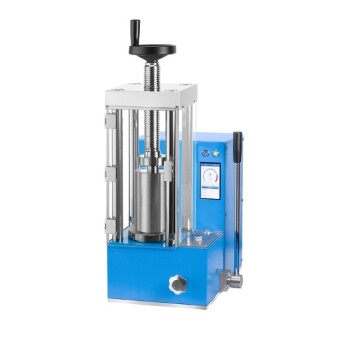
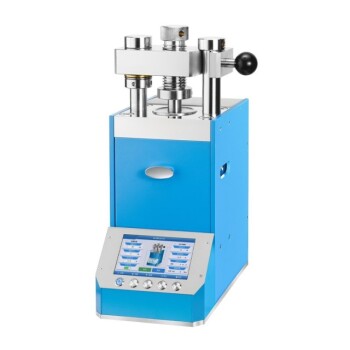
High-precision pressure equipment serves as a critical diagnostic tool to mechanically simulate or reconstruct the interface between electrodes and electrolytes during failure analysis. By utilizing pressure-holding capabilities, this equipment applies constant external force to counteract the physical gaps created by volume changes during electrochemical cycling, effectively separating mechanical failure modes from chemical ones.
In all-solid-state batteries, performance decay drives from a complex mix of physical separation and chemical impedance. High-precision pressure control acts as an analytical filter, mechanically "healing" contact loss to isolate and reveal the true extent of chemical degradation.
The Mechanics of Interfacial Failure
The Volume Change Challenge
During electrochemical cycling, electrode materials naturally expand and contract. In liquid batteries, the fluid adapts to these changes; in all-solid-state batteries (ASSBs), this movement creates voids.
The Consequence of Rigid Interfaces
These volume fluctuations lead to a physical disconnect at the electrode-electrolyte interface. This separation interrupts the ion transport pathway, appearing as a loss of capacity or increased resistance.
The Role of High-Precision Equipment
Standard clamps may lose tension as materials contract. High-precision equipment with pressure-holding capabilities actively compensates for these changes, maintaining a specific force threshold throughout the testing duration.
Diagnostic Strategies Using Pressure
Strategy 1: Constant External Pressure
This method involves applying a continuous, regulated force during the cycling process. This forces the electrode and electrolyte materials to remain in contact despite volume fluctuations.
Reconstructing the Interface
By maintaining this contact, the equipment effectively "reconstructs" the interface mechanically. If the battery performance recovers or stabilizes under this pressure, it confirms that the primary failure mode was physical contact loss.
Strategy 2: Consistent Initial Conditions
Alternatively, this equipment is used during sample preparation to establish a precise, repeatable baseline pressure.
Creating Valid Comparisons
By ensuring all comparative samples start with identical interfacial pressure, researchers minimize variables. This rigorous consistency allows for accurate A/B testing of different materials or assembly methods without mechanical variances skewing the data.
Distinguishing Failure Modes
Isolating the Variable
The primary value of this technique is the ability to distinguish between mechanical and chemical failure.
Identifying Physical Contact Loss
If applying high-precision pressure restores performance, the decay was likely caused by mechanical delamination or void formation. The pressure equipment essentially proves the materials are still chemically active but physically separated.
Identifying Chemical Diffusion Barriers
If the battery performance continues to decay despite the application of optimal external pressure, the issue is not mechanical. This points the analysis toward increased chemical diffusion barriers, such as side reactions or passivation layers, which pressure cannot fix.
Optimizing Your Failure Analysis
To effectively utilize high-precision pressure equipment in your ASSB research, consider your specific analytical goals:
- If your primary focus is diagnosing reversible failure: Apply constant external pressure during cycling to see if performance decay can be mechanically mitigated.
- If your primary focus is material benchmarking: Use the equipment to set consistent initial pressure to ensure all samples have identical starting contact conditions.
By precisely controlling mechanical force, you transform pressure from a simple variable into a powerful tool for pinpointing the root cause of battery failure.
Summary Table:
| Diagnostic Strategy | Mechanical Action | Analytical Insight |
|---|---|---|
| Constant Pressure | Compensates for volume expansion/contraction | Identifies physical contact loss vs. chemical decay |
| Baseline Compression | Ensures repeatable initial contact force | Eliminates mechanical variables during material benchmarking |
| Pressure Holding | Actively maintains force during cycling | Reconstructs ion pathways by 'healing' physical voids |
Elevate Your Battery Research with KINTEK Precision
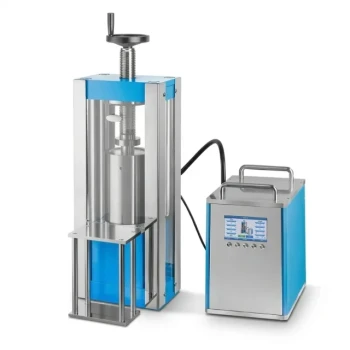
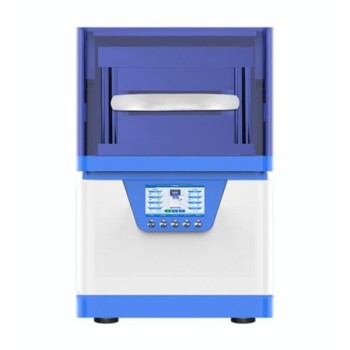
Unlock the full potential of your all-solid-state battery (ASSB) analysis with KINTEK’s industry-leading laboratory equipment. Whether you are performing critical failure analysis or benchmarking new materials, our high-precision hydraulic presses (pellet, hot, isostatic) and specialized battery research tools provide the exact pressure control needed to isolate mechanical failure from chemical degradation.
From high-temperature high-pressure reactors to advanced crushing and milling systems, KINTEK specializes in providing the comprehensive toolsets required for next-generation energy storage. Don't let mechanical variables skew your data—partner with KINTEK for consistent, repeatable results.
Ready to optimize your interfacial contact analysis? Contact KINTEK today for a customized solution!
Related Products
- Electric Split Lab Cold Isostatic Press CIP Machine for Cold Isostatic Pressing
- Customizable High Pressure Reactors for Advanced Scientific and Industrial Applications
- Automatic Laboratory Heat Press Machine
- Mini SS High Pressure Autoclave Reactor for Laboratory Use
- Stainless High Pressure Autoclave Reactor Laboratory Pressure Reactor
People Also Ask
- How is isostatic pressing equipment utilized to integrate lithium metal anodes during solid-state battery assembly?
- How does isostatic pressing equipment enhance lithium metal anode contact? Optimize Your Solid-State Battery Assembly
- What is the meaning of isostatic pressing? Achieve Uniform Density in Complex Parts
- What is isostatic pressing method for ceramics? Achieve Uniform Density for Complex Parts
- What role does cold isostatic pressing play in the formation of feed rods for single crystal growth? Ensure Stability.