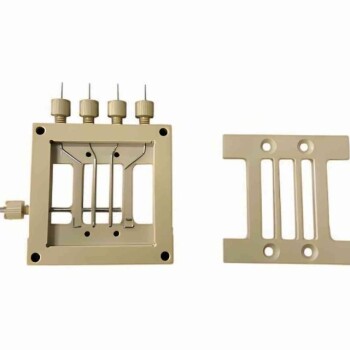
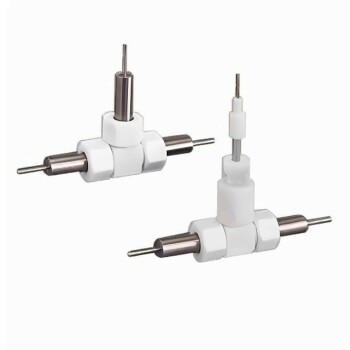
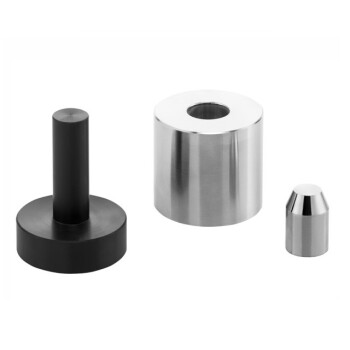
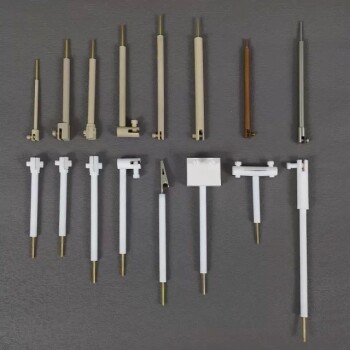
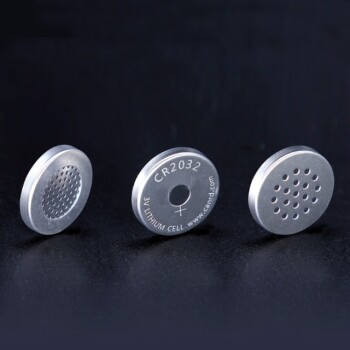
A pressure-controlled test fixture is mandatory for all-solid-state batteries because, unlike liquid electrolytes, solid components cannot naturally flow to maintain contact. This fixture applies a constant or adjustable stack pressure to counteract the significant volume expansion and contraction of electrode materials during cycling, preventing physical delamination and ensuring consistent electrochemical performance.
Core Takeaway Solid-state batteries rely on mechanical force to maintain the ionic conductive pathway between rigid particles. Without a fixture to apply and regulate external pressure, the natural "breathing" of materials during charge and discharge would sever the contact between the electrode and electrolyte, leading to a rapid rise in internal resistance and immediate battery failure.
The Fundamental Challenge: Mechanics Meets Electrochemistry
Overcoming the Lack of Wettability
In traditional batteries, liquid electrolytes naturally wet the electrode surfaces, filling every microscopic pore and gap.
Solid-state batteries lack this fluid adaptability. Because the components—cathode, solid electrolyte, and anode—are rigid, they do not inherently form a cohesive interface.
High pressure (often generated by hydraulic presses or specialized fixtures) is initially required to force these particles into close physical contact, establishing the necessary ionic pathways.
Managing Volume Expansion and Contraction
During charging and discharging, electrode materials undergo significant physical changes.
For example, high-nickel cathode materials experience anisotropic volume expansion, changing size and shape as lithium ions move in and out of the lattice structure.
Similarly, lithium metal anodes undergo volume changes during deposition and stripping. Without external constraint, these fluctuations cause the battery stack to physically loosen over time.
Critical Functions of the Pressure Fixture
Preserving the Interfacial Contact Network
The primary function of the test fixture is to maintain a "tight" system.
By applying continuous pressure (ranging from moderate levels like 1.5 MPa to extremely high levels like 98 MPa, depending on the chemistry), the fixture ensures that solid particles remain touching.
This prevents interface separation and crack propagation within the material. If the pressure is removed, the contact network breaks, isolating active material and rendering the battery non-functional.
Stabilizing Lithium Metal Anodes
For batteries utilizing lithium metal anodes, pressure control is vital for safety and longevity.
As lithium is stripped and plated, the volume of the anode fluctuates. The fixture's mechanical pressure offsets these changes, preventing physical separation at the electrode-electrolyte interface.
Furthermore, correct pressure application helps suppress the formation of voids or gaps where lithium dendrites could preferentially grow, thereby enhancing cycle life.
Reducing Interfacial Impedance
Performance is directly linked to impedance (resistance).
A fixture that maintains constant pressure significantly reduces interfacial impedance by maximizing the contact area between the solid electrolyte and the electrodes.
This ensures that the electrochemical data collected during testing reflects the true chemistry of the materials, rather than artifacts caused by poor physical assembly.
Understanding the Trade-offs: Pressure Precision
The Danger of Excessive Pressure
While pressure is necessary, "more" is not always "better."
Excessive pressure on lithium metal can cause lithium creep, where the metal physically deforms and squeezes through the solid electrolyte pores.
This can lead to internal short circuits. Therefore, the fixture must not just apply pressure, but apply the correct amount for the specific materials being tested.
Dynamic Pressure Requirements
Advanced testing often requires variable pressure strategies.
For instance, a fixture might need to apply high instantaneous pressure (e.g., 25 MPa) during the initial formation to eliminate interfacial gaps.
However, during long-term cycling, it may need to drop to a lower operating level (e.g., 5 MPa) to maintain contact without inducing short circuits. A static clamp cannot achieve this; a specialized pressure-controlled fixture is required.
Making the Right Choice for Your Goal
To select or configure the correct test fixture, consider the specific phase of your research:
- If your primary focus is Initial Interface Formation: Ensure the fixture can tolerate and maintain high pressures (often exceeding 50 MPa) to forcefully densify the contact between rigid particles and eliminate voids.
- If your primary focus is Long-Term Cycle Life: Select a fixture with adjustable or active pressure monitoring (typically 1.5 to 10 MPa) to accommodate material "breathing" and prevent lithium creep while maintaining connectivity.
Ultimately, the pressure test fixture serves as the "mechanical electrolyte," providing the physical continuity that liquid electrolytes usually provide chemically.
Summary Table:
| Feature | Importance in Solid-State Testing | Key Benefit |
|---|---|---|
| Interfacial Contact | Replaces liquid wettability by forcing rigid particles together. | Establishes stable ionic pathways. |
| Volume Management | Offsets expansion/contraction during charge/discharge. | Prevents physical delamination and failure. |
| Impedance Control | Maximizes contact area between electrolyte and electrodes. | Reduces resistance for accurate data. |
| Safety Support | Regulates lithium metal stripping and plating. | Suppresses dendrite growth and voids. |
| Precision Control | Adjusts pressure (e.g., 1.5 MPa to 98 MPa). | Prevents lithium creep and short circuits. |
Elevate Your Solid-State Battery Research with KINTEK
Precise mechanical control is the foundation of reliable electrochemical data. At KINTEK, we understand that all-solid-state battery testing requires more than just a connection—it requires a specialized environment.
Our comprehensive range of battery research tools and consumables—including high-precision pressure-controlled test fixtures, hydraulic presses for pelletizing, and high-temperature furnaces—is designed to meet the rigorous demands of next-generation energy storage.
Whether you are focusing on initial interface formation or long-term cycle stability, KINTEK provides the advanced equipment needed to eliminate interfacial impedance and ensure consistent performance.
Ready to optimize your battery testing workflow? Contact our laboratory experts today to find the perfect fixture and equipment solutions for your research goals.
Related Products
- Battery Lab Equipment 304 Stainless Steel Strip Foil 20um Thick for Battery Test
- Custom Ion Conductivity Test Fixtures for Fuel Cell Research
- Customizable Swagelok Type Test Cells for Advanced Battery Research Electrochemical Analysis
- Button Battery Tablet Press Sealing Mold for Lab Use
- Electrode Fixture for Electrochemical Experiments
People Also Ask
- How is a galvanostat used to evaluate F-rGO layers? Quantifying Protective Performance in Lithium Metal Batteries
- What is the sputtering cathode method? A Guide to Thin Film Deposition Technology
- What is sputtering target material? The Blueprint for High-Quality Thin Film Coatings
- What is organic thin film? A Guide to Engineered Molecular Layers for Advanced Tech
- What are the target materials for sputtering? From Metals to Ceramics for Precise Thin Films