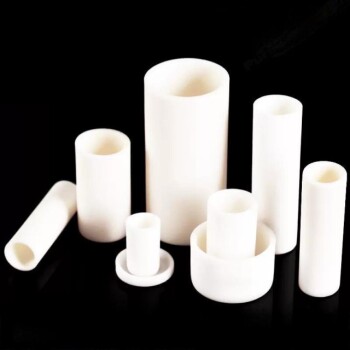
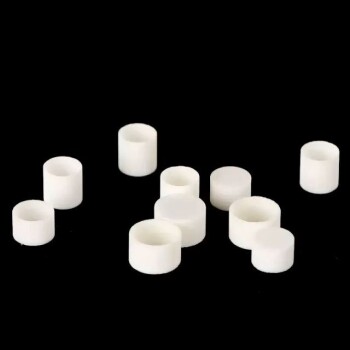
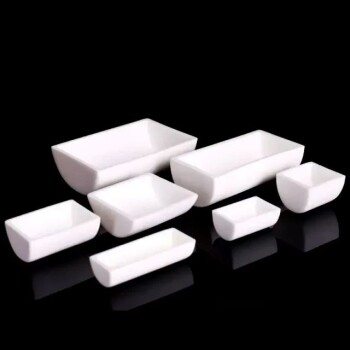
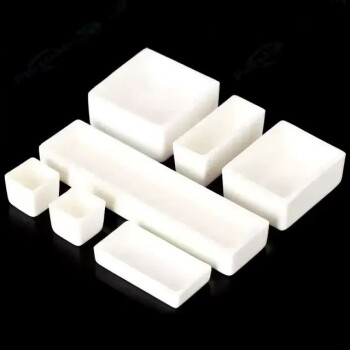
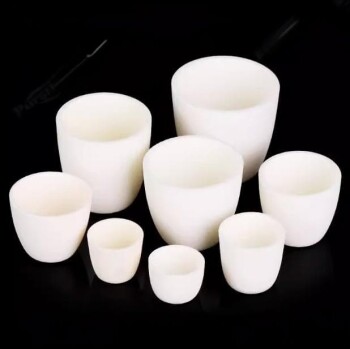
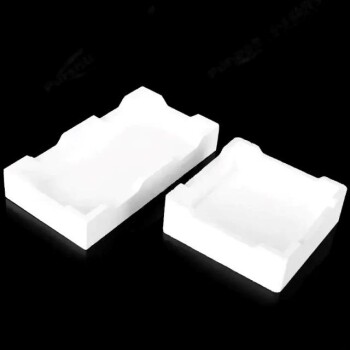
Alumina and silica crucibles serve as critical refractory vessels that isolate and stabilize NiTiCu alloys during the high-temperature sintering process. At temperatures such as 950°C, these crucibles act as chemically inert barriers that prevent impurities from the furnace environment from migrating into the alloy. Their primary function is to maintain the chemical stoichiometry and structural integrity of the NiTiCu sample while ensuring a uniform distribution of heat.
These crucibles provide a stable, non-reactive environment that preserves the high purity of NiTiCu alloys by preventing chemical interactions with the furnace lining and ensuring a consistent thermal field during long-duration heat preservation.
The Role of Refractory Containers in Alloy Sintering
Chemical Isolation and Purity Preservation
During high-temperature sintering, NiTiCu alloys are highly susceptible to contamination from the furnace atmosphere or the refractory lining of the furnace chamber. Alumina and silica crucibles act as a physical shield, ensuring that no external elements leach into the metallic sample.
This isolation is vital for maintaining the chemical stoichiometry of the alloy. Even minor amounts of oxygen or metallic impurities from the furnace can significantly alter the mechanical properties and phase transformation temperatures of the NiTiCu system.
Structural Stability at Extreme Temperatures
These crucibles are chosen for their high-temperature resistance, allowing them to remain structurally sound while the alloy undergoes solid-state reactions. They provide a rigid support structure that prevents the NiTiCu sample from deforming or reacting with the furnace floor.
Beyond simple support, the crucible helps create a uniform thermal field distribution. By absorbing and radiating heat evenly, the crucible minimizes temperature gradients across the sample, leading to a more homogenous microstructure in the finished alloy.
Mitigation of Material Loss
In certain sintering environments, crucibles can help maintain a localized atmosphere around the sample. While primarily used as support for NiTiCu, this containment strategy is essential for preventing the volatilization of alloy components that might occur during long-duration heating.
By acting as a "micro-environment" holder, the crucible ensures that the alloy maintains its intended weight and composition. This is particularly important during long-term heat preservation stages where phase stability is established.
Understanding the Trade-offs and Limitations
Thermal Shock Sensitivity
Alumina, while highly stable, can be susceptible to thermal shock if heated or cooled too rapidly. Sudden temperature fluctuations can cause the crucible to crack, potentially exposing the NiTiCu sample to the furnace environment or causing mechanical failure of the support.
Chemical Compatibility Limits
While generally inert at 950°C, the choice between alumina and silica depends on the specific reactivity of the alloy and the atmosphere. At much higher temperatures or in the presence of specific fluxes, silica may react more readily than high-purity alumina, which generally offers superior chemical resistance in aggressive environments.
Porosity and Contamination Risk
The density of the crucible material matters; highly porous crucibles may trap atmospheric gases or moisture that could outgas during sintering. Utilizing high-purity, dense alumina ceramics is often necessary to ensure that the crucible itself does not become a source of secondary contamination.
How to Apply This to Your Project
Recommendations for Sintering NiTiCu Alloys
When selecting a crucible for the sintering of NiTiCu or similar shape-memory alloys, consider the following technical priorities:
- If your primary focus is maximum chemical purity: Use high-purity (99%+) alumina crucibles to ensure zero interaction between the container and the reactive titanium components of the alloy.
- If your primary focus is rapid thermal cycling: Consider fused silica crucibles, as they offer superior thermal shock resistance compared to standard alumina, though they may have lower maximum service temperatures.
- If your primary focus is thermal uniformity for large samples: Use a thick-walled alumina crucible to act as a thermal heat sink, which helps buffer the sample against fluctuations in the furnace heating elements.
- If your primary focus is cost-efficiency at lower temperatures: Standard silica crucibles are often sufficient for processes below 1000°C, provided the alloy does not contain elements that specifically flux with silicon dioxide.
Selecting the appropriate refractory container is not merely a matter of heat resistance, but a strategic decision to ensure the chemical and structural integrity of the final alloy.
Summary Table:
| Feature | Alumina Crucibles (99%+ Al₂O₃) | Silica Crucibles (Fused/Standard) |
|---|---|---|
| Primary Function | Maximum chemical isolation & purity | High thermal shock resistance |
| Max Temperature | High (Up to 1800°C) | Moderate (Up to 1200°C) |
| Chemical Inertness | Excellent; resists aggressive reactions | Good, but may flux at high temps |
| Best Application | Long-duration heat preservation | Rapid thermal cycling & cooling |
| Key Benefit | Prevents NiTiCu contamination | Cost-efficient for <1000°C processes |
Optimize Your Alloy Sintering with KINTEK Precision Solutions
Achieving the perfect chemical stoichiometry in NiTiCu alloys requires more than just heat; it requires the right environment. KINTEK specializes in high-performance laboratory equipment and consumables designed to meet the rigorous demands of material science.
From high-purity alumina and silica crucibles to advanced muffle, vacuum, and atmosphere furnaces, we provide the tools necessary to ensure uniform heat distribution and zero contamination. Our portfolio also features essential tools like crushing and milling systems, hydraulic presses, and PTFE or ceramic consumables to support your entire research workflow.
Why choose KINTEK?
- Superior Purity: Our ceramics are engineered to prevent material migration and preserve alloy integrity.
- Comprehensive Range: One-stop shop for high-temperature furnaces, reactors, and lab essentials.
- Expert Support: We help you select the right refractory materials for your specific sintering temperatures and atmospheres.
Ready to enhance your lab's efficiency and material quality? Contact KINTEK today to find the perfect crucible for your project!
References
- Waheed Gul, Aqib Ali. Development and Characterization of NiTiCu Alloy using Powder Metallurgy Route. DOI: 10.5281/zenodo.8330735
This article is also based on technical information from Kintek Solution Knowledge Base .
Related Products
- Engineering Advanced Fine Ceramics Alumina Al2O3 Crucible With Lid Cylindrical Laboratory Crucible
- Engineering Advanced Fine Ceramics Alumina Crucibles (Al2O3) for Thermal Analysis TGA DTA
- Alumina Al2O3 Ceramic Crucible Semicircle Boat with Lid for Engineering Advanced Fine Ceramics
- Engineering Advanced Fine Alumina Al2O3 Ceramic Crucible for Laboratory Muffle Furnace
- Arc-Shaped Alumina Ceramic Crucible High Temperature Resistant for Engineering Advanced Fine Ceramics
People Also Ask
- Why are high-purity alumina crucibles used for liquid lead corrosion experiments? Ensure Data Accuracy at 550°C
- Why are alumina crucibles and mother powder essential for LATP sintering? Optimize Your Solid Electrolyte Performance
- What is the primary purpose of using alumina crucibles for LLTO ceramics? Optimize Your High-Temperature Sintering
- Why Use Alumina Crucibles & Powder Burial for NaSICON? Ensure Phase Purity and Prevent Elemental Volatilization
- Why are alumina crucibles used as containers during the tungsten diffusion coating process on diamond surfaces?