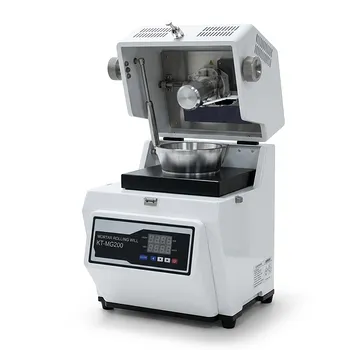
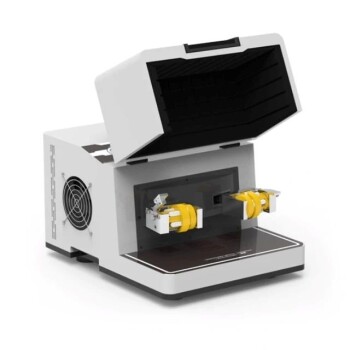
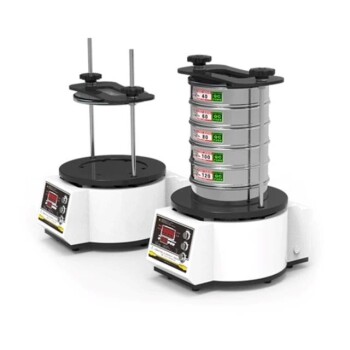
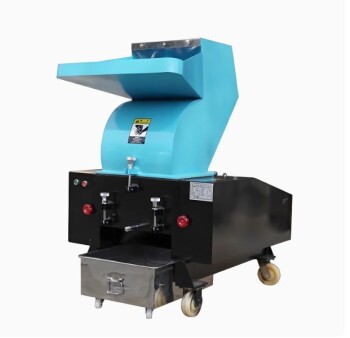
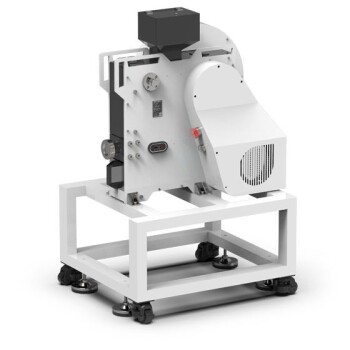
Achieving optimal gasification performance begins with microscopic precision. High-precision grinding and sieving equipment transform raw petroleum coke into a refined, uniform powder—typically within specific ranges like 83–165 μm—to maximize the specific surface area and ensure intimate contact between fuel components. This rigorous preparation is essential to eliminate physical variables, allowing researchers to isolate chemical kinetics and trigger the synergistic effects required for efficient co-gasification.
Core Takeaway: Precision sample processing is the foundation of reliable gasification data; it standardizes heat and mass transfer rates across the sample, ensuring that physical dimensions do not interfere with the measurement of chemical reaction kinetics.
Maximizing Reactive Surface Area and Component Synergy
Increasing Specific Surface Area
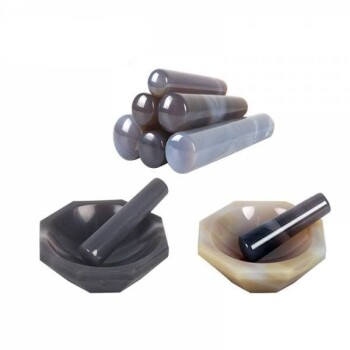
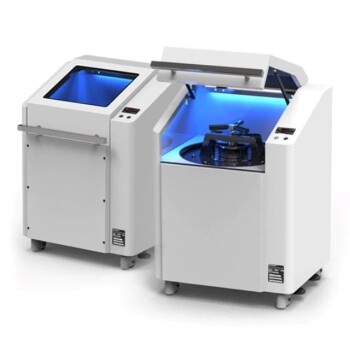
High-precision grinding uses mechanical action to refine petroleum coke into fine particles, significantly increasing the specific surface area available for gasification reactions. A larger surface area allows for more immediate contact between the fuel and the gasifying agent, which accelerates the overall reaction rate.
Inducing Synergistic Effects
When petroleum coke is processed alongside lignite or additives, high-precision equipment ensures a microscopically uniform mixture. This intimate contact is a prerequisite for inducing synergistic effects, where the interaction between different components enhances the gasification process beyond the sum of its parts.
Controlling Particle Size Distribution
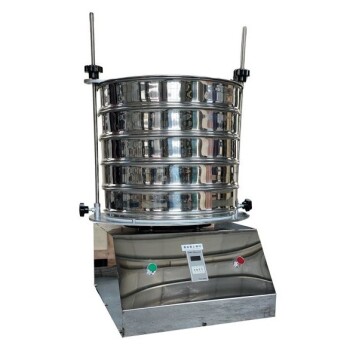
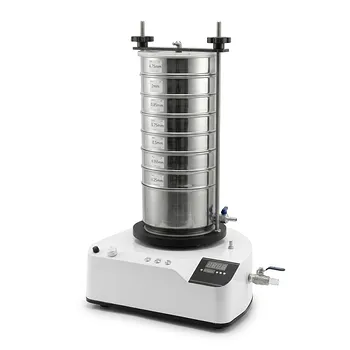
Standardized sieving equipment, often utilizing micropore sieves, limits the particle size to a narrow range, such as 83–165 μm or 150–250 μm. This strict control prevents larger particles from lagging behind in the reaction, ensuring that the entire sample reacts at a consistent pace.
Standardizing Experimental Conditions for Repeatability
Eliminating Diffusion Path Interference
Uniform particle sizes help eliminate interference caused by differences in diffusion paths during kinetic analysis. By standardizing the distance that gases must travel within the particle, researchers can obtain accurate data on the release rates of volatile matter and other reaction products.
Stabilizing Heat and Mass Transfer
Consistency in particle size ensures that the heating surface area remains constant across different experimental runs. This stability is critical for maintaining uniform gas flow distribution and stable reaction rates within a gasifier bed, preventing localized hot spots or "dead zones."
Ensuring Analytical Comparability
In thermogravimetric analysis and spectroscopic testing, uniform particle size ensures that functional group intensity and wetting kinetics remain comparable. Without this precision, variations in particle dimensions can introduce "noise" that obscures the actual chemical characteristics of the petroleum coke sample.
Understanding the Trade-offs and Pitfalls
The Risk of Over-Grinding
While finer particles generally improve reactivity, over-grinding can lead to thermal damage or changes in the sample's chemical structure due to excessive mechanical energy. If the material becomes too fine, it may also lead to "clumping" or agglomeration, which paradoxically reduces the effective surface area.
Sieve Blinding and Contamination
High-precision sieving requires careful maintenance to prevent sieve blinding, where particles become lodged in the micropores and skew the size distribution. Additionally, intensive grinding can introduce trace contaminants from the grinding media, which may catalyze or inhibit gasification reactions unexpectedly.
Complexity in Multi-Component Blends
Achieving a truly uniform mixture with materials of significantly different densities—such as petroleum coke and biomass—remains a challenge. High-precision equipment must be calibrated to ensure that segregation does not occur during the sieving process, which would result in an unrepresentative sample.
How to Apply This to Your Gasification Project
Recommendations for Sample Preparation
- If your primary focus is kinetic accuracy: Use high-precision sieving to isolate a very narrow particle range (e.g., 75–90 μm) to minimize mass transfer limitations during thermogravimetric analysis.
- If your primary focus is co-gasification synergy: Prioritize high-energy mechanical mixing to ensure petroleum coke and additives are refined together, maximizing the contact points between different phases.
- If your primary focus is industrial scalability: Utilize industrial-grade milling to achieve a broader but controlled range (100–200 μm) that balances high reactivity with the practicalities of large-scale fuel feeding.
The mastery of particle morphology through precision equipment is the only way to ensure that the results observed in the lab will translate accurately to the complex environment of an industrial gasifier.
Summary Table:
| Preparation Factor | Impact on Gasification | Key Research Benefit |
|---|---|---|
| Particle Size Control | Limits range to 83–165 μm | Eliminates heat and mass transfer variables |
| Surface Area Boost | Maximizes contact with gasifying agents | Accelerates chemical reaction rates |
| Microscopic Uniformity | Ensures intimate contact in blends | Triggers synergistic effects in co-gasification |
| Sieving Precision | Standardizes diffusion paths | Ensures repeatability and kinetic accuracy |
Elevate Your Gasification Research with KINTEK Precision
High-quality gasification data depends on the microscopic consistency of your samples. KINTEK specializes in high-performance laboratory equipment designed to meet the rigorous demands of material science. Our range of crushing and milling systems and precision sieving equipment ensures your petroleum coke samples achieve the exact morphology required for reliable kinetic analysis.
Why choose KINTEK?
- Unrivaled Precision: Achieve narrow particle size distributions to eliminate experimental noise.
- Comprehensive Solutions: From high-energy mills to essential ceramic crucibles and PTFE consumables.
- Versatile Applications: Supporting everything from laboratory-scale TGA to industrial scalability trials.
Don't let sample variability compromise your results. Contact KINTEK today to find the perfect grinding and sieving solutions for your next gasification project!
References
- Lirui Mao, Mingdong Zheng. Synergism between lignite and high-sulfur petroleum coke in CO <sub>2</sub> gasification. DOI: 10.1515/gps-2022-8143
This article is also based on technical information from Kintek Solution Knowledge Base .
Related Products
- Three-dimensional electromagnetic sieving instrument
- Laboratory Test Sieves and Sieving Machines
- Laboratory Vibratory Sieve Shaker Machine for Dry and Wet Three-Dimensional Sieving
- Nature Agate Mortar and Pestle for Grinding and Mixing
- Laboratory High Throughput Tissue Grinding Mill Grinder
People Also Ask
- Why is sieving equipment essential for the classification of processed bio-activated carbon? Optimize Performance
- What are the limitations of sieving? Understanding the Constraints of Particle Size Analysis
- What are advantages and disadvantages of sieving method? A Guide to Reliable & Cost-Effective Particle Sizing
- How is sieving important? The Critical Role of Particle Size Analysis in Quality Control
- What is sieving and how does it work? A Guide to Accurate Particle Size Analysis