Ultrasonic homogenizers enhance digestion efficiency primarily through the mechanism of acoustic cavitation. These devices utilize high-frequency sound waves to generate microscopic bubbles that violently collapse, physically disrupting the cellular structures of organic substrates. This mechanical force accelerates the breakdown of complex materials, rendering them immediately available for biological processing.
Ultrasonic pretreatment removes the physical barriers to digestion by shattering cell walls and solubilizing proteins. This creates a rapid influx of accessible carbohydrates, allowing hydrogen-producing microorganisms to bypass the slow natural rate of hydrolysis and immediately begin metabolism.
The Mechanics of Disruption
The Power of Cavitation
The core engine of an ultrasonic homogenizer is the cavitation effect. Sound waves propagate through the liquid substrate, creating alternating high-pressure and low-pressure cycles.
During the low-pressure cycle, high-intensity microscopic bubbles are formed. When these bubbles collapse during the high-pressure cycle, they release immense localized energy that shreds surrounding material.
Breaking Cellular Structures
This energy is specifically targeted at the cellular structures of organic matter, such as food waste.
In a standard fermentation setup, bacteria must work to penetrate these cell walls. Ultrasonic treatment mechanically ruptures these walls instantly, exposing the internal cytoplasm to the surrounding liquid.
Accelerating Biological Availability
Rapid Depolymerization
The primary biological advantage is the faster depolymerization of organic substances. Complex organic chains are physically sheared into smaller, simpler molecules.
This mechanical breakdown replaces the time-consuming enzymatic hydrolysis that would normally occur in the early stages of fermentation.
Solubilization of Proteins
A critical outcome of this disruption is the solubilization of proteins. Intracellular proteins are released from the cell interior into the solution, making them chemically available.
This increases the overall nutrient density of the liquid medium available to the microbial culture.
Making Carbohydrates Accessible
The ultimate goal of this pretreatment is to make carbohydrates more readily available.
Hydrogen-producing microorganisms thrive on these carbohydrates. By physically unlocking them from the cellular matrix, the system supports a more robust and efficient metabolic rate.
Understanding the Trade-offs
Specificity to Cellular Substrates
It is important to recognize that this technology relies on disrupting cellular structures.
If your substrate is already a simple soluble liquid (like glucose syrup) lacking complex organic matter or cell walls, the efficiency gains from cavitation will be negligible. The value is derived entirely from breaking down complex, solid-like organic structures found in waste.
The Necessity of Pretreatment
Implementing ultrasonic homogenization introduces an additional pretreatment step into the workflow.
While it is faster than other pretreatment methods, it requires dedicated equipment upstream of the fermentation vessel. You are essentially trading mechanical complexity for biological speed.
Making the Right Choice for Your Goal
To determine if ultrasonic homogenization is the right specific intervention for your dark fermentation process, consider your substrate and timeline.
- If your primary focus is processing food waste: This technology is highly recommended as it excels at disrupting the tough cellular structures inherent in this substrate.
- If your primary focus is accelerating reaction time: Use this method to achieve faster depolymerization compared to chemical or thermal alternatives.
- If your primary focus is maximizing carbohydrate availability: This approach effectively solubilizes proteins and releases carbohydrates to fuel hydrogen-producing microorganisms.
By mechanically dismantling organic barriers, you transform a biological waiting game into an immediate metabolic opportunity.
Summary Table:
| Feature | Impact on Dark Fermentation | Primary Benefit |
|---|---|---|
| Acoustic Cavitation | Generates high-energy bubble collapse | Rapidly shreds complex organic materials |
| Mechanical Disruption | Shatters cellular structures and walls | Immediate access to internal cytoplasm |
| Solubilization | Releases intracellular proteins | Increases nutrient density of the medium |
| Depolymerization | Shears organic chains into smaller molecules | Bypasses slow enzymatic hydrolysis stages |
Optimize Your Dark Fermentation with KINTEK
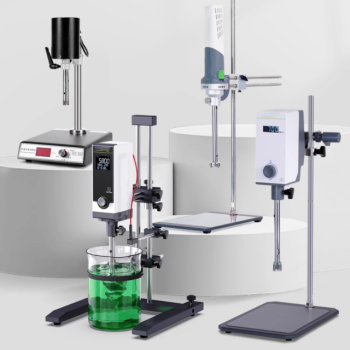
Maximize your laboratory's efficiency and hydrogen yields with KINTEK’s high-performance ultrasonic homogenizers and cell disruptors. Designed to accelerate depolymerization and overcome the physical barriers of organic waste, our equipment ensures your microbial cultures have immediate access to the carbohydrates they need.
Beyond disruption technology, KINTEK specializes in a comprehensive range of laboratory equipment, including:
- High-temperature furnaces and reactors for precise thermal processing.
- Homogenizers, shakers, and cooling solutions for stable sample preparation.
- Specialized consumables like PTFE products and ceramics for demanding lab environments.
Ready to transform your biological research from a waiting game into an immediate metabolic opportunity? Contact KINTEK today to find the perfect equipment for your workflow!
References
- Djangbadjoa Gbiete, Michael Nelles. Insights into Biohydrogen Production Through Dark Fermentation of Food Waste: Substrate Properties, Inocula, and Pretreatment Strategies. DOI: 10.3390/en17246350
This article is also based on technical information from Kintek Solution Knowledge Base .
Related Products
- High Shear Homogenizer for Pharmaceutical and Cosmetic Applications
- High Performance Lab Homogenizer for Pharma Cosmetics and Food R&D
- Lab Sterile Slapping Type Homogenizer for Tissue Mashing and Dispersing
- Laboratory High Throughput Tissue Grinding Mill Grinder
- Laboratory Disc Rotary Mixer for Efficient Sample Mixing and Homogenization
People Also Ask
- Why Use a High Shear Homogenizer for Cathode Slurries? Optimize Double-Layer Solid-State Battery Production
- What is the function of high-shear dispersion equipment in corona-resistant nanocomposites? Elevate Your Insulation
- What is the necessity of using an industrial-grade high-shear homogenizer for biomass washing? Ensure Process Efficiency
- What are the advantages of using a high-shear homogenizer for BED/GMA coatings? Achieve Superior Nano-Dispersion
- What role does a high-shear homogenizer play in ODC catalyst suspensions? Unlock Superior Electrochemical Efficiency