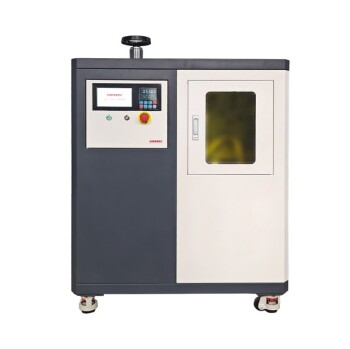
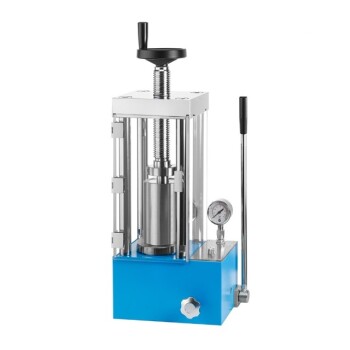
Warm isostatic presses and hot pressing equipment function as critical enablers for All-Solid-State Batteries (ASSBs) by fundamentally altering the physical structure of dry electrodes. By simultaneously applying heat and pressure, these machines induce plastic deformation in solid electrolytes, such as sulfides. This process forces the material to conform to active particles, effectively eliminating voids and significantly reducing the interfacial impedance that otherwise limits battery performance.
The primary barrier to efficient ASSBs is poor contact between solid particles. Warm isostatic pressing overcomes this by using heat and isotropic pressure to force electrolyte material into micropores, establishing the continuous pathways necessary for lithium-ion transport.
Overcoming the Solid-Solid Interface Challenge
The Void Problem in Dry Electrodes
Unlike traditional batteries where liquid electrolytes naturally wet surfaces, ASSBs rely on solid-solid interfaces.
Without intervention, the contact between the solid electrolyte and active material particles is poor.
This results in voids and air gaps, which act as insulators and block the flow of ions.
Inducing Plastic Deformation
Hot pressing equipment applies specific thermal energy to soften the solid electrolyte.
This heat allows the material to undergo plastic deformation when pressure is applied.
Instead of fracturing, the electrolyte shapes itself around the active material particles, maximizing the contact area.
Optimizing Ionic Conductivity
Eliminating Microporosity
Warm isostatic laminators operate within sealed environments to apply high, isotropic pressure.
This pressure forces viscous or molten electrolytes deep into the micropores of the electrode structure.
This significantly reduces unfilled porosity, creating a denser and more uniform electrode composite.
Establishing Transport Channels
By filling voids and micropores, the process creates continuous lithium-ion transport channels.
This connectivity is essential for the battery to function efficiently.
The result is a direct increase in ionic conductivity and a reduction in the internal resistance of the battery cell.
Understanding the Trade-offs
Managing Thermal Sensitivity
While heat facilitates deformation, excessive temperatures can degrade sensitive active materials within the electrode.
Operators must balance the heat required to soften the electrolyte against the thermal stability limits of the cathode or anode materials.
Complexity of Sealed Environments
Warm isostatic pressing often requires sealed environments to manage high pressure and molten states.
This increases the complexity and cost of manufacturing compared to the cold roll-pressing methods used in traditional lithium-ion battery production.
Making the Right Choice for Your Goal
When integrating hot pressing into your ASSB manufacturing line, align your process parameters with your specific material limitations.
- If your primary focus is maximizing conductivity: Prioritize high isotropic pressure to force electrolyte material deep into micropores for a dense, void-free structure.
- If your primary focus is preserving active material integrity: Focus on achieving plastic deformation at the lowest effective temperature to improve contact without inducing thermal degradation.
Ultimately, precise control over heat and pressure transforms a porous, high-resistance mixture into a cohesive, high-performance electrochemical system.
Summary Table:
| Feature | Impact on Dry Electrodes | Benefit for ASSBs |
|---|---|---|
| Plastic Deformation | Softens solid electrolytes to mold around active particles | Maximizes solid-solid contact area |
| Isotropic Pressure | Forces electrolyte into micropores and eliminates air gaps | Reduces internal resistance |
| Void Elimination | Removes insulating air pockets within the electrode | Increases ionic conductivity |
| Thermal Control | Optimizes material viscosity during the pressing phase | Ensures structural integrity of active materials |
Elevate Your Battery Research with KINTEK Precision Solutions
Transitioning to All-Solid-State Batteries requires overcoming the toughest solid-solid interface challenges. At KINTEK, we specialize in the high-performance laboratory equipment essential for next-generation energy storage, including warm isostatic presses and hot pressing systems designed for precise dry electrode fabrication.
Beyond pressing technology, our comprehensive portfolio supports your entire workflow—from crushing and milling systems for material preparation to high-temperature furnaces, vacuum systems, and electrolytic cells for advanced electrochemical testing.
Ready to eliminate interfacial impedance and optimize your ASSB performance? Contact KINTEK today to discuss how our customized hydraulic presses and thermal processing solutions can accelerate your research and development.
Related Products
- Warm Isostatic Press for Solid State Battery Research
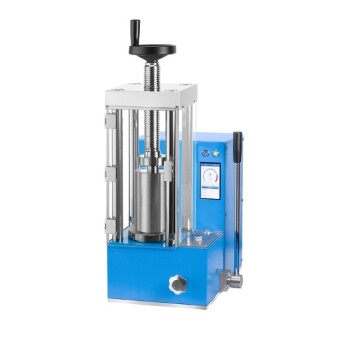
- Electric Lab Cold Isostatic Press CIP Machine for Cold Isostatic Pressing
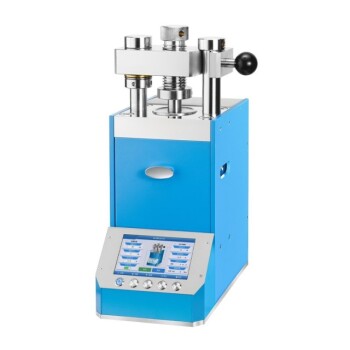
- Automatic Lab Cold Isostatic Press CIP Machine Cold Isostatic Pressing
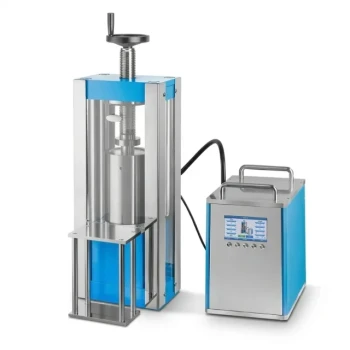
- Electric Split Lab Cold Isostatic Press CIP Machine for Cold Isostatic Pressing
- Manual Cold Isostatic Pressing Machine CIP Pellet Press
People Also Ask
- What is the temperature of a warm isostatic press? Achieve Optimal Densification for Your Materials
- What is the function of a Warm Isostatic Press (WIP) in all-solid-state pouch cells? Optimize Battery Density
- Why are Warm Isostatic Presses (WIP) necessary for solid-state batteries? Achieve Atomic-Level Contact
- What advantages does a warm isostatic press offer over a traditional uniaxial press for Li6PS5Cl electrolyte sheets?
- What is an isostatic press used for? Achieve Uniform Density & Eliminate Defects