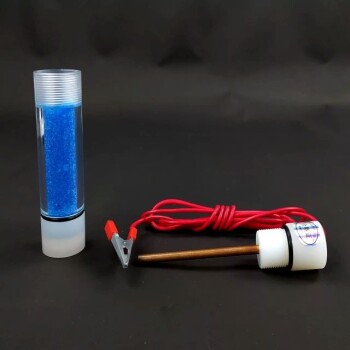
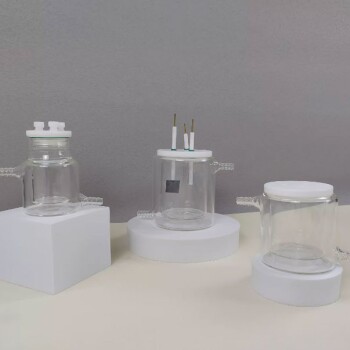
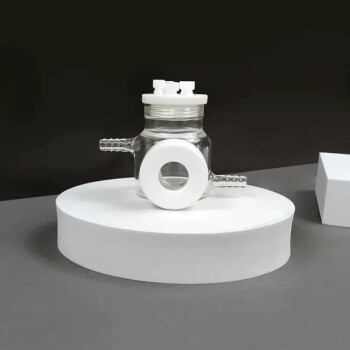
The conductivity test cell serves as a precision instrument designed to isolate the electrical properties of fluorinated carbon aerogels from external variables. By sandwiching the powder sample between high-conductivity copper electrodes and encasing it within insulating PTFE rings, the apparatus allows researchers to apply specific external pressures and currents to determine exactly how the level of fluorination alters the material's resistance.
The primary value of this configuration is its ability to enable accurate measurement of powder resistance under load, facilitating a direct correlation between the degree of fluorination and electrical conductivity.
The Architecture of the Measurement System
The Role of Copper Electrodes
The system utilizes copper electrodes specifically for their high electrical conductivity.
By minimizing the resistance inherent to the testing equipment itself, copper ensures that the voltage drop measured corresponds almost entirely to the aerogel sample.
This guarantees optimal electrical contact with the powder, reducing contact resistance errors that could skew the data.
The Function of PTFE Rings
Polytetrafluoroethylene (PTFE) rings serve two critical functions: electrical insulation and sample encapsulation.
As an insulator, the PTFE ensures that the electrical current flows strictly through the aerogel powder, rather than leaking laterally.
Simultaneously, the rings encapsulate the powder, maintaining the sample's structural integrity while it is being compressed.
Operational Principles and Data Acquisition
Testing Under External Pressure
This specific test cell configuration is designed to work in tandem with a hydraulic press.
The setup allows for resistance measurements to be taken while the sample is subjected to controlled external pressures.
This is essential for powder samples, as the contact between particles changes significantly under load, affecting the overall conductivity reading.
Characterizing Material Changes
The ultimate goal of this apparatus is to evaluate the impact of fluorination.
By keeping other variables (like pressure and contact area) constant, researchers can isolate the chemical composition as the primary variable.
This makes it possible to determine if increased fluorination enhances or degrades the material's ability to conduct electricity.
Understanding the Trade-offs
Pressure Dependency
Because the system relies on external pressure to ensure particle contact, the data is pressure-dependent.
Measurements taken at different pressures cannot be directly compared without normalization.
Consistency in the hydraulic pressure applied is just as critical as the electrical settings for accurate characterization.
Sample State Limitations
This method is specifically optimized for powder samples.
While effective for aerogels in their typical synthesized state, this setup may not accurately represent the conductivity of the material if it were formed into a solid, monolithic block.
Interpreting Your Results
To effectively characterize your fluorinated carbon aerogels, consider the following regarding your testing goals:
- If your primary focus is material synthesis: Use the cell to map how incremental increases in fluorination correlate with changes in resistance to find the optimal chemical balance.
- If your primary focus is application utility: Ensure you measure conductivity at the specific pressures the material will endure in its final use case (e.g., inside a battery or sensor).
This test cell transforms a complex powder measurement into a controllable, reproducible data point, bridging the gap between chemical composition and electrical performance.
Summary Table:
| Component | Material | Primary Function in Conductivity Testing |
|---|---|---|
| Electrodes | Copper | High conductivity; minimizes contact resistance and system error. |
| Insulation | PTFE (Teflon) | Prevents lateral current leakage; encapsulates powder samples. |
| Load Source | Hydraulic Press | Applies controlled external pressure to ensure particle-to-particle contact. |
| Sample Form | Powder Aerogel | The specific material state optimized for this characterization cell. |
Elevate Your Material Research with KINTEK Precision Solutions
Precise characterization requires high-performance equipment that eliminates variables. KINTEK specializes in advanced laboratory tools designed for rigorous material science, including high-conductivity components and robust hydraulic systems.
Whether you are analyzing fluorinated carbon aerogels or developing next-generation energy storage, our portfolio offers the reliability you need:
- Advanced Hydraulic Presses (pellet, hot, and isostatic) for controlled sample compression.
- Premium PTFE Products and Ceramics for superior electrical and thermal insulation.
- Specialized High-Temperature Furnaces (CVD, PECVD, vacuum) for precise material synthesis.
- Comprehensive Battery Research Tools and consumables.
Ready to achieve reproducible results in your lab? Contact KINTEK today to discuss how our customized equipment can streamline your research and development process.
References
- Yasser Ahmad, Katia Guérin. Advances in tailoring the water content in porous carbon aerogels using RT-pulsed fluorination. DOI: 10.1016/j.jfluchem.2020.109633
This article is also based on technical information from Kintek Solution Knowledge Base .
Related Products
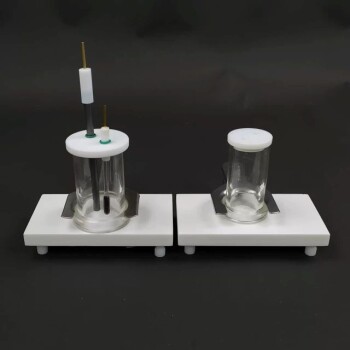
- PTFE Electrolytic Cell Electrochemical Cell Corrosion-Resistant Sealed and Non-Sealed
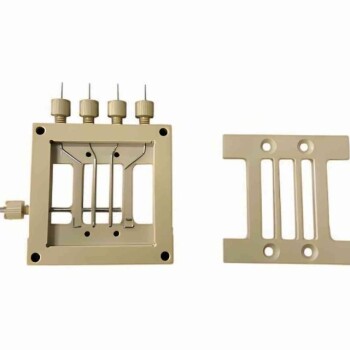
- Custom Ion Conductivity Test Fixtures for Fuel Cell Research
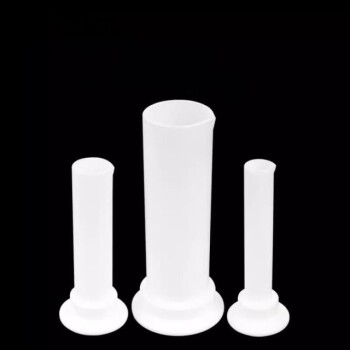
- Custom PTFE Teflon Parts Manufacturer for PTFE Measuring Cylinder 10/50/100ml
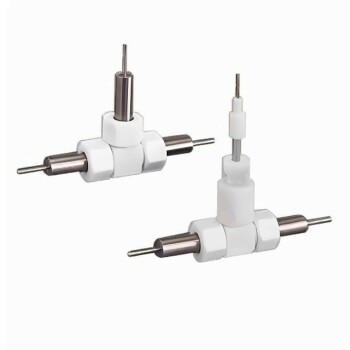
- Customizable Swagelok Type Test Cells for Advanced Battery Research Electrochemical Analysis
- Electrolytic Electrochemical Cell for Coating Evaluation
People Also Ask
- What is the necessity of selecting a PTFE electrolytic cell? Ensure Precise Graphene Corrosion Testing Accuracy
- What is the proper method for cleaning the surface of an all-PTFE electrolytic cell? Ensure Accurate Results with a Pristine Surface
- How should an all-PTFE electrolytic cell be stored after use? Expert Maintenance Tips for Long-Lasting Performance
- What is the proper cleaning method for an all-PTFE electrolytic cell? Essential Tips for Surface Integrity
- What are the standard opening specifications for all-PTFE electrolytic cells? A Guide to Sealed vs. Non-Sealed Ports