A constant temperature drying oven serves as the kinetic regulator for the Chemical Bath Deposition (CBD) of SnO2. By maintaining a stable thermal environment, typically around 90 °C, it drives the specific hydrolysis and condensation reactions required to convert tin salts into a solid metal oxide layer.
Core Takeaway Success in SnO2 deposition relies on transforming a liquid precursor into a solid film at a controlled rate. The constant temperature oven provides the thermal energy necessary to ensure these reactions occur uniformly, resulting in a dense, defect-free electron transport layer essential for device performance.
The Role of Thermal Stability in Reaction Kinetics
Controlling Hydrolysis and Condensation
The CBD process is not merely about drying a liquid; it is a chemical reaction. The constant heat provided by the oven initiates and sustains the hydrolysis of tin salts.
Simultaneously, it drives condensation, where the hydrolyzed species link together to form the SnO2 network. Without this specific thermal energy, the precursor solution would remain stable and fail to deposit the necessary oxide layer.
Ensuring Reaction Uniformity
The "constant" aspect of the oven is just as critical as the temperature itself. A fluctuating temperature would cause variable reaction rates across the substrate.
By locking the environment at a specific set point (e.g., 90 °C), the oven ensures that the chemical conversion happens evenly across the entire surface of the FTO substrate.
Impact on Film Morphology
achieving High Density and Coverage
The primary goal of an Electron Transport Layer (ETL) is to facilitate charge movement while blocking recombination.
The controlled thermal environment allows the SnO2 to grow as a dense and ultra-thin layer. This density is vital for creating a robust pathway for electrons.
Preventing Pinholes
A well-regulated drying process ensures the film is continuous. The constant temperature promotes better coverage on the FTO (Fluorine-doped Tin Oxide) substrate.
This prevents the formation of "pinholes" or gaps in the layer, which are detrimental to the final electrical performance of the solar cell or device.
Understanding the Trade-offs
The Risk of Thermal Fluctuation
While the oven facilitates growth, reliance on thermal drivers introduces sensitivity. If the oven fails to maintain spatial uniformity (hot spots vs. cold spots), the film thickness will vary.
Inconsistent temperatures lead to uneven reaction rates. This results in patches of poor coverage or areas where the film is too thick, increasing series resistance.
Balancing Rate and Quality
Higher temperatures generally accelerate the deposition, but faster is not always better.
If the temperature is too high, the reaction may occur too rapidly, causing the SnO2 to precipitate in the solution rather than growing on the substrate. The oven setting must be precise to balance reaction speed with film quality.
Making the Right Choice for Your Goal
To maximize the effectiveness of your SnO2 CBD process, align your thermal strategy with your specific objectives:
- If your primary focus is Device Efficiency: Ensure your oven has high thermal spatial uniformity to guarantee a dense, pinhole-free layer that maximizes electron transport.
- If your primary focus is Process Reproducibility: rigorous calibration of the oven temperature (e.g., strictly at 90 °C) is required to ensure the hydrolysis rate remains identical across different batches.
Precise thermal management turns a volatile chemical process into a reliable method for fabricating high-performance electronic layers.
Summary Table:
| Parameter | Role in SnO2 CBD Process | Impact on Film Quality |
|---|---|---|
| Temperature Stability | Regulates hydrolysis & condensation kinetics | Ensures uniform film thickness and density |
| Thermal Uniformity | Prevents localized reaction rate variations | Eliminates pinholes and improves FTO coverage |
| 90 °C Set Point | Provides activation energy for tin salt conversion | Balances reaction speed with oxide layer quality |
| Kinetic Control | Prevents premature precipitation in solution | Promotes controlled growth of dense, ultra-thin ETLs |
Elevate Your Thin-Film Research with KINTEK Precision
Achieving a defect-free SnO2 electron transport layer requires the absolute thermal stability found in KINTEK’s high-performance laboratory equipment. Whether you are conducting Chemical Bath Deposition (CBD) or scaling up perovskite research, our range of constant temperature drying ovens, high-temperature furnaces (muffle, vacuum, tube), and ultrasonic homogenizers provide the precision necessary for superior material synthesis.
From pellet and isostatic hydraulic presses for material preparation to crucibles, ceramics, and PTFE consumables for chemical baths, KINTEK supports your entire laboratory workflow. Contact us today to optimize your SnO2 deposition process and discover how our advanced cooling and heating solutions can enhance your device efficiency.
References
- Zhonghui Zhu, Salvador Eslava. Ultrastable halide perovskite CsPbBr3 photoanodes achieved with electrocatalytic glassy-carbon and boron-doped diamond sheets. DOI: 10.1038/s41467-024-47100-2
This article is also based on technical information from Kintek Solution Knowledge Base .
Related Products
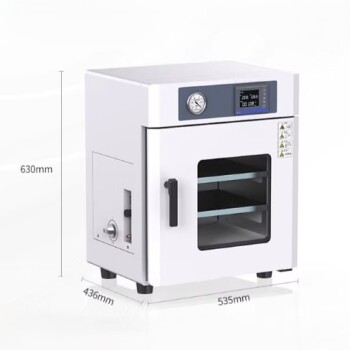
- 23L Laboratory Vacuum Drying Oven
- Laboratory Scientific Electric Heating Blast Drying Oven
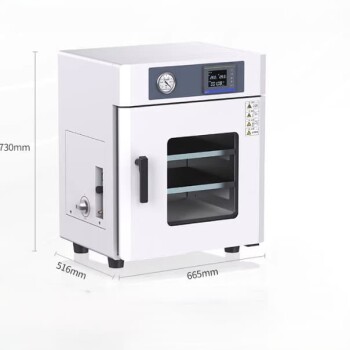
- 56L Vertical Laboratory Vacuum Drying Oven
- High Temperature Muffle Oven Furnace for Laboratory Debinding and Pre Sintering
- 10L Chilling Circulator Cooling Water Bath Low Temperature Constant Temperature Reaction Bath
People Also Ask
- Why is a laboratory vacuum drying oven recommended for rice straw residues? Protect Your Biomass Integrity
- What role does a laboratory vacuum drying oven play in the preparation of modified multi-walled carbon nanotubes?
- What is the importance of using a laboratory vacuum drying oven? Preserving Slow-Release Microcapsule Integrity
- Why is a Laboratory Vacuum Drying Oven recommended for PBAT microspheres? Protect Sensitive Polymer Integrity
- What role does a laboratory vacuum drying oven play in processing nanoparticle powder samples? Protect Sample Integrity