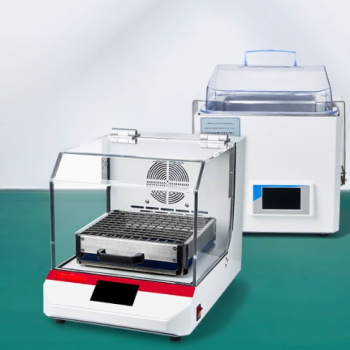
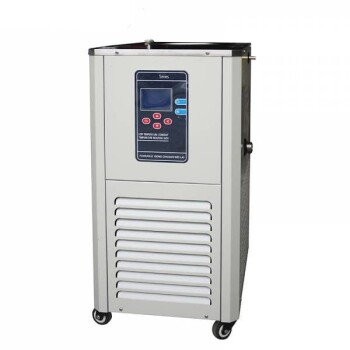
A constant temperature shaking incubator serves as the foundational tool for the laboratory research phase of bioleaching waste printed circuit boards (PCBs). It functions by simultaneously maintaining the precise thermal environment required for microbial metabolism and providing the mechanical agitation necessary to keep solids suspended and oxygen levels high.
By simulating an active biological reactor on a small scale, this equipment balances the need for high dissolved oxygen and uniform nutrient contact against the risk of damaging microorganisms through excessive force.
Creating the Optimal Growth Environment
Bioleaching relies on specific acidophilic bacteria or fungi to solubilize metals. The incubator ensures these sensitive microorganisms remain in their peak metabolic state.
Precise Thermal Regulation
Microbial activity is highly sensitive to temperature fluctuations. The incubator maintains a stable environment, typically between 25–30 °C for common bioleaching strains.
This stability allows researchers to isolate temperature as a variable, ensuring that changes in leaching efficiency are due to experimental adjustments rather than environmental inconsistencies.
Support for Specific Strains
While the standard range is often 25–30 °C, the precise control capabilities extend to higher ranges, such as 40 °C.
This flexibility allows for the cultivation of various bacterial types, from mesophiles to thermophiles like Acidithiobacillus caldus, ensuring they grow within their specific optimal activity ranges.
The Mechanics of Agitation and Aeration
Beyond temperature, the physical movement of the incubator—specifically the oscillation frequency—is the primary driver of the leaching chemical reaction.
Maximizing Dissolved Oxygen
Bioleaching is an aerobic process; the microorganisms require significant amounts of oxygen to oxidize metals.
The incubator typically operates at oscillation frequencies of 120–145 rpm. This continuous motion breaks the liquid surface, facilitating gas-liquid mass transfer and ensuring the culture medium remains saturated with dissolved oxygen and carbon dioxide.
Preventing Sedimentation
Waste PCBs are processed into a fine powder for leaching. Without constant motion, these heavy metallic particles would settle at the bottom of the flask.
Continuous rotational oscillation prevents this precipitation. It keeps the mineral powder in a state of suspension, maximizing the surface area available for bacterial attack.
Ensuring Uniform Contact
Successful bioleaching requires three components to meet: the bacteria, the nutrients, and the solid PCB powder.
The mechanical action ensures thorough mixing. This results in uniform contact between the biological agents and the metal waste, driving consistent metabolic activity across the entire sample.
Understanding the Trade-offs
While agitation is necessary, it introduces physical forces that must be carefully managed to avoid ruining the experiment.
Shear Stress vs. Oxygenation
There is a critical balance between mixing speed and microbial health. Increasing the rpm improves oxygen levels and suspension, but it also generates shear stress.
If the agitation is too aggressive, the hydrodynamic forces can physically damage or rupture the microbial cells. The incubator allows researchers to fine-tune the frequency (e.g., sticking to the 120–145 rpm range) to provide sufficient aeration without inhibiting microbial activity.
Making the Right Choice for Your Goal
Selecting the correct settings for your shaking incubator is determined by the specific biological and physical requirements of your experiment.
- If your primary focus is standard acidophilic bioleaching: Maintain a temperature range of 25–30 °C and an oscillation speed of 120–145 rpm to balance aeration with cell viability.
- If your primary focus is high-density pulp or heavier particles: You may need to increase agitation toward 180 rpm to prevent sedimentation, but you must monitor for cell damage caused by shear stress.
- If your primary focus is thermophilic bacteria: Ensure the unit is capable of maintaining stable higher temperatures (e.g., 40 °C) while sustaining continuous operation.
Ultimately, the constant temperature shaking incubator transforms a static mixture into a dynamic, living system capable of extracting value from electronic waste.
Summary Table:
| Parameter | Typical Range for PCB Bioleaching | Function & Benefit |
|---|---|---|
| Temperature | 25–30 °C (up to 40 °C) | Maintains peak microbial metabolism for mesophiles and thermophiles. |
| Oscillation Speed | 120–145 rpm | Balances oxygen mass transfer while minimizing cell shear stress. |
| Agitation Type | Rotational/Orbital | Prevents PCB powder sedimentation and ensures uniform nutrient contact. |
| Aeration | Continuous Surface Renewal | Maximizes dissolved oxygen levels required for aerobic oxidation. |
Revolutionize Your Bioleaching Research with KINTEK
Precision is the backbone of successful metal recovery. KINTEK specializes in high-performance laboratory equipment designed to meet the rigorous demands of electronic waste processing and microbial research. From our advanced shaking incubators and homogenizers to our crushing and milling systems and PTFE consumables, we provide the tools you need for consistent, scalable results.
Whether you are scaling up bioleaching protocols or exploring battery research, KINTEK offers a comprehensive range of thermal and mechanical solutions, including:
- High-Temperature Furnaces & Reactors
- Precision Crushing & Sieving Equipment
- High-Pressure Autoclaves & Electrolytic Cells
- Cooling Solutions (ULT Freezers & Freeze Dryers)
Ready to optimize your lab's efficiency and recovery rates? Contact our technical experts today to find the perfect equipment for your specific research needs.
References
- Zahra Ilkhani, Farid Aiouache. Bioleaching of Gold from Printed Circuit Boards: Potential Sustainability of Thiosulphate. DOI: 10.3390/recycling10030087
This article is also based on technical information from Kintek Solution Knowledge Base .
Related Products
- Shaking Incubators for Diverse Laboratory Applications
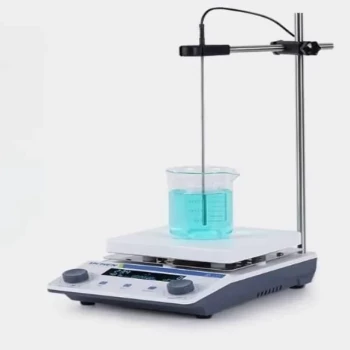
- Laboratory Small Constant Temperature Heated Magnetic Stirrer Heater and Stirrer
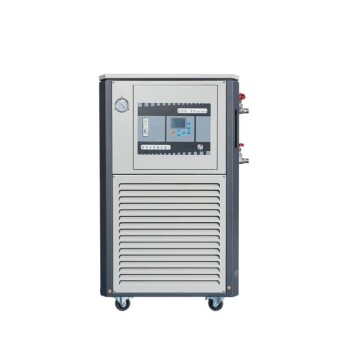
- High Temperature Constant Temperature Heating Circulator Water Bath Chiller Circulator for Reaction Bath
- 50L Chiller Water Bath Cooling Circulator Low Temperature Constant Temperature Reaction Bath
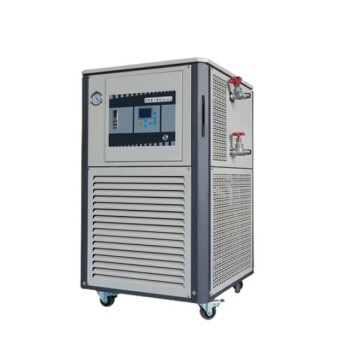
- 10L Heating Chilling Circulator Cooling Water Bath Circulator for High and Low Temperature Constant Temperature Reaction
People Also Ask
- What physical conditions does a shaking incubator provide for bioethanol fermentation? Optimize Yeast Productivity
- Why is the mechanical agitation provided by a shaking incubator necessary for the enzymatic hydrolysis of biomass?
- What critical reaction conditions does a shaking incubator provide? Optimize Cassava Cellulose Enzymatic Hydrolysis
- What are the primary functions of a shaking incubator? Optimize Biomass Fenton Pretreatment Efficiency
- What function does a laboratory shaking incubator serve for halophilic archaea? Optimize Your Seed Cultivation Today