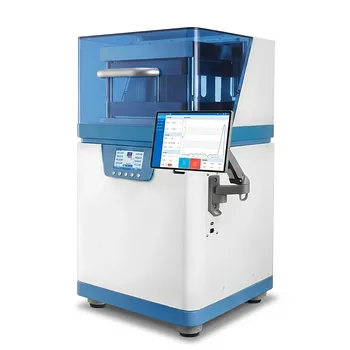
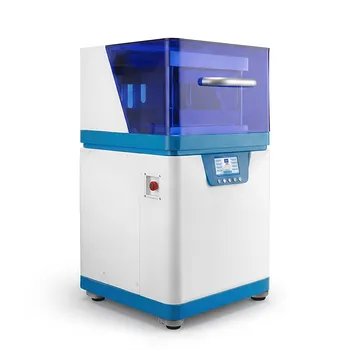
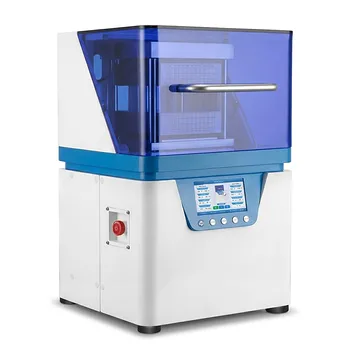
The high-pressure hydrothermal reactor facilitates $MoS_2$ growth by creating a supercritical environment that drives chemical nucleation and covalent anchoring. Specifically, the reactor maintains elevated temperatures (typically 180°C to 220°C) and internal pressure to force molybdenum precursors to react with functional groups on the porous carbon surface, ensuring the $MoS_2$ forms a stable, integrated nanosheet structure rather than a loose precipitate.
By providing a sealed, high-energy environment, the hydrothermal reactor overcomes the thermodynamic barriers required to bond $MoS_2$ nanosheets directly to a carbon substrate. This results in a composite material where the active sulfur layers are chemically locked to the carbon, preventing detachment during intensive use.
Driving Nucleation and Surface Anchoring
Activation of Surface Functional Groups
The high-pressure environment within the reactor promotes the nucleation of molybdenum sources at specific sites on the porous carbon. It targets oxygen-containing functional groups, such as C-O or Ti-OH, which act as "anchor points" for the incoming precursors.
Formation of Covalent Bonds
Under these subcritical conditions, the reactor facilitates the formation of strong covalent bonds between the $MoS_2$ nanosheets and the carbon substrate. This chemical tethering is critical because it prevents the $MoS_2$ from dissolving or detaching from the carbon during electrochemical cycling.
Uniform Growth on Complex Surfaces
The pressurized liquid phase ensures that precursors penetrate deep into the pores of the carbon. This leads to the uniform distribution of $MoS_2$, maximizing the available surface area and ensuring the entire substrate is utilized effectively.
Kinetic Control and Structural Morphology
Enhanced Precursor Solubility
High pressure significantly increases the solubility and chemical activity of precursors like sodium molybdate and thiourea. This allows the reactants to remain fully dissolved and mobile until they reach the carbon surface, where they undergo controlled crystallization.
Stabilization of 2D Nanosheets
The reactor provides the specific kinetic conditions required to grow two-dimensional nanosheet arrays. Without this pressurized environment, the molybdenum and sulfur might form bulkier, less efficient 3D particles instead of high-surface-area layers.
Phase Transformation and Control
Certain high-performance phases, such as 1T-phase $MoS_2$, are difficult to achieve under standard atmospheric pressure. The autoclave environment allows for precise control over temperature and pressure to stabilize these specific crystalline structures directly on the substrate.
Understanding the Trade-offs
Equipment and Safety Constraints
While highly effective, hydrothermal synthesis requires specialized high-pressure autoclaves (often Teflon-lined) to withstand corrosive precursors and high internal stress. Operating these systems demands strict safety protocols to manage the risks associated with pressurized vessels.
Scalability and Monitoring Challenges
Hydrothermal reactions occur in a sealed "black box" environment, making it impossible to monitor the growth of nanosheets in real-time. Additionally, transitioning from small-batch laboratory autoclaves to industrial-scale production presents significant engineering and cost hurdles.
Precision vs. Complexity
Achieving the perfect nanosheet morphology requires a delicate balance of temperature, pressure, and precursor concentration. Small deviations in the reactor's heating profile can lead to non-uniform growth or the formation of undesirable chemical phases.
How to Apply This to Your Project
Making the Right Choice for Your Goal
- If your primary focus is electrochemical stability: Prioritize reactors capable of maintaining 200°C to ensure the formation of strong covalent bonds between the $MoS_2$ and carbon.
- If your primary focus is maximizing catalytic surface area: Focus on controlling the cooling rate and precursor concentration to favor the growth of vertically aligned, ultrathin nanosheets.
- If your primary focus is phase-specific synthesis (e.g., 1T phase): Utilize a high-pressure autoclave to provide the subcritical conditions necessary for phase transformation that standard heating cannot achieve.
By leveraging the unique physics of a high-pressure environment, you can transform simple precursors into high-performance, carbon-anchored $MoS_2$ composites.
Summary Table:
| Feature | Hydrothermal Process Action | Benefit for MoS2 Synthesis |
|---|---|---|
| Nucleation | Targets functional groups (C-O, Ti-OH) | Precise anchoring on the carbon substrate |
| Bonding | Drives covalent bond formation | Prevents MoS2 detachment during cycling |
| Diffusion | Pressurized liquid penetrates pores | Ensures uniform growth on complex surfaces |
| Morphology | Kinetic control of subcritical states | Stabilizes 2D nanosheets over 3D particles |
| Phase Control | Sustained high temperature/pressure | Enables synthesis of high-performance phases |
Elevate Your Nanomaterial Synthesis with KINTEK
Achieving the perfect MoS2-carbon composite requires precision, safety, and reliability. KINTEK specializes in high-performance laboratory equipment, offering a premium range of high-pressure high-pressure reactors and autoclaves designed to handle the rigorous demands of hydrothermal synthesis.
Whether you are focusing on electrochemical stability, maximizing catalytic surface area, or mastering phase-specific synthesis, our reactors provide the stable subcritical environment necessary for superior material performance. Beyond reactors, KINTEK supports your entire workflow with ultrasonic homogenizers, high-temperature furnaces, and specialized ceramics.
Ready to optimize your 2D material growth? Contact our technical experts today to find the ideal high-pressure solution for your research goals!
References
- Vishal Shrivastav, Shashank Sundriyal. Diffusion controlled electrochemical analysis of MoS2 and MOF derived metal oxide–carbon hybrids for high performance supercapacitors. DOI: 10.1038/s41598-023-47730-4
This article is also based on technical information from Kintek Solution Knowledge Base .
Related Products
- Customizable Laboratory High Temperature High Pressure Reactors for Diverse Scientific Applications
- High Pressure Laboratory Autoclave Reactor for Hydrothermal Synthesis
- Customizable High Pressure Reactors for Advanced Scientific and Industrial Applications
- Stainless High Pressure Autoclave Reactor Laboratory Pressure Reactor
- Mini SS High Pressure Autoclave Reactor for Laboratory Use
People Also Ask
- How do high-pressure and high-temperature reactors ensure the effective treatment of lignocellulosic wastewater in WAO?
- What equipment is required for high-pressure high-temperature reactions? Master Extreme Chemistry Safely
- How do you control high pressure in a reactor? A Guide to Safe & Stable Operation
- How does initial oxygen pressure affect the wet oxidation of pharmaceutical sludge? Master Your Oxidation Depth
- Why is argon better than nitrogen for inert atmosphere? Ensure Absolute Reactivity & Stability