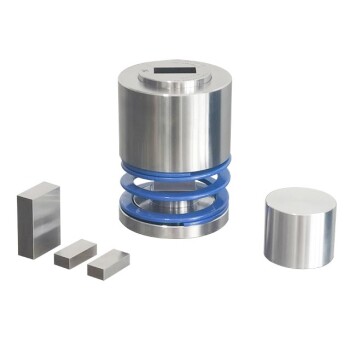
High-pressure reactors are essential for the catalytic hydrogenation of 2,6-dimethylnitrobenzene because they provide the necessary physical conditions to overcome thermodynamic barriers and maintain hydrogen availability. By maintaining a sealed environment at pressures such as 0.4 MPa, these reactors increase the solubility of hydrogen in the liquid phase and prevent the rapid volatilization of organic solvents at elevated temperatures (e.g., 200 °C). This controlled atmosphere ensures that the catalyst remains in contact with high concentrations of hydrogen molecules, facilitating an efficient and safe reduction process.
A high-pressure reactor acts as a controlled physical-chemical vessel that optimizes the interaction between hydrogen gas, liquid substrates, and solid catalysts. Its primary value lies in its ability to sustain the high hydrogen partial pressures required for deep conversion while providing real-time data for kinetic analysis.
Optimizing the Chemical Environment
Increasing Hydrogen Solubility and Concentration
The hydrogenation of substituted nitrobenzenes like 2,6-dimethylnitrobenzene depends heavily on the concentration of hydrogen at the catalyst surface. High-pressure reactors force hydrogen into the solvent, significantly increasing its solubility and ensuring the catalyst has constant access to the reactant. This overcomes the kinetic limitations typically found in atmospheric pressure setups.
Preventing Solvent Volatilization
Many hydrogenation reactions require high temperatures (up to 200 °C) to increase reaction rates or overcome steric hindrance in the molecule. The sealed nature of the reactor prevents organic solvents from boiling off, maintaining the reaction in a stable liquid phase. This containment is critical for ensuring that the concentration of the substrate remains consistent throughout the process.
Overcoming Thermodynamic Barriers
Certain hydrogenation steps are thermodynamically unfavorable at standard pressure. By providing high hydrogen partial pressures (ranging from 0.4 MPa to 50 bar), the reactor shifts the thermodynamic equilibrium toward the desired products. This allows for deep conversion of nitro groups to amines that might otherwise stall or produce unwanted intermediates.
The Role of Precision Monitoring and Control
Accurate Kinetic Measurement
Integrated pressure monitoring allows researchers to track the hydrogen consumption rate in real-time. This data is vital for conducting hydrogenation kinetics experiments under stable conditions. It enables the precise measurement of catalytic efficiency, particularly when evaluating improvements facilitated by hydrogen spillover.
Thermal Management and Safety
The reduction of nitro compounds is inherently exothermic, releasing significant heat during the reaction. High-pressure reactors are equipped with cooling/heating jackets and precise temperature control to manage these thermal effects. This prevents "runaway" reactions and ensures the safety of the laboratory environment while maintaining data consistency.
Ensuring Thorough Reactant Contact
Mechanical agitation or integrated stirring systems within the reactor ensure that the hydrogen gas, liquid 2,6-dimethylnitrobenzene, and the solid catalyst are thoroughly mixed. This minimizes mass transfer resistance. Without this mechanical help, even high pressure might not be enough to achieve high selectivity and activity.
Understanding the Trade-offs and Pitfalls
Mass Transfer vs. Chemical Kinetics
A common pitfall is assuming that higher pressure always leads to faster results. If the agitation speed is too low, the reaction becomes "diffusion-limited," meaning the speed is capped by how fast hydrogen can move through the liquid, regardless of the pressure setting.
Equipment Cost and Complexity
Operating at higher pressures (such as 400 bar) requires specialized stainless steel alloys and complex sealing mechanisms. This increases the initial capital investment and requires more rigorous maintenance protocols compared to low-pressure glass reactors.
Catalyst Deactivation Risks
While high pressure promotes the reaction, it can also accelerate certain deactivation pathways for sensitive catalysts. For example, high hydrogen concentrations might lead to the over-reduction of other functional groups or the structural collapse of fragile catalyst supports if not carefully monitored.
How to Apply This to Your Project
If your primary focus is Maximizing Yield and Purity: Use a reactor that can maintain at least 0.6 MPa to 5.0 MPa to ensure complete saturation of the solvent with hydrogen.
If your primary focus is Kinetic Research and R&D: Prioritize a reactor with high-precision pressure sensors and parallel testing capabilities to evaluate multiple catalyst samples under identical conditions.
If your primary focus is Industrial Scalability: Focus on reactors with advanced thermal management systems to safely handle the exothermic heat of nitrobenzene reduction at scale.
The high-pressure reactor is not merely a container, but a precision tool that turns a difficult thermodynamic challenge into a manageable and measurable chemical process.
Summary Table:
| Key Feature | Benefit to Catalytic Hydrogenation | Application Parameter |
|---|---|---|
| High Pressure | Increases H2 solubility; shifts thermodynamic equilibrium | 0.4 MPa to 50 bar |
| Thermal Control | Prevents solvent volatilization; manages exothermic heat | Up to 200 °C |
| Real-time Monitoring | Precise kinetic data via hydrogen consumption tracking | Pressure & Temp Sensors |
| Mechanical Stirring | Minimizes mass transfer resistance; ensures catalyst contact | Integrated Agitation |
Elevate Your Hydrogenation Research with KINTEK
Take the guesswork out of complex chemical synthesis. KINTEK specializes in high-performance laboratory equipment, offering a comprehensive range of high-temperature high-pressure reactors and autoclaves designed to provide the precision and safety required for the catalytic hydrogenation of 2,6-dimethylnitrobenzene and other challenging substrates.
From advanced pressure monitoring and thermal management systems to a full suite of laboratory tools—including crushing and milling systems, hydraulic presses, and high-temperature furnaces—we provide the reliability your R&D demands.
Ready to optimize your yields and ensure laboratory safety? Contact KINTEK today to find the perfect reactor solution for your project!
References
- Zhida Gu, Fengwei Huo. Water-assisted hydrogen spillover in Pt nanoparticle-based metal–organic framework composites. DOI: 10.1038/s41467-023-40697-w
This article is also based on technical information from Kintek Solution Knowledge Base .
Related Products
- Customizable Laboratory High Temperature High Pressure Reactors for Diverse Scientific Applications
- Customizable High Pressure Reactors for Advanced Scientific and Industrial Applications
- Stainless High Pressure Autoclave Reactor Laboratory Pressure Reactor
- Visual High-Pressure Reactor for In-Situ Observation
- Mini SS High Pressure Autoclave Reactor for Laboratory Use
People Also Ask
- How do high-pressure and high-temperature reactors ensure the effective treatment of lignocellulosic wastewater in WAO?
- What equipment is required for high-pressure high-temperature reactions? Master Extreme Chemistry Safely
- How do you control high pressure in a reactor? A Guide to Safe & Stable Operation
- How does initial oxygen pressure affect the wet oxidation of pharmaceutical sludge? Master Your Oxidation Depth
- Why is argon better than nitrogen for inert atmosphere? Ensure Absolute Reactivity & Stability