A high-temperature and high-pressure water circulation system acts as the dynamic stabilizer for oxidation experiments. By continuously cycling simulated primary circuit water through the reaction vessel, it actively maintains precise concentrations of lithium and boron while regulating dissolved hydrogen (DH) levels. This constant flow prevents chemical stagnation, ensuring the test environment remains consistent throughout the study.
Core Insight: In static environments, chemical parameters drift as the alloy reacts with the water. A circulation system eliminates this drift by constantly refreshing the solution and removing reaction byproducts, ensuring that any observed changes in the Alloy 690TT oxide layer are the result of controlled variables rather than environmental contamination.
The Mechanics of Chemical Control
Maintaining Exact Composition
The system utilizes solution tanks and high-pressure pumps to introduce a pre-mixed, chemically precise solution into the reaction vessel.
Because the water is constantly replenished, the concentration of critical elements—specifically lithium (Li) and boron (B)—remains stable at target levels. This prevents the depletion of these chemicals that would naturally occur in a static autoclave.
Managing Thermal and Pressure Variables
The system employs preheaters and back-pressure regulators to condition the water before it reaches the sample.
This ensures that the chemical properties of the water, which change significantly with temperature and pressure, are stabilized before interaction with the Alloy 690TT specimen.
Why Flow is Critical for Alloy 690TT
Removing Reaction Byproducts
As Alloy 690TT oxidizes, it releases ions and particulate matter into the immediate water boundary layer.
In a static system, these reaction products accumulate, potentially altering the local pH or chemistry and skewing results. The circulation system flushes these byproducts away, maintaining a "fresh" environment at the metal surface.
Studying Hydrogen Effects
One of the primary goals of these studies is to understand how dissolved hydrogen (DH) affects the oxide layer structure and boron enrichment.
The circulation system allows for precise, dynamic control of DH levels. This provides a repeatable environment necessary to isolate the specific impact of hydrogen on the alloy without interference from other shifting variables.
Understanding the Trade-offs
System Complexity vs. Data Fidelity
While a circulation system provides superior chemical control, it introduces significant mechanical complexity compared to static autoclaves.
Operators must manage multiple active components, including pumps and regulators, increasing the potential for mechanical failure or leaks.
Equilibrium Challenges
A dynamic flow system mimics the primary circuit of a reactor, but it requires careful calibration to ensure equilibrium.
If the flow rate is too high, it may artificially strip the oxide layer; if too low, it fails to clear reaction products. Achieving the correct balance is essential for the validity of the simulation.
Ensuring Data Integrity in Oxidation Studies
To maximize the value of your experimental setup, consider your specific research goals:
- If your primary focus is oxide layer structure: Ensure the flow rate is sufficient to remove reaction products, preventing local saturation that could alter crystal growth.
- If your primary focus is boron enrichment analysis: Monitor the solution tanks rigorously to guarantee the input concentrations of Lithium and Boron remain constant over long-duration tests.
By decoupling the test environment from the reaction process, a circulation system transforms a chaotic chemical reaction into a controlled, measurable scientific study.
Summary Table:
| Parameter Controlled | Mechanism of Control | Impact on Alloy 690TT Study |
|---|---|---|
| Li & B Concentration | Continuous solution replenishment | Prevents chemical depletion and ensures environmental stability. |
| Dissolved Hydrogen (DH) | Dynamic flow regulation | Isolates the specific impact of hydrogen on oxide layer structures. |
| Reaction Byproducts | Constant flushing/flow | Removes ions and particulates to prevent local pH shifts or saturation. |
| Thermal/Pressure State | Preheaters & Back-pressure regulators | Stabilizes chemical properties before water-sample interaction. |
Elevate Your Nuclear Materials Research with KINTEK
Precision is paramount when simulating primary circuit conditions for Alloy 690TT studies. KINTEK specializes in advanced laboratory solutions, offering the high-temperature high-pressure reactors and autoclaves necessary to maintain flawless chemical stability and dynamic flow control.
Whether you are analyzing oxide layer growth or boron enrichment, our team provides the high-performance systems and essential consumables—including PTFE products, ceramics, and high-purity crucibles—to ensure your data integrity.
Ready to optimize your experimental setup? Contact our specialists today to discover how KINTEK can enhance your lab's research capabilities.
References
- Soon-Hyeok Jeon, Do Haeng Hur. Effects of Hydrogen Contents on Oxidation Behavior of Alloy 690TT and Associated Boron Accumulation within Oxides in High-Temperature Water. DOI: 10.1155/2018/7845176
This article is also based on technical information from Kintek Solution Knowledge Base .
Related Products
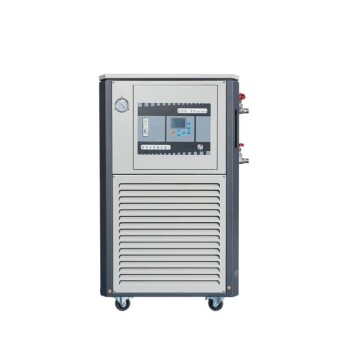
- High Temperature Constant Temperature Heating Circulator Water Bath Chiller Circulator for Reaction Bath
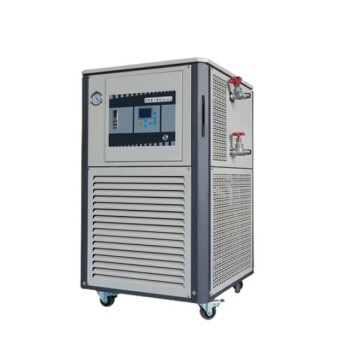
- 10L Heating Chilling Circulator Cooling Water Bath Circulator for High and Low Temperature Constant Temperature Reaction
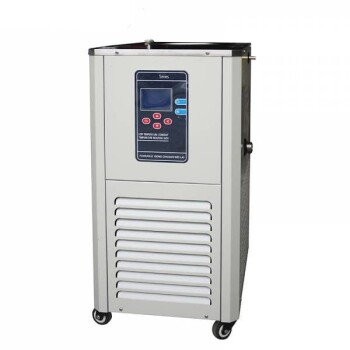
- 5L Heating Chilling Circulator Cooling Water Bath Circulator for High and Low Temperature Constant Temperature Reaction
- 20L Heating Chilling Circulator Cooling Water Bath Circulator for High and Low Temperature Constant Temperature Reaction
- 100L Heating Chilling Circulator Cooling Water Bath Circulator for High and Low Temperature Constant Temperature Reaction
People Also Ask
- What is the necessity of a circulating water bath in chlorate production? Optimize Yield & Purity with Precision
- How do constant temperature circulators impact weight-loss immersion tests? Ensure Precision in Corrosion Analysis
- How does a constant temperature circulator support the leaching reaction of gold scrap? Optimize Gold Recovery Results
- Why is a constant temperature water bath used for precursor storage in CVD? Achieve Stable Nanocrystalline SiC Deposition
- Why is a high-precision constant temperature water bath necessary for anaerobic digestion? Ensure Success at 37±0.02°C