Beyond simple evaporation, a laboratory drying oven serves as a critical reaction environment for the "aging" of Titanium Dioxide (TiO2) composite catalysts. While its basic function is solvent removal, its deeper purpose is to facilitate thermal treatments that fundamentally alter the chemical bonding and structural integrity of the final material.
Core Takeaway The drying oven is not merely a dehydration tool; it acts as a stabilization chamber. By maintaining specific temperatures for prolonged periods, it drives the complete hydrolysis of precursors and solidifies the chemical attachment of TiO2 nanoparticles to their support structures, preventing future material failure.
The Role of Thermal Aging in Chemical Bonding
Facilitating Precursor Hydrolysis
In the synthesis of TiO2 composites—specifically those involving high-surface-area supports like carbon nanotubes or graphene—the drying phase functions as an aging process.
Maintaining a steady temperature promotes the further hydrolysis of titanium precursors. This ensures the chemical reaction reaches completion, converting the precursor fully into the desired active oxide phase.
Anchoring Nanoparticles to Supports
The most critical function of this thermal treatment is the strengthening of chemical bonds.
As the material ages in the oven, the interaction between the TiO2 nanoparticles and the carrier surface (e.g., graphene) intensifies. This thermal energy helps forge a robust link between the active catalyst and its support matrix.
Preventing Component Detachment
The practical result of this enhanced bonding is mechanical and chemical stability.
Without this specific thermal aging, the TiO2 nanoparticles may remain loosely attached. A proper oven cycle ensures that active components do not detach from the support material during subsequent use, preserving the catalyst's lifespan and efficacy.
Pre-treatment and Structural Integrity
Ensuring Stoichiometric Accuracy
Beyond the synthesis of the composite itself, the oven plays a vital role in the pre-treatment of raw materials, such as in Ni-Al2O3-TiO2 composites.
By drying powders at high temperatures (e.g., 200°C) before weighing, the oven removes absorbed moisture. This guarantees that the mass weighed corresponds to the actual material, ensuring precise stoichiometric proportions in the final mixture.
Eliminating Structural Defects
Moisture control during the drying phase is essential for the physical integrity of the material during later processing stages.
If moisture remains trapped in the powder, it will vaporize violently during high-pressure pressing or high-temperature sintering. Using the drying oven effectively prevents the formation of cracks or pores in the "green body" (the unfired ceramic), ensuring a dense and uniform final product.
Understanding the Trade-offs
Temperature Sensitivity of Supports
While heat promotes bonding, excessive temperatures can degrade certain support materials.
When working with carbon-based supports like graphene or nanotubes, one must balance the heat required for TiO2 bonding against the oxidation limits of the carbon lattice. Overheating can damage the support structure before the composite is fully formed.
Balancing Time and Efficiency
The "aging" process described requires a prolonged period to be effective.
Rushing this step to increase throughput can result in incomplete hydrolysis and weak precursor attachment. Conversely, extending the time beyond the saturation point yields diminishing returns on bond strength while increasing energy consumption.
Making the Right Choice for Your Goal
Depending on which stage of synthesis you are optimizing, your approach to oven usage should shift:
- If your primary focus is Catalyst Durability: Prioritize the "aging" protocol to maximize the bond strength between the TiO2 and its carrier, preventing nanoparticle detachment.
- If your primary focus is Structural Density: Prioritize high-temperature pre-drying of raw powders to eliminate moisture-induced cracks and pores during sintering.
Treat the drying oven as a precision instrument for chemical bonding, not just a tool for removing water.
Summary Table:
| Process Phase | Function Beyond Evaporation | Impact on Final Material |
|---|---|---|
| Thermal Aging | Drives complete precursor hydrolysis | Ensures full conversion to active oxide phase |
| Particle Anchoring | Strengthens bonds between TiO2 and supports | Prevents detachment and increases catalyst lifespan |
| Pre-treatment | Removes absorbed moisture before weighing | Guarantees stoichiometric accuracy and chemical purity |
| Structural Control | Eliminates trapped moisture/gases | Prevents cracks and pores during sintering/pressing |
Elevate Your Composite Synthesis with KINTEK Precision
Don't settle for simple dehydration. KINTEK provides high-performance laboratory drying ovens and thermal processing solutions designed to ensure the structural integrity and chemical stability of your TiO2 composites.
Our extensive portfolio supports every stage of material science—from crushing and milling systems and hydraulic presses for sample preparation to high-temperature furnaces (muffle, vacuum, CVD) for advanced sintering. Whether you are working with graphene-based supports or complex ceramics, KINTEK offers the specialized equipment and consumables, like crucibles and PTFE products, needed to achieve stoichiometric precision.
Ready to optimize your thermal aging protocols? Contact our experts today to find the perfect equipment for your research and production needs.
References
- Samar Al Jitan, Corrado Garlisi. Synthesis and Surface Modification of TiO2-Based Photocatalysts for the Conversion of CO2. DOI: 10.3390/catal10020227
This article is also based on technical information from Kintek Solution Knowledge Base .
Related Products
- Laboratory Scientific Electric Heating Blast Drying Oven
- 56L Vertical Laboratory Vacuum Drying Oven
- 23L Laboratory Vacuum Drying Oven
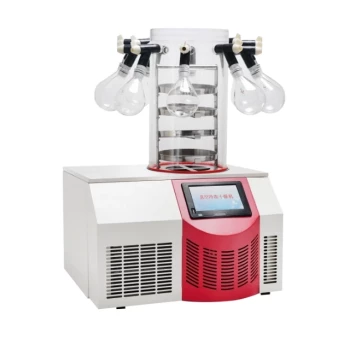
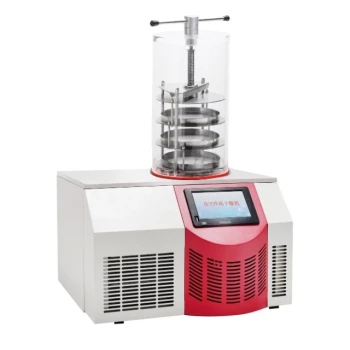
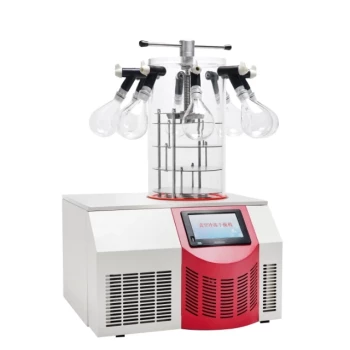
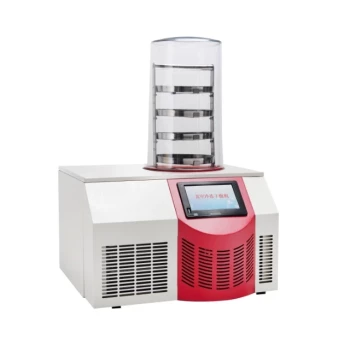
- High Performance Laboratory Freeze Dryer
- High Performance Laboratory Freeze Dryer for Research and Development
People Also Ask
- How does a laboratory electric drying oven contribute to the formation of the initial coating? Expert Insights
- What role does a precision laboratory drying oven play in the synthesis of GO-PANI nanocomposites? Protect Material Integrity
- What role does a laboratory drying oven play in the preparation of zinc oxide nanoparticle precursors?
- What is the necessity of using a laboratory drying oven when processing MoO3/GO composite nanopowders? Find out here.
- What is the role of a laboratory drying oven in cellulose citrate production? Ensure Material Stability & Purity