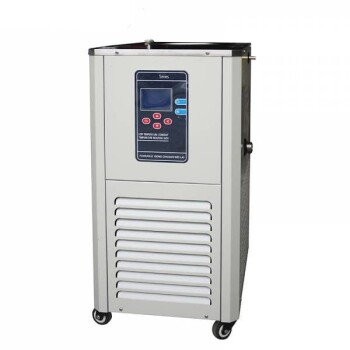
A laboratory-scale hydrothermal reactor facilitates the preparation of mesoporous hydroxyapatite catalysts by creating a high-pressure, enclosed environment that pushes solvents into a subcritical state. This unique physical condition enables the stable doping of molybdate anions into the apatite lattice and promotes controlled crystal growth, resulting in a material with high specific surface area and superior catalytic activity.
Core Takeaway The hydrothermal reactor acts as a precision tool for phase engineering, utilizing high temperature and pressure to induce spontaneous physicochemical changes that are impossible under standard conditions. By controlling these variables, the reactor forces the self-assembly of mesoporous structures and ensures high reproducibility in catalytic performance.
The Mechanism of Subcritical Synthesis
Creating a Subcritical Environment
The primary function of the reactor is to maintain an enclosed system where aqueous solutions can exceed their normal boiling points. Under these subcritical hydrothermal conditions, the physical properties of the solvent change drastically.
Enhancing Solubility and Kinetics
The elevated pressure and temperature significantly increase the solubility of precursors. This accelerates reaction kinetics, promoting the rapid dissolution and subsequent recrystallization of raw materials into the desired hydroxyapatite phase.
Driving Phase Transformation
The reactor provides the energy required for complete phase transformation. By managing the internal environment, the system ensures the conversion of precursors into high-purity hydroxyapatite crystals with controlled dispersibility.
Engineering the Catalyst Structure
Facilitating Molybdate Doping
A critical advantage of this reactor is its ability to facilitate the doping of functional groups. It allows molybdate anions to be stably integrated into the hydroxyapatite lattice.
Regulating Pore Architecture
The doping process is not merely chemical; it influences the physical morphology of the material. The presence of molybdate anions, introduced under controlled pressure, regulates the evolution of the microporous structure.
Achieving High Surface Area
The interplay between crystal growth and anion doping results in a mesoporous structure. This morphology provides a high specific surface area, which is essential for maximizing the efficiency of heterogeneous catalysts during chemical oxidation reactions.
Understanding the Trade-offs
Sensitivity to Process Parameters
While the reactor allows for precision, the process is highly sensitive. Slight deviations in temperature or pressure can drastically alter phase composition and pore size distribution, leading to inconsistent catalytic performance.
Safety and Operational Complexity
Operating at subcritical conditions involves significant safety considerations due to high internal pressures. The equipment requires rigorous maintenance and monitoring to prevent containment failures or uneven heating.
Reproducibility vs. Scalability
The closed environment ensures excellent reproducibility at the laboratory scale. However, transferring these precise high-pressure conditions to larger industrial batch sizes often presents significant engineering challenges regarding heat transfer and pressure uniformity.
Making the Right Choice for Your Goal
To maximize the effectiveness of your hydrothermal synthesis, align your operational parameters with your specific material requirements:
- If your primary focus is Maximizing Catalytic Activity: Prioritize the precise control of molybdate anion concentration and pressure to ensure optimal lattice doping and pore formation.
- If your primary focus is Structural Consistency: Focus on maintaining a strictly constant temperature profile throughout the exposure duration to guarantee uniform crystal growth and phase purity.
The power of the hydrothermal reactor lies not just in heating the material, but in its ability to force chemical species to self-assemble into complex, highly active nanostructures through precise environmental control.
Summary Table:
| Feature | Hydrothermal Synthesis Benefit |
|---|---|
| Environment | Enclosed high-pressure, subcritical state |
| Mechanism | Enhanced solubility and accelerated kinetics |
| Structure | Controlled mesoporous architecture and lattice doping |
| Key Outcome | High specific surface area and superior catalytic activity |
| Phase Control | High-purity hydroxyapatite with stable molybdate integration |
Elevate Your Materials Research with KINTEK Precision
Unlock the full potential of your catalytic research with KINTEK’s advanced laboratory-scale hydrothermal reactors and autoclaves. Specifically designed for high-temperature and high-pressure synthesis, our equipment ensures the precise environment needed for successful phase engineering and mesoporous structure development.
From high-purity ceramics and crucibles to comprehensive battery research tools and high-pressure reactors, KINTEK provides the high-performance solutions researchers need for consistent, reproducible results. Whether you are developing next-generation catalysts or advanced nanomaterials, our expert team is ready to support your lab's mission.
Ready to optimize your synthesis process? Contact us today to find the perfect equipment for your application!
References
- Ana Vico Cobos, L.F. Capitán‐Vallvey. Research and characterisation of novel flexible materials for radiochromic film design. DOI: 10.21175/rad.abstr.book.2023.31.3
This article is also based on technical information from Kintek Solution Knowledge Base .
Related Products
- High Pressure Laboratory Autoclave Reactor for Hydrothermal Synthesis
- Customizable Laboratory High Temperature High Pressure Reactors for Diverse Scientific Applications
- Mini SS High Pressure Autoclave Reactor for Laboratory Use
- Stainless High Pressure Autoclave Reactor Laboratory Pressure Reactor
- Customizable High Pressure Reactors for Advanced Scientific and Industrial Applications
People Also Ask
- What role does a high-pressure reactor (autoclave) play in the synthesis of NiCuFe-LDH? Master Hydrothermal Growth
- What Role Does a High-Pressure Reactor or Autoclave Play in HA Catalyst Synthesis? Achieve High Surface Area Materials
- What equipment is required for hydrothermal synthesis of Ga0.25Zn4.67S5.08? Optimize Your Semiconductor Production
- What is the function of a high-pressure reactor in the hydrothermal synthesis of boehmite? Expert Process Insights
- What role does an autoclave play in the synthesis of MnO2 nanofibers? Mastering Hydrothermal Growth