A static autoclave verifies the long-term hydrothermal corrosion performance of Cr-C-Al coatings by strictly replicating the harsh internal environment of a Pressurized Water Reactor (PWR). By exposing the coating to specific high-temperature and high-pressure water chemistry over an extended period, the test determines whether the material will chemically stabilize or degrade.
The static autoclave test acts as a reliability gate: it confirms if the coating will survive by forming a protective passivation layer (Cr2O3) or fail through rapid aluminum dissolution under conditions of 330 °C and 18 MPa.
Replicating Reactor Conditions
To accurately predict how a coating will behave in a nuclear power plant, the testing environment must mirror actual operating parameters.
Precise Temperature and Pressure
The static autoclave subjects the Cr-C-Al coatings to a temperature of 330 °C. Simultaneously, it maintains a pressure of 18 MPa.
These extreme conditions are necessary to simulate the thermal and mechanical stresses found in a PWR.
Controlled Water Chemistry
Temperature and pressure are not the only factors; the chemical environment is equally critical.
The water inside the autoclave is not neutral; it contains specific concentrations of boron and lithium. This specific chemistry is used to match the coolant composition of a reactor, which significantly influences corrosion rates.
Evaluating Chemical Stability
The core purpose of this verification is to observe the chemical reaction of the coating surface over a long duration, typically 30 days.
Detecting Aluminum Dissolution
One of the primary failure modes for Cr-C-Al coatings in this environment is the loss of aluminum.
The autoclave test monitors the material to see if it experiences rapid aluminum dissolution. If the aluminum leaches out quickly, the coating loses its structural integrity and reliability.
Confirming Passivation Layer Formation
In a successful test, the coating does not degrade but instead adapts to the environment.
The goal is to verify the formation of a stable passivation layer, specifically composed of chromium oxide (Cr2O3). This layer acts as a barrier, protecting the underlying material from further corrosion during long-term operation.
Interpreting Critical Failure Modes
While the static autoclave provides essential data, understanding the binary nature of the results is vital for material qualification.
The Aluminum Trade-off
The presence of aluminum in the coating presents a specific challenge in hydrothermal environments.
While aluminum contributes to certain coating properties, it introduces the risk of rapid dissolution under PWR conditions. The static autoclave effectively isolates this risk, allowing engineers to determine if the aluminum content will lead to catastrophic failure or if the chromium will successfully take over to form the protective oxide scale.
Making the Right Choice for Your Goal
The results from a static autoclave test are decisive for material selection in nuclear applications.
- If your primary focus is Material Reliability: Ensure the test data explicitly confirms the formation of a Cr2O3 passivation layer rather than just the absence of visible cracking.
- If your primary focus is Experimental Design: Verify that your autoclave parameters are locked strictly to 330 °C, 18 MPa, and Boron/Lithium chemistry to ensure the simulation is valid.
Ultimately, the static autoclave serves as the definitive proof of whether a coating can withstand the hostile reality of a nuclear reactor.
Summary Table:
| Parameter | Testing Specification | Significance in Verification |
|---|---|---|
| Temperature | 330 °C | Simulates thermal stress of a Pressurized Water Reactor (PWR) |
| Pressure | 18 MPa | Replicates the mechanical stress within the reactor core |
| Water Chemistry | Boron & Lithium enriched | Matches reactor coolant to evaluate chemical reactivity |
| Duration | 30 Days (Long-term) | Determines long-term durability and aluminum dissolution rates |
| Success Metric | Cr2O3 Passivation Layer | Confirms the formation of a stable, protective chemical barrier |
Ensure the reliability of your nuclear-grade materials with KINTEK’s precision engineering solutions. Whether you are conducting hydrothermal corrosion studies or material qualification, KINTEK specializes in high-performance laboratory equipment, including high-temperature high-pressure reactors and autoclaves, muffle and vacuum furnaces, and advanced crushing and milling systems. Our comprehensive range of electrolytic cells, electrodes, and ceramic consumables is designed to meet the rigorous demands of reactor simulation and energy research. Contact KINTEK today to discover how our specialized equipment can enhance your experimental accuracy and accelerate your material breakthroughs.
References
- Chongchong Tang, Michael Stüber. The Effect of Annealing Temperature on the Microstructure and Properties of Cr–C–Al Coatings on Zircaloy-4 for Accident-Tolerant Fuel (ATF) Applications. DOI: 10.3390/coatings12020167
This article is also based on technical information from Kintek Solution Knowledge Base .
Related Products
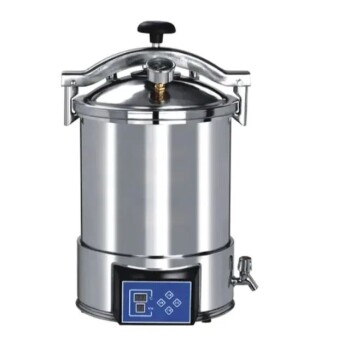
- Laboratory Sterilizer Lab Autoclave Vertical Pressure Steam Sterilizer for Liquid Crystal Display Automatic Type
- Portable Digital Display Automatic Laboratory Sterilizer Lab Autoclave for Sterilization Pressure
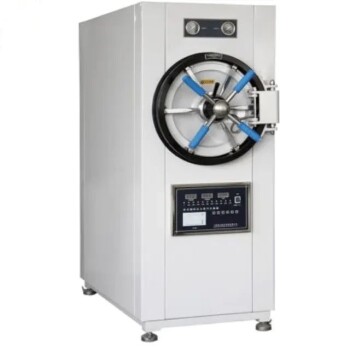
- Laboratory High Pressure Steam Sterilizer Vertical Autoclave for Lab Department
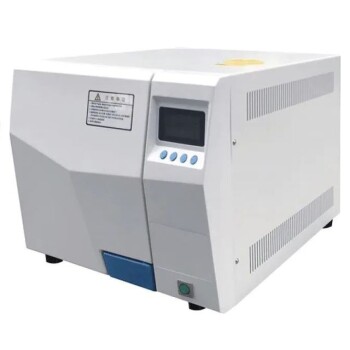
- Desktop Fast Laboratory Autoclave Sterilizer 35L 50L 90L for Lab Use
- Desktop Fast Laboratory Autoclave Sterilizer 20L 24L for Lab Use
People Also Ask
- What is the primary function of a laboratory sterilization autoclave? Master the Physics of Wet Heat Sterilization
- In what industries and applications are steam sterilizers or autoclaves used? Discover Key Uses Across 4 Major Sectors
- What is a laboratory autoclave? A Guide to Sterilization with Pressurized Steam
- What precautions should be taken during autoclave in laboratory? A Complete Safety Guide to Prevent Burns and Explosions
- What extreme conditions does a laboratory autoclave simulate? Testing Wear Resistance of Nuclear Fuel Cladding